
|
|
|
| |

|
|
| |
The latest analytical chemistry news from News-Medical |
|
|
|
 | | |
 Advance Omics Workflows with Expert Insights Advance Omics Workflows with Expert Insights
Discover how leading researchers are transforming biomedical and omics research with innovative analytical workflows. Watch this on-demand webinar series for real-world insights, emerging applications, and expert perspectives on how advanced mass spectrometry is enabling deeper biological discoveries, greater analytical confidence, and more impactful research outcomes.
| |
|
|
|
|
| | |  Advancements in 2D NMR and automation improve drug discovery, enabling precise analysis of protein binding through chemical shift perturbation techniques. Advancements in 2D NMR and automation improve drug discovery, enabling precise analysis of protein binding through chemical shift perturbation techniques. | | | | |  Utilizing Fluorine-19 NMR in enzyme inhibition studies provides direct measurements for drug discovery, highlighting its potential in inhibitor screening. Utilizing Fluorine-19 NMR in enzyme inhibition studies provides direct measurements for drug discovery, highlighting its potential in inhibitor screening. | | | | |  Automated NMR workflows revolutionize fragment-based drug discovery, accelerating hit identification and optimizing the screening of chemical libraries. Automated NMR workflows revolutionize fragment-based drug discovery, accelerating hit identification and optimizing the screening of chemical libraries. | | | | | 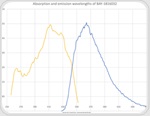 Three complementary assays are used to assess BAY-1816032 concentrations in serum. Three complementary assays are used to assess BAY-1816032 concentrations in serum. | | | | |  Submicron IR combines submicron resolution and high sensitivity to complement FTIR in label-free subcellular analysis. Submicron IR combines submicron resolution and high sensitivity to complement FTIR in label-free subcellular analysis. | |
|
|
|
 | | | How would you rate today's newsletter?
| |
|
|
|
| | |
 |
Stay updated with the latest in health and medical news! Follow News‑Medical.net on Google News for real‑time updates. Click here to follow us now. |
| |
|
|
|
|
|