|
|
|
| |

|
|
| |
The latest drug discovery news from News Medical |
|
|
|
 | | |
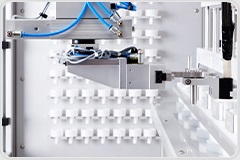 Fully Automated Dissolution Testing for Efficient Pharmaceutical Workflows Fully Automated Dissolution Testing for Efficient Pharmaceutical Workflows
Modern dissolution automation workflows help pharmaceutical laboratories improve efficiency, reproducibility, and data integrity while reducing human error.
Solutions such as the ERWEKA RoboDis II+ automate the entire testing process, from sampling and analysis to documentation, increasing sample throughput, supporting regulatory compliance, and delivering reliable, high-quality results in research and quality control environments.
| |
|
|
| | | | |  Automated NMR workflows revolutionize fragment-based drug discovery, accelerating hit identification and optimizing the screening of chemical libraries. Automated NMR workflows revolutionize fragment-based drug discovery, accelerating hit identification and optimizing the screening of chemical libraries. | | | | |  BioDuro, a global integrated contract research, development and manufacturing organization (CRDMO), today announced the appointment of Greg Makara, Ph.D., as Senior Vice President Lead Discovery Chemistry. BioDuro, a global integrated contract research, development and manufacturing organization (CRDMO), today announced the appointment of Greg Makara, Ph.D., as Senior Vice President Lead Discovery Chemistry. | | | | |  Carterra®, a leading provider of high-throughput surface plasmon resonance (HT-SPR™) platforms for antibody and small molecule drug discovery, today announced a research collaboration with AstraZeneca to develop hardware and software aimed at advancing lab-in-the loop drug discovery. Carterra®, a leading provider of high-throughput surface plasmon resonance (HT-SPR™) platforms for antibody and small molecule drug discovery, today announced a research collaboration with AstraZeneca to develop hardware and software aimed at advancing lab-in-the loop drug discovery. | | | | |  BioDuro, a global integrated contract research, development and manufacturing organization (CRDMO), today announced the appointment of Greg Makara, Ph.D., as Senior Vice President Lead Discovery Chemistry. BioDuro, a global integrated contract research, development and manufacturing organization (CRDMO), today announced the appointment of Greg Makara, Ph.D., as Senior Vice President Lead Discovery Chemistry. | | | | |  ELRIG, a not-for-profit, volunteer-led organization dedicated to the global drug discovery community, and The Protein Society, an international, not-for-profit, scholarly society, with the mission to provide forums for the advancement of research into protein structure, function, design and applications, today announced the keynote speakers for Protein Sciences in Drug Discovery 2026. ELRIG, a not-for-profit, volunteer-led organization dedicated to the global drug discovery community, and The Protein Society, an international, not-for-profit, scholarly society, with the mission to provide forums for the advancement of research into protein structure, function, design and applications, today announced the keynote speakers for Protein Sciences in Drug Discovery 2026. | |
|
|
|  | | | How would you rate today's newsletter?
| |
|
|
| | | |
 |
Stay updated with the latest in health and medical news! Follow News‑Medical.net on Google News for real‑time updates. Click here to follow us now. |
| |
|
|
|
|
|
|
|