
|
|
|
| |

|
|
| |
The latest lab automation and artificial intelligence news from AZoNetwork |
|
|
|
 | | |
 Let AI Simplify Thermal Analysis Curve Evaluation Let AI Simplify Thermal Analysis Curve Evaluation
Evaluating DSC and TGA measurement curves can be time-consuming and dependent on user experience. METTLER TOLEDO’s AIWizard™ uses trained neural networks to automatically detect, identify, and evaluate thermal effects, helping analysts standardize results and reach faster conclusions. Explore how AIWizard supports autonomous result evaluation, watch the short video to see it in action.
| |
|
|
|  | | |
| |
|
 AI-Enabled Laboratory Orchestration for Advanced Therapeutics AI-Enabled Laboratory Orchestration for Advanced Therapeutics
Scaling cell and gene therapies often creates an overwhelming amount of paperwork, deviations, and disconnected lab data. This white paper looks at how practical, governed AI helps manufacturing teams speed up batch reviews and spot issues earlier, without taking critical quality decisions away from the scientists who know best.
|
|
| |  | | |
| |
|
![[Free Webinar] Imaris 11.1: Learn Faster, Analyse with Confidence](https://www.azonetwork.com/newsletters/images/generic/54__639252222264803488_multisizecolor_0_custom.jpg) [Free Webinar] Imaris 11.1: Learn Faster, Analyse with Confidence [Free Webinar] Imaris 11.1: Learn Faster, Analyse with Confidence
Join us for an introduction to Imaris 11.1, the latest release of our leading AI 3D/4D image analysis software for life science research. You'll discover what's new in the latest release, see key features demonstrated live, and learn how the latest enhancements can help streamline analysis workflows, improve productivity, and accelerate research outcomes.
Whether you're an existing Imaris user or exploring advanced image analysis solutions, this session will provide practical insights to help you get more from your microscopy data.
|
|
| |
|
|
| | | |  Carterra®, a leading provider of high-throughput surface plasmon resonance (HT-SPR™) platforms for antibody and small molecule drug discovery, today announced a research collaboration with AstraZeneca to develop hardware and software aimed at advancing lab-in-the loop drug discovery. Carterra®, a leading provider of high-throughput surface plasmon resonance (HT-SPR™) platforms for antibody and small molecule drug discovery, today announced a research collaboration with AstraZeneca to develop hardware and software aimed at advancing lab-in-the loop drug discovery. | | | | | 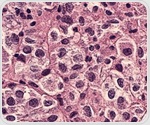 Publishing in Nature Communications, a KAUST-led team has developed the AI tool Unify to help scientists compare similar cell types across distant species. Publishing in Nature Communications, a KAUST-led team has developed the AI tool Unify to help scientists compare similar cell types across distant species. | | | | |  Researchers at The University of Texas MD Anderson Cancer Center and collaborating institutions in Texas developed an artificial intelligence (AI) model that helps explain how immune cells find their way to specific locations in the body and why they avoid others. Researchers at The University of Texas MD Anderson Cancer Center and collaborating institutions in Texas developed an artificial intelligence (AI) model that helps explain how immune cells find their way to specific locations in the body and why they avoid others. | | | | |  HZI team develops a computational tool for accurate identification and abundance estimation of microorganisms in complex samples. HZI team develops a computational tool for accurate identification and abundance estimation of microorganisms in complex samples. | | | | |  Laurel Yohe, Ph.D., assistant professor of bioinformatics at The University of North Carolina at Charlotte, is among the co-authors of a landmark study of bat genomes published this week in Nature. Laurel Yohe, Ph.D., assistant professor of bioinformatics at The University of North Carolina at Charlotte, is among the co-authors of a landmark study of bat genomes published this week in Nature. | |
|
|
| | | | How would you rate today's newsletter?
| |
|
|
| | | |
 |
Stay updated with the latest in health and medical news! Follow News‑Medical.net on Google News for real‑time updates. Click here to follow us now. |
| |
|
|
|
|
|
|
|