In the 21st century, technology has transformed every aspect of life – from smartphones connecting the world, to social media reshaping communication, to AI revolutionizing industries. Cancer treatment has undergone its own shift: from chemotherapies to precise monoclonal therapy, targeted therapies, and immunotherapies.
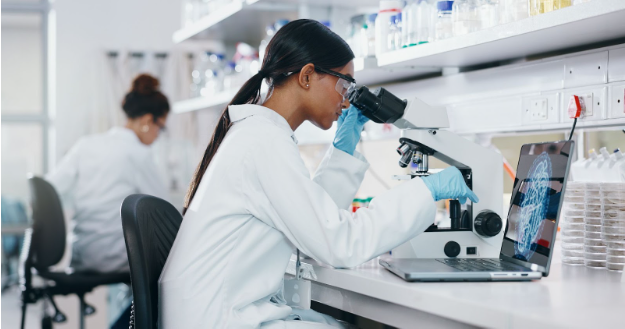
Image Credit: PeopleImages/Shutterstock.com
These advances enable scientists to tailor studies to specific cancer types, improving outcomes with fewer side effects.
This article outlines the latest advancements in cancer research and treatment.
What are the latest advances in cancer treatment?
Traditional treatments like surgery, chemotherapy, and radiation have been the primary treatment methods for many years.
Although these treatments might be effective, high-energy rays and strong drugs used during the procedure caused several side effects, such as fatigue, nausea, hair loss, weakened immune system, nerve damage, bruising, and bleeding.
In recent years, more specialized therapies have been developed to treat cancer with greater precision and fewer side effects.
Common key therapies used in cancer treatment are:
1. Monoclonal antibodies:
These are lab-made molecules that target a specific protein present on cancer cells and help the immune system kill them. These antibodies, such as the anti-CD44 antibody, are designed to target proteins associated with cancer growth.
How researchers developed this therapy:
2. Immunotherapy:
In immunotherapy, the body's immune system fights against cancer by training it to recognize and attack cancer cells. It has become a significant treatment method for cancers like melanoma (skin) and lung cancer.
How researchers developed this therapy:
3. Targeted therapy:
This therapy targets a specific molecule (weak points) involved in the growth of cancer cells. They block those signals without affecting the healthy cells, unlike traditional treatment.
How researchers developed this therapy:
How do targeted therapies impact cancer treatment?
- Traditional treatment, like chemo, radiation, and surgery, worked well but caused side effects.
- The new shift brought precise and personal therapies that focus directly on the cancer cells.
- Monoclonal antibodies target cancer cells, Immunotherapy boosts the immune attack, and Targeted therapy blocks cancer growth.
- This research improved the treatment methods, a more site-focused approach, and contains fewer side effects.
Final thought
Cancer treatment has made tremendous progress in recent years. Researchers are developing treatments tailored to the patient's needs, making them more personalized.
By using tools like the ELISA Kits, monoclonal antibodies, and IHC, researchers are developing more focused treatments and providing a new hope to cancer patients.
About AAA Biotech
We offer the highest-grade reagents available anywhere in the world.
The majority of AAA Biotech’s antibodies are highly validated and can be used in multiple applications such as ELISA, FC, ICC, IF, IHC, IP, WB, etc. We have antibodies available for rare species, in multiple conjugated forms or recombinant antibodies.
As for our high quality proteins, the majority have 90 % purity, detected by SDS-PAGE while some are available in different tags such as Flag, GST, His, MBP, etc. We also carry high quality native and biologically active proteins.
AAA Biotech is constantly working to expand our capacity to provide recombinant proteins, antibodies and ELISA kits to most target proteins.
Sponsored Content Policy: AZoLifeSciences.com publishes articles and related content that may be derived from sources where we have existing commercial relationships, provided such content adds value to the core editorial ethos of AZoLifeSciences.com, which is to educate and inform site visitors interested in medical research, science, medical devices, and treatments.
Last Updated: Jan 6, 2026