Researchers can reduce lab time while maintaining continuous 24/7 operation for cultivating and expanding various stem cell lines, spheroids, or organoids with the AI-powered CellXpress.ai® Automated Cell Culture System. This innovative solution gives researchers full control over complex cell-culture feeding and passaging schedules.
By lowering attrition rates, this revolutionary technology builds confidence in experimental outcomes, enabling laboratories to make key decisions faster, reach milestones sooner, and advance to clinical stages more quickly. A detailed event log confirms timely feedings and the completion of essential tasks, supported by thorough digital microscopy documentation.
Automate the Cell Culture Processes
Strictly managing feeding and passaging schedules reduces hands-on lab time, eliminating the need to work outside regular hours.
Improve the Screening Workflows
Continuous operation enhances productivity while developing and expanding multiple stem cell lines, spheroids, or organoids.
Develop Reliable, Reproducible Assays
A machine-learning-supported solution standardizes the development process, ensuring outputs that are consistent, unbiased, and biologically relevant at scale.
See what the future of cell culture can do for your lab. Video Credit: Molecular Devices UK Ltd
Features
- Scale Up Complex Cell Culture Workflows
- Implementable imaging techniques and pre-established protocols for the secure exchange, monitoring, and transmission of media. Automated processes for cell culture and image analysis operate continuously, even during lab closures.
- Track the Complete Cell Journey Over Time
- A cohesive software environment enables the straightforward creation of traceable, reproducible cell cultures tailored to specific test-endpoint requirements.
- Evaluate and Make Decisions Earlier
- Speed up responses to critical questions by identifying outliers at the well, plate, or experiment level, which helps determine sources of variability. To conserve reagents, eliminate these plates or wells from subsequent processing early in the drug discovery workflow.
- Standardized Protocols
- Dependable and consistent automation accelerates the development process. Moreover, automated decision-making triggers events such as feeding, monitoring, and passaging, while also notifying users of assay milestones or necessary actions.
- Reduce Human Error
- Using image-based deep learning for decision-making boosts productivity and frees up hands-on time. Automating cell handling reduces unpredictability, ensures sterility, and boosts confidence in outcomes.
- Turn Data Into Decisions
- Address complex image analysis challenges by using sophisticated artificial intelligence (AI) to turn images into results. Intuitive workflows help you extract insights from 2D, 3D, and time-lapse studies.
Complex Biology Simplified
A user-friendly, automated system created by scientists specifically for scientists.
With this system, users won't miss any feeding or passaging phases, as it is engineered for uninterrupted operation. The CellXpress.ai cell culture system streamlines workflows and uses imaging-guided AI decision-making to ensure cell culture feeding and passaging occur at the correct intervals, while event notifications keep users informed about cell culture status.
Reliable, Reproducible Results
The CellXpress.ai cell culture system was developed with biologists in mind. The user-friendly protocol wizard eliminates the need to write intricate scripts. Rather, users can establish workflows through an intuitive interface that reflects the logical progression of the cell culture procedure.
The CellXpress.ai cell culture system supports a diverse array of model system operations in both 2D and 3D formats, including matrix and matrix-free settings.
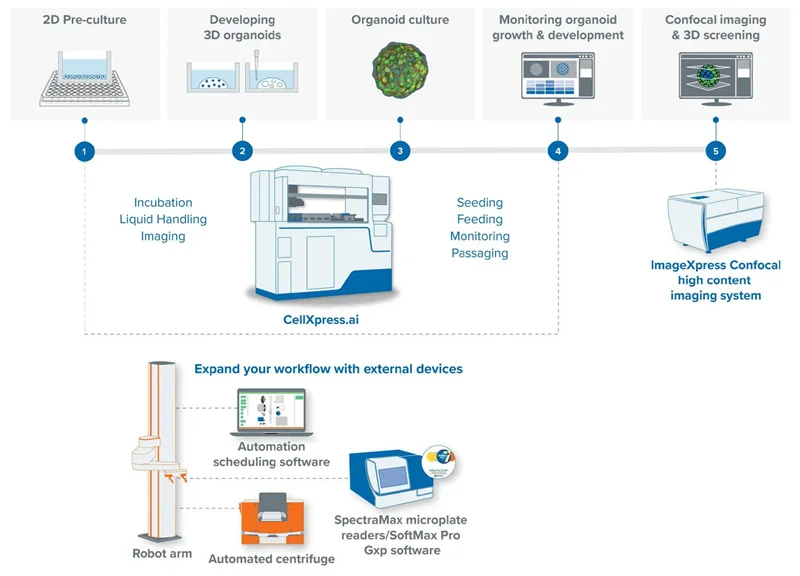
Image Credit: Molecular Devices UK Ltd
Applications
Applications of the CellXpress.ai Automated Cell Culture System
The CellXpress.ai technology enhances cell culture and assay processes by addressing issues related to standardization, reproducibility, and scalability. This system automates critical procedures for the following applications:
- iPSC-derived culture
- 3D organoid assays
- Intestinal organoids
- 3D spheroid assays
- Automated cell culture
3D Organoid Assays
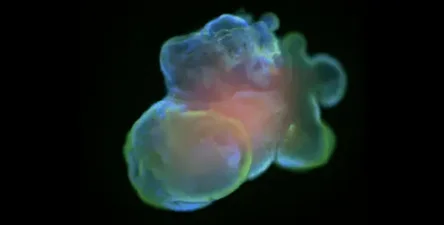
Image Credit: Molecular Devices UK Ltd
The CellXpress.ai™ Automated Cell Culture System facilitates automated organoid assay techniques. This innovative method addresses challenges related to uniformity, repeatability, and scalability in the culture and analysis of 3D organoids. By integrating advanced hardware and software, which includes machine learning-driven image analysis, the system automates essential tasks such as media exchange, passaging, and endpoint testing.
The research and methodologies outlined illustrate effective automation of processes for iPSC, tumoroid, and adult stem cell-derived organoids, improving throughput, consistency, and reliability. These advancements highlight automation's transformative potential in organoid research, improving efficiency and scalability for drug discovery and personalized medicine.
- Streamline the cultivation and analysis of 3D organoids to turn the challenges of 3D cell culture into a dependable, applicable scientific discipline.
- CellXpress.AI Automated Cell Culture System: A fully automated workstation designed for consistent organoid generation.
- Utilization of machine learning and sophisticated image analysis for the automation of 3D organoid cultivation and experimentation.
3D Spheroid Assays
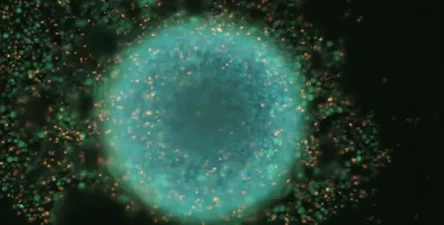
Image Credit: Molecular Devices UK Ltd
Thorough drug efficacy testing protocols are essential for identifying effective drug combinations in cancer treatment. 3D cancer models, including spheroids and toroids, play a crucial role in cancer research and therapy development because they accurately mimic tumor structure and behavior. Nevertheless, the complexity and manual processes involved in 3D assays have limited their use in high-throughput drug screening.
The CellXpress.ai Automated Cell Culture System addresses these challenges by fully automating 3D spheroid assays, including plating, passaging, media exchanges, organoid monitoring, chemical dosing, and endpoint assays. This automation improves the scalability, consistency, and efficiency of complex 3D cell-based assays, accelerating the identification of new therapeutic targets and drug combinations.
- CellXpress.ai fully automates the workflow for 3D cancer spheroid experiments.
- The CellXpress.ai cell culture system automates cell culture processes in 3D cancer spheroid experiments.
Automated Cell Culture
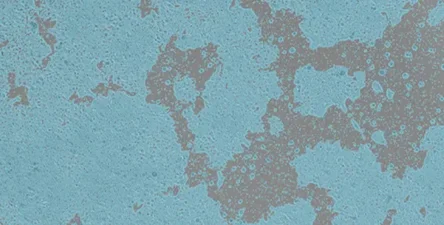
Image Credit: Molecular Devices UK Ltd
The innovative application of decision-making-driven image analysis in the CellXpress.ai Automated Cell Culture System revolutionizes cell culture maintenance and expansion. This system integrates liquid handling, incubation, imaging, and AI-enhanced software to perform intricate cell culture tasks with reduced human involvement.
The system’s decision-making features, supported by real-time image analysis, enable it to track cell growth and autonomously execute actions like media changes and cell passaging. This cutting-edge approach enhances workflow efficiency and consistency while substantially reducing the manual workload and potential for errors faced by researchers.
- Completely automated cell culture passaging and expansion through decision-making-driven image analysis.
- Employing AI for the automation of cell culture
- The transformative potential of AI-enhanced cell culture in drug discovery
- CellXpress.ai: Software powered by AI
Intestinal Organoids
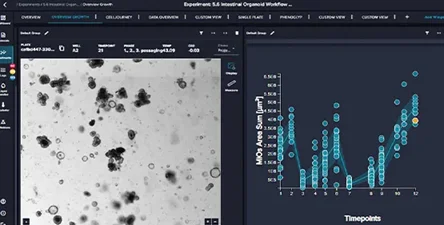
Image Credit: Molecular Devices UK Ltd
Given that intestinal organoids can mimic the physiological structure and function of human intestines, they play a crucial role in enhancing drug discovery and disease modeling. The CellXpress.ai Automated Cell Culture System exemplifies a solution that addresses the assay complexity, repeatability, and scalability challenges that have hindered the widespread adoption of organoid-based screening techniques.
The CellXpress.ai system automates the entire 3D intestinal organoid culture process, which encompasses media exchange, plating, passaging, organoid monitoring, and endpoint assays.
This automation significantly increases the number of organoid cultures that can be processed concurrently, ensures process uniformity, and improves result accuracy. Such advancements facilitate reliable toxicity testing and efficient high-throughput drug discovery.
By leveraging machine learning and AI-driven image analysis, this solution helps researchers overcome traditional barriers and substantially boost productivity in drug development and precision medicine applications, delivering dependable, reproducible results.
- Utilizing healthy intestinal organoids, we conduct automated assessments to evaluate the toxicity of various compounds.
- The CellXpress.ai Automated Cell Culture System automates 3D intestinal organoid cultivation.
iPSC-Derived Culture

Image Credit: Molecular Devices UK Ltd
Induced pluripotent stem cells (iPSCs) play a crucial role in generating a variety of cell types, organoids, and tissues, and in creating disease-specific phenotypes through CRISPR genetic editing. Nevertheless, traditional manual techniques used in iPSC cultures are labor-intensive and stressful. The CellXpress.ai Automated Cell Culture System oversees the entire iPSC culture process, which includes passaging, medium exchange, monitoring, and cell expansion.
This system integrates an incubator, a liquid handler, and AI-driven, image-based decision-making to regulate feeding schedules, track cell growth, and implement necessary actions. By automating these processes, the CellXpress.ai system enhances scalability, reproducibility, and efficiency, thereby facilitating high-throughput drug discovery and disease modeling.
- The CellXpress.ai Automated Cell Culture System automates iPSC culture, passaging, and expansion.
Specifications and Options
Specifications and Options of CellXpress.ai Automated Cell Culture System
CellXpress.ai Cell Culture System Features and Options
Source: Molecular Devices UK Ltd
| Incubator |
| Capacity (choose) |
44 plate max – 2 rack capacity
154 plate max – 7 rack capacity |
| Decontamination |
Automated hydrogen peroxide decontamination |
| Environmental control |
CO2, temperature, and humidity control |
| Imager |
| Objectives |
2X through 40X objectives available |
| Imaging modes |
TL and up to 6 FL channels |
| Acquisition mode |
Time-lapse, Z-stack, optional Digital Confocal* |
| LED light source |
7 LEDs ranging from 365 to 730 nm |
| Available filter cubes |
DAPI, FITC, TRITC, TxRed, Cy5, Cy7, CFP, YFP |
| Environmental control |
Temperature and CO2 control |
| Camera |
24 megapixel camera |
| Acquisition speed |
Rapid whole plate acquisition |
| Liquid handler |
| Pipette head |
Span 8 |
| Deck locations |
9 positions: plate cooling, heating, and tilting |
| Cell culture media |
Heated and cooled positions for low-volume and bulk media |
| Decontamination |
Automated on-deck UV decontamination |
| Waste |
| Liquid waste |
10 L liquid waste capacity with volume tracking |
| Solid waste |
60 L solid waste capacity with automated lid |
| System |
| Transfer ports |
2 plate transfer ports |
| Enclosure |
HEPA-filtered with anti-clog sensor |
| On-system display |
15” touchscreen display |
| External workstation |
10 Tb workstation with 27” LED monitor |
| Size |
2250 mm W x 954 mm D x 2,155 mm H |
| Weight |
1042 kg / 1,100 kg |
| Power consumption |
2000 W max, 2ea 10 A lines |
| Certifications |
CSA, CE |
| Software |
| Cell culture protocol manager |
Pre-defined and user-defined protocols |
| Experiment manager |
At-a-glance experiment manager |
| Cell journey |
Phase-based cell journey with film-strip viewer |
| Decision making |
Rule-based decision making to advance and stop cell culture |
| System dashboard |
At-a-glance dashboard informs the user of immediate or upcoming actions needed |
| User alerts |
Configurable alerts keep the user informed about the state of the cell culture |
*CellXpress.ai cell culture system uses AutoQuant 2D Real Time Deconvolution