The NX12 is an atomic force microscope (AFM) designed for materials science, electrochemistry, and biochemistry studies.
The Park Systems microscope performs nanoscale imaging and characterizes material properties in liquid or air. This system combines scanning probe microscopy with inverted optical microscopy, enabling detailed analysis of dynamic events.
The NX12 integrates Park’s True Non-contact™ mode, an orthogonal scan system, alongside nanopipette technology to deliver accurate topography and correlative data. This integration links structural, mechanical, electrical, and optical properties on a single sample.
This system facilitates diverse experiments, such as gentle in-liquid imaging of living cells via SICM and high-resolution local reactivity mapping using SECM/SECCM. A digitally managed environmental chamber ensures consistent gas and temperature, promoting dependable and repeatable research outcomes.
Key Features
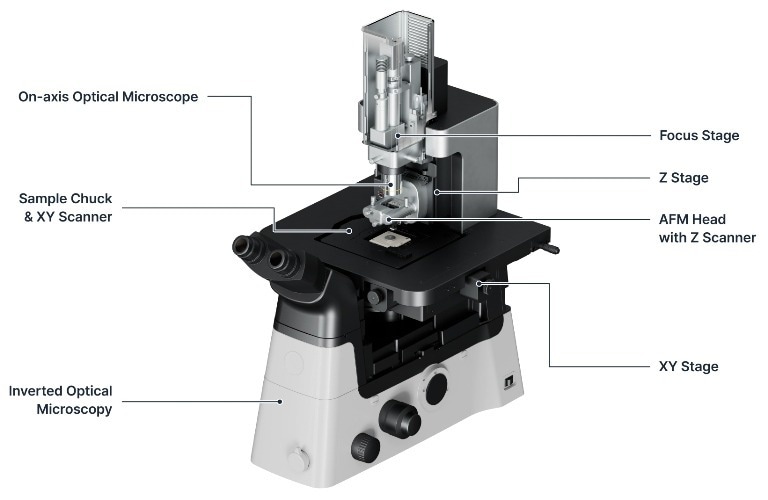
Image Credit: Park Systems
Integration with Inverted Optical Microscopy
The NX12 system integrates seamlessly with inverted optical microscopes, allowing researchers to merge the wide field of view of optical imaging with the nanoscale resolution of AFM.
This correlative configuration enables sample analysis across different length scales within a unified process. It is especially useful for transparent samples and biological studies, where both cellular structures and nanoscale features need simultaneous investigation.
Fast Z Servo and High Resolution
The Park NX series enables improved image resolution. Its NX Z scanner incorporates a stacked piezo actuator and strain gauge sensor, which enables rapid and accurate measurements on diverse surfaces.
This AFM instrument provides consistent roughness linearity, independent of scan area, for both very smooth and uneven samples, guaranteeing dependable measurement outcomes.
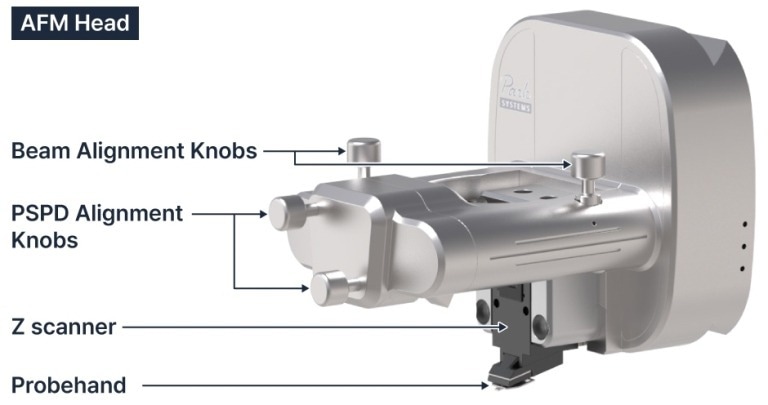
Image Credit: Park Systems
NX Laser Beam Path
The NX head uses a superluminescent diode to produce light with low coherence, reducing interference and producing reliable signal measurement results. The laser light travels through high-precision mirrors to reach the cantilever and position-sensitive photodetector (PSPD), guaranteeing precise signal direction.
The knobs enable direct movement of the laser beam on the X and Y axes. This provides simple control of the beam's location and easy realignment when probes are changed.
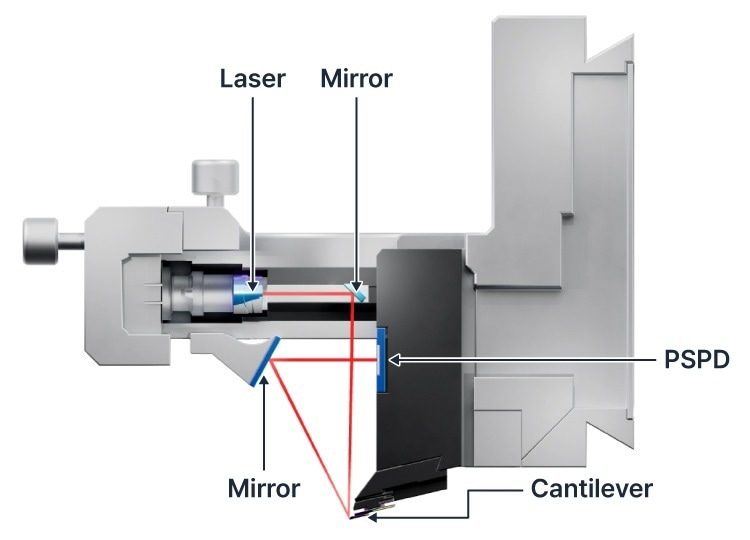
Image Credit: Park Systems
Improved Z Scan Straightness
The Park NX series Z scanner achieves a straightness of 0.1 % throughout its operational range. Off-axis movement remains below 5 nm, even when fully extended to 15 µm.
The scanner's design incorporates a preload spring, kinematic pin, and piezo actuator in a small form factor. This design minimizes drift and ensures precise vertical movement, resulting in dependable nanoscale measurements that are distortion-free.
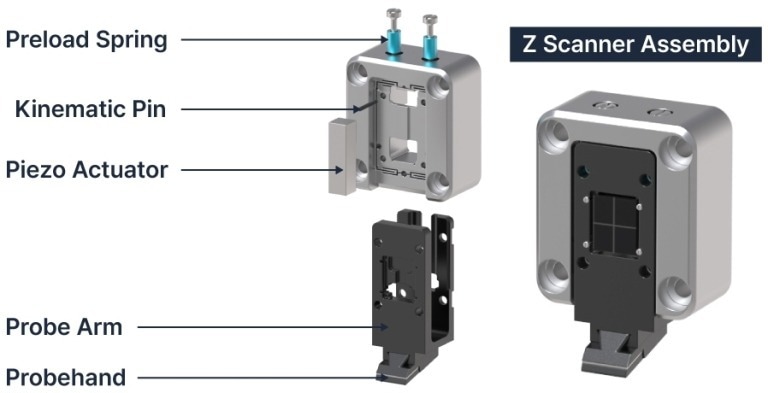
Image Credit: Park Systems
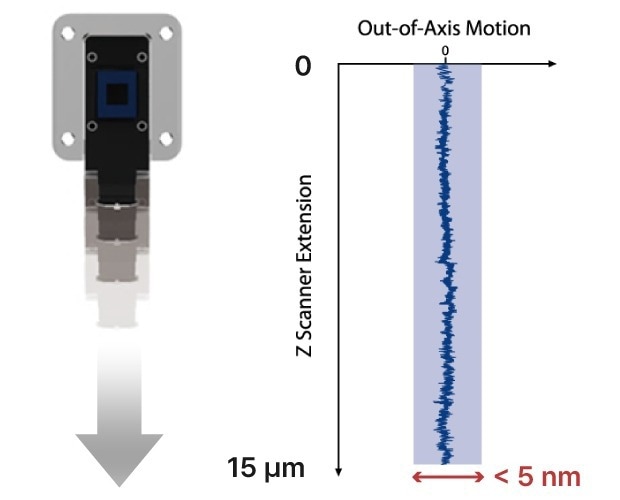
Image Credit: Park Systems
Nanopipette-Based Applications
The NX12 atomic force microscope extends beyond standard AFM imaging to include sophisticated techniques like SICM, SICM-SECM, and SECCM. These methods enable the visualization of nanoscale electrochemical and ionic phenomena, providing researchers with robust capabilities for novel investigations.
Through these applications, users can analyze ion-driven mechanisms, electrochemical behavior, and surface reactivity, in addition to surface topography. This positions the NX12 as a flexible instrument applicable to diverse fields, spanning materials science, biology, and electrochemistry.
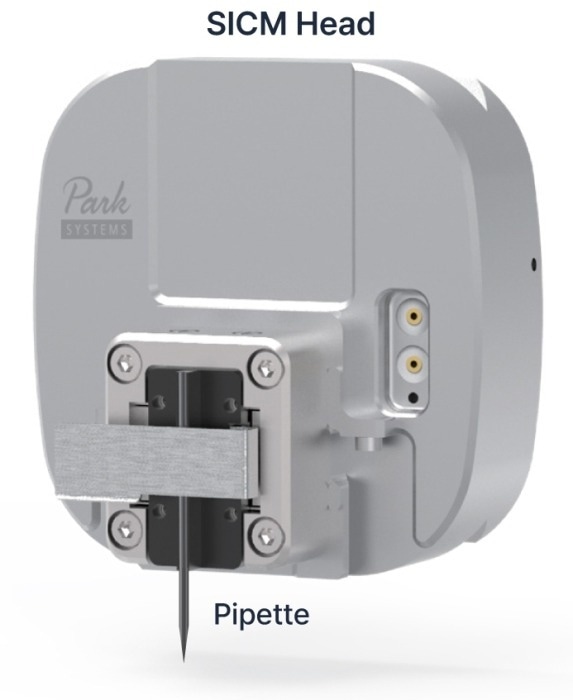
Image Credit: Park Systems
Nanopipette-Based Scanning Probe Microscopy
SICM
Determines the surface topography of soft, liquid-immersed, or biological specimens by tracking ionic current through a nanopipette within a liquid medium.
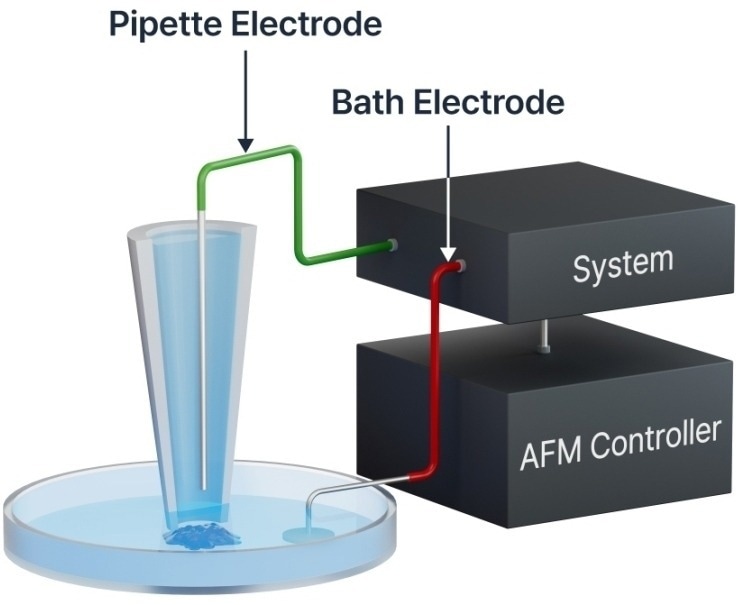
Image Credit: Park Systems
SICM-SECM
Allows concurrent charting of surface topography alongside electrochemical behavior in specific areas within liquid surroundings.
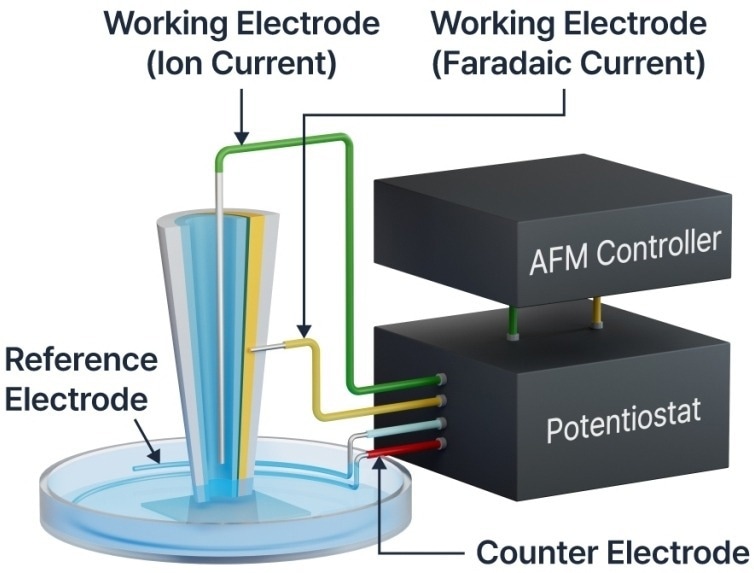
Image Credit: Park Systems
SECCM
Instead of submerging the whole sample, this method uses a nanopipette meniscus to study electrochemical reactions in specific locations.
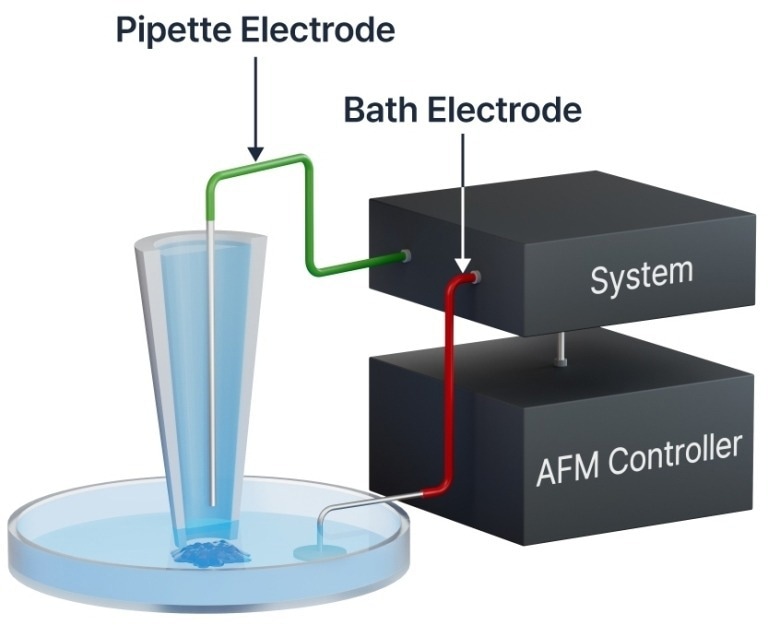
Image Credit: Park Systems
Park AFM Technology
Orthogonal Scan System
Traditional AFMs that use tube scanners are prone to image artifacts due to unwanted vertical movement and interference between axes, particularly when scanning large areas. The NX12, consistent with Park AFMs, uses an innovative orthogonal scanning mechanism based on a flexure design.
This design incorporates a 2D flexure scanner to position the sample in the XY plane, and a discrete 1D flexure scanner to manage the probe's Z-axis position. This decoupled scanner system, incorporating low-noise optical sensors for XY feedback and a very low-noise strain gauge for Z control, provides highly precise, linear scans characterized by minimal vertical displacement and rapid response.
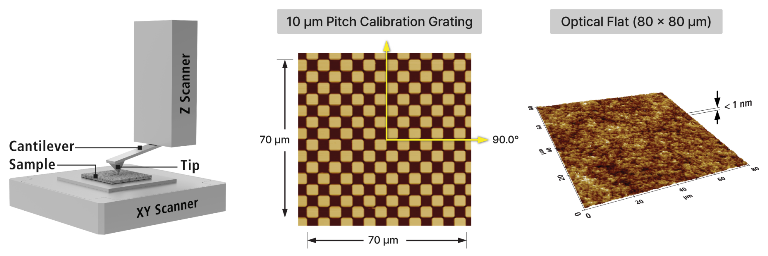
Image Credit: Park Systems
The XY scanner features stacked piezo actuators and flexure hinges to produce a flat, purely horizontal motion, eliminating vertical disturbances. A position sensor provides direct feedback for servo control, thereby reducing positioning inaccuracies throughout the scanning region. This architecture guarantees reliable precision and stability, also when examining sizable samples.
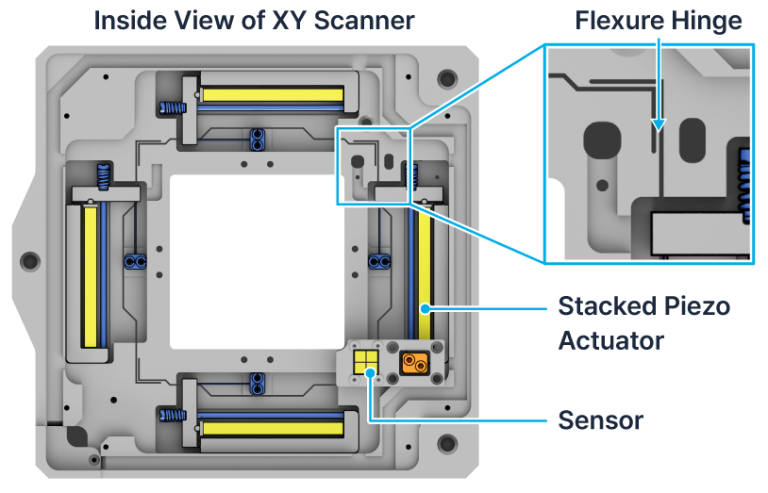
Image Credit: Park Systems
True Non-Contact™ Mode
The NX10 incorporates True Non-contact™ mode, a unique Park Systems technology. This mode images surfaces by sensing the attractive van der Waals force using the AFM tip without making contact.
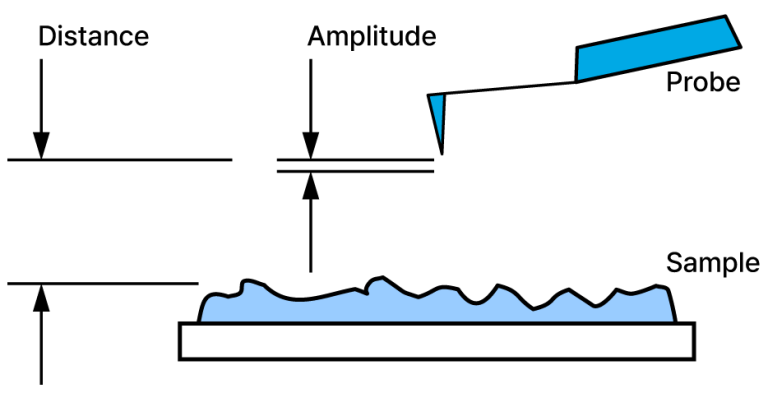
Image Credit: Park Systems
Softwares
Park SmartScan™
Park SmartScan™ is a sophisticated AFM control software. It offers a streamlined, user-friendly interface coupled with robust functionalities. These are engineered to deliver exceptional image clarity and improve the overall user interaction.

Park SmartAnalysis™
Park SmartAnalysis™ is a sophisticated AFM image analysis program designed for rapid image processing, thorough data examination, and streamlined results reporting.

Image Credit: Park Systems
Applications:
|
Tapping Mode
|
True Non-Contact™ Mode
|
SICM
|
Fast PinPoint™ Mode
|
| Giardia in Liquid |
Sunflower Pollen |
Lung Cancer Cell |
Cellguard |
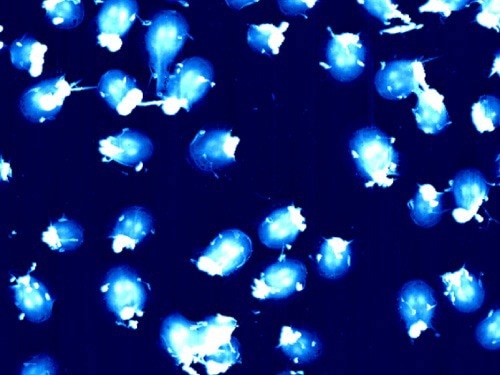 |
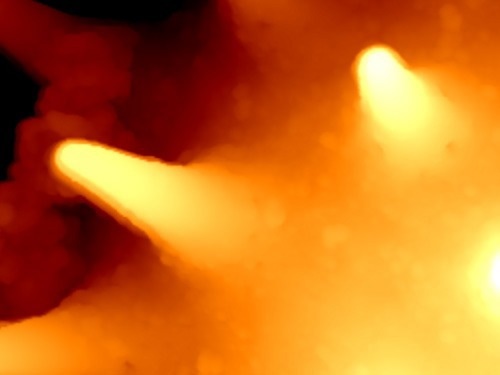 |
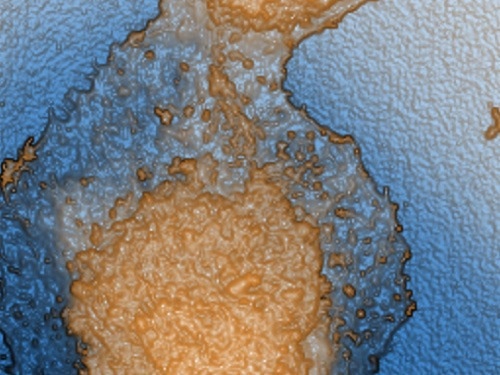 |
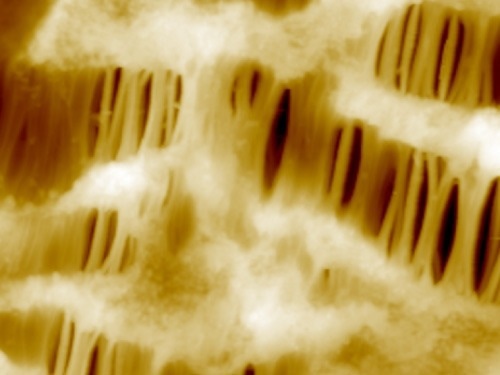 |
Image Credit: Park Systems
All images used are the property of Park Systems and have been licensed for use by AZoNetwork.