This article examines how CRISPR moved beyond the lab in 2025, proving it can safely and effectively edit genes in patients and crops alike. It highlights a turning point where precision, automation, and delivery advances made genome editing ready for real deployment.
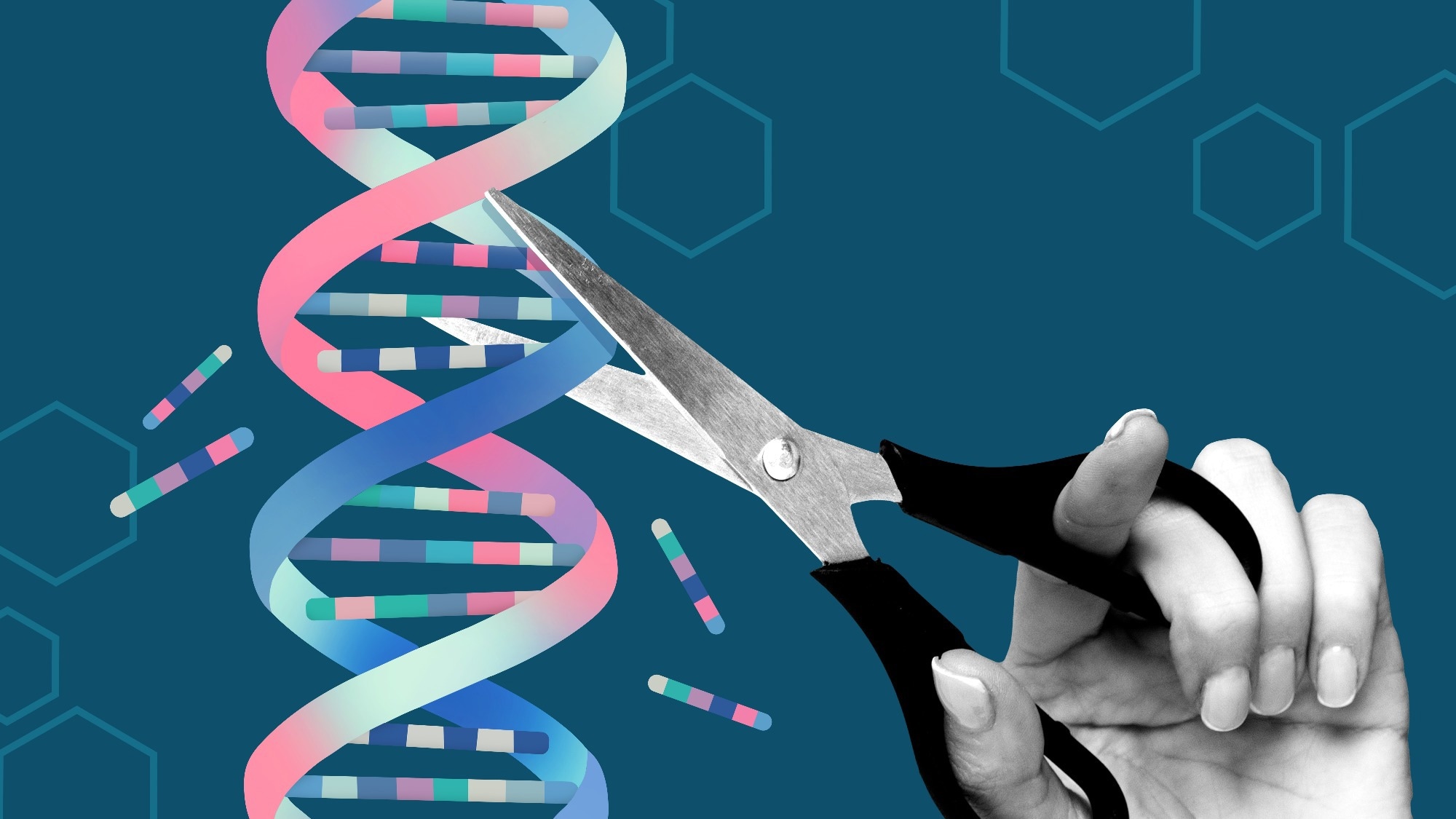
Image credit: Anton Vierietin/Shutterstock.com
What Counts as a Breakthrough In 2025
In this wrap, a “breakthrough” means more than just a clever experiment; it's a step that actually moves genome editing closer to real-world impact. That can take three forms: clear evidence that editing changed the course of disease in a person; a leap in the underlying chemistry, designs, or delivery that makes editing faster, more precise, or easier to produce; or tangible progress outside of medicine, like diagnostics or agriculture, that's ready for practical use.
By that measure, 2025 brought genuine milestones: a personalized bedside therapy, AI copilots that help design edits in real time, steadily maturing precision editors, workable non-viral delivery systems, sharper Clustered Regularly Interspaced Short Palindromic Repeats (CRISPR) diagnostics, and crop editing aimed at surviving climate stress.
Together, these advances show a field shifting its focus from flashy firsts to building tools that are durable, safe, and scalable.1,2,3,6
Want to learn more about 2025 CRISPR breakthroughs? Download your PDF copy now!
Patient Impact: First-In-Human and Personalized Edits
The year’s headline was a personalized, base-editing–based in vivo CRISPR therapy for an infant with carbamoyl phosphate synthetase 1 (CPS1) deficiency, reported jointly by the Children’s Hospital of Philadelphia and NIH collaborators. The National Institutes of Health (NIH)-supported team designed a variant-specific editor, completed preclinical qualification, and dosed within months. Early follow-up shows safe administration, metabolic stabilization, and improved nitrogen handling without severe adverse events during early monitoring.
Beyond the powerful clinical narrative, the program provides a workable template for “therapy-for-one”: modular Chemistry, Manufacturing, and Controls (CMC) packages, rapid on-target and off-target qualification, and a regulatory pathway that is flexible enough to accommodate individualized guides or editing constructs. What clinicians will look for in the next wave is familiar: durability of edited hepatocytes, functional benefit captured by ammonia control and avoidance of transplant, and safety in the context of possible re-dosing if transient delivery platforms are used.2,4
A Breakthrough in Medicine: Personalized Gene Editing to Save KJ
Video credit: ChildrensHospPhila/Youtube.com
Better Tools: AI, Prime Editors, and Delivery
The year 2025 marked a practical turn from “AI can” to “AI does.” Stanford Medicine’s “CRISPR-GPT” demonstrated a functional AI co-pilot that automates guide design, experiment planning, and off-target triage under human oversight. Deployed in real-world labs, such tools shorten design-build-test cycles and improve traceability, which is useful for productivity and regulatory submissions that require auditable provenance. Expect deeper integration with lab information systems, automated versioning of protocols, and tighter links between in-silico design, robotic execution, and data capture in 2026.3,6
Prime editing moved from promise to playbook. According to Lee, Kweon, and Kim (2025), structural and delivery improvements, such as optimized pegRNAs, Cas9 nickase variants, and nicking strategies, have expanded the therapeutic range of prime editing while reducing off-target events. The practical point is simple: prime editors are no longer novelty instruments; they are becoming default choices when template-free, permanent correction with fewer double-strand breaks can reduce genotoxic risk while maintaining efficacy.5
Non-viral systems, especially lipid nanoparticles (LNPs), have gained ground due to their advantages in transient exposure, manufacturability, and natural liver tropism. A 2025 overview mapped how ionizable lipids, helper lipids, and particle architecture govern endosomal escape, editing efficiency, and tolerability for CRISPR-associated (Cas) messenger RNA, as well as guide or ribonucleoprotein cargo. Hosseini-Kharat et al. confirmed that apolipoprotein E (ApoE) binding directs LNP uptake through LDL receptors, explaining their hepatocyte selectivity and enabling repeat dosing strategies.
The trade-off between the trade space and adeno-associated virus (AAV) is clearer: LNPs appear best suited for hepatic targets and enable potential re-administration; AAV remains useful for certain extrahepatic tissues but faces packaging limitations and pre-existing immunity. Hybrid strategies, such as engineered capsids for targeting, paired with transient editors for safety, are likely to define early 2026 studies.7
Beyond Medicine: Diagnostics And Agriculture
CRISPR-based diagnostics improved single-nucleotide discrimination by tuning guide architecture, effector choice (Cas12/Cas13), and reaction chemistry, while integrating isothermal amplification for speed and simplicity. Kohabir et al. showed that Cas12- and Cas13-based systems now achieve single-nucleotide fidelity suitable for clinical-grade assays, moving from proof-of-concept to regulated validation. The center of gravity shifted from proofs of concept to clinical-grade validation and manufacturability, prerequisites for respiratory panels, sexually transmitted infection testing, and oncology minimal residual disease monitoring.
The remaining hurdles are familiar to in vitro diagnostics: ensuring lot-to-lot reproducibility, maintaining stable supply chains, developing user-friendly workflows, and creating evidence packages suitable for point-of-care or eventual at-home use. Human-factors studies and shelf-life data will determine which assays cross the finish line in 2026.8
CRISPR-Cas9-based crop editing advanced through multiplex, transgene-free strategies that enhanced drought and salinity tolerance by targeting ABA and ethylene response pathways in cereals such as rice, wheat, and maize. The next step is field-scale validation across sites and seasons, along with clear regional guidance for non-transgenic classifications. Given climate volatility and input costs, grower uptake will depend on stacked traits and predictable performance rather than branding. The scientific challenge for 2026 is to translate greenhouse gains into consistent yield and quality under multi-stress conditions without sacrificing the agronomic traits that farmers already rely on.9
Safety, Policy, and Access
Safety demands rigorous off-target assessment and immune-risk control. The United States Food and Drug Administration (FDA) draft guidance for Investigational New Drugs recommends multiple orthogonal off-target assays and evaluation of immunogenicity of editing components and any expressed gene product, with clear mitigation and monitoring plans. Ewaisha and Anderson emphasized the persistent challenge of pre-existing immunity to Cas proteins (notably SpCas9 and SaCas9), calling for ortholog diversification and immune surveillance in both ex vivo and in vivo trials.10
Trials should screen pre-existing and treatment-emergent responses, track biodistribution, and ensure long-term follow-up for late effects. For single-patient (n=1) therapies, variant-specific oversight and patient-level monitoring may be required; human leukocyte antigen (HLA) diversity complicates immune prediction and validation. Access and equity matter: pre-existing antibodies to AAV vectors or CRISPR proteins can limit eligibility; alternative orthologs, delivery routes, or immunomodulation may broaden access while preserving safety.10
Download your PDF copy now!
Conclusions
If 2023-2024 were the years CRISPR took on major diseases, 2025 showed how the field might scale. A personalized infant therapy demonstrated that individualized editing can be both medically and operationally feasible. AI systems began to shrink the design cycle, while prime editing and delivery engineering offered safer and more precise options. CRISPR diagnostics edged closer to commercialization, and crop editing aligned with climate needs.
Together, these highlight the transition from feasibility to manufacturability, with AI, chemistry, and regulation aligning to embed editing into clinical and industrial practice. 3,5,7
The translation test for 2026 is simple to state and hard to meet: persistent function, transparent safety, and processes that are fast and reproducible across sites. Deliver those, and next year’s wrap-up will read less like a festive list and more like a deployment plan.
References
- Lee, S., Rafiq, S., & Kang, S. H. (2025). Nanobiosensors for Single-Molecule Diagnostics: Toward Integration with Super-Resolution Imaging. Biosensors. 15(10). DOI:10.3390/bios15100705, https://www.mdpi.com/2079-6374/15/10/705
- Musunuru, K., Grandinette, S. A., Wang, X., Hudson, T. R., Briseno, K., Berry, A. M., Hacker, J. L., Hsu, A., Silverstein, R. A., Hille, L. T., Ogul, A. N., Robinson-Garvin, N. A., Small, J. C., McCague, S., Burke, S. M., Wright, C. M., Bick, S., Indurthi, V., Sharma, S., Jepperson, M., Vakulskas, C. A., Collingwood, M., Keogh, K., Jacobi, A., Sturgeon, M., Brommel, C., Schmaljohn, E., Kurgan, G., Osborne, T., Zhang, H., Kinney, K., Rettig, G., Barbosa, C. J., Semple, S. C., Tam, Y. K., Lutz, C., George, L. A., Kleinstiver, B. P., Liu, D. R., Ng, K., Kassim, S. H., Giannikopoulos, P., Alameh, M.-G., Urnov, F. D., & Ahrens-Nicklas, R. C. (2025). Patient-specific in vivo gene editing to treat a rare genetic disease. New England Journal of Medicine. 392(22). 2235-2243. DOI:10.1056/NEJMoa2504747, https://www.nejm.org/doi/full/10.1056/NEJMoa2504747
- Kay, C. (2025, September 16). AI-powered CRISPR could lead to faster gene therapies, Stanford Medicine study finds. Stanford Medicine News Center. https://med.stanford.edu/news/all-news/2025/09/ai-crispr-gene-therapy.html
- Children’s Hospital of Philadelphia. (2025, May 15). World’s first patient treated with personalized CRISPR gene editing therapy at Children’s Hospital of Philadelphia [News Release]. https://www.chop.edu/news/worlds-first-patient-treated-personalized-crispr-gene-editing-therapy-childrens-hospital
- Lee, J., Kweon, J., & Kim, Y. (2025). Emerging trends in prime editing for precision genome editing. Experimental & Molecular Medicine. 57. 1381–1391. DOI:10.1038/s12276-025-01463-8, https://www.nature.com/articles/s12276-025-01463-8
- Li, Z., Khan, W.U., Bai, G., Dong, C., Wang, J., Zhang, Y., Wang, C., Zhang, H., Wang, W., Luo, M. & Chen, F. (2025). From Code to Life: The AI‐Driven Revolution in Genome Editing. Advanced Science. 12(30). DOI:10.1002/advs.202417029, https://advanced.onlinelibrary.wiley.com/doi/10.1002/advs.202417029
- Hosseini-Kharat, M., Bremmell, K. E., & Prestidge, C. A. (2025). Why do lipid nanoparticles target the liver? Understanding of biodistribution and liver-specific tropism. Molecular Therapy Methods & Clinical Development. 33(1). DOI:10.1016/j.omtm.2025.101436, https://www.cell.com/molecular-therapy-family/methods/fulltext/S2329-0501(25)00031-2
- Kohabir, K. A. V., Sistermans, E. A., & Wolthuis, R. M. F. (2025). Recent advances in CRISPR-based single-nucleotide fidelity diagnostics. Communications Medicine. 5(1). DOI:10.1038/s43856-025-00933-4, https://www.nature.com/articles/s43856-025-00933-4
- Sami, A., Xue, Z., Tazein, S., Arshad, A., He Zhu, Z., Ping Chen, Y., Hong, Y., Tian Zhu, X & Jin Zhou, K. (2021). CRISPR–Cas9-based genetic engineering for crop improvement under drought stress. Bioengineered. 12(1). 5814-5829. DOI:10.1080/21655979.2021.1969831, https://www.tandfonline.com/doi/full/10.1080/21655979.2021.1969831
- Ewaisha, R., & Anderson, K. S. (2023). Immunogenicity of CRISPR therapeutics - Critical considerations for clinical translation. Frontiers in Bioengineering and Biotechnology. 11. DOI:10.3389/fbioe.2023.1138596, https://www.frontiersin.org/journals/bioengineering-and-biotechnology/articles/10.3389/fbioe.2023.1138596/full
Last Updated: Dec 31, 2025