A team of biologists from Heinrich Heine University Düsseldorf (HHU), along with researchers from Bochum and Paris, has uncovered a genetic component underlying intricate social behaviors in bees. Their research pinpointed a genetic element responsible for the begging behavior of male bees, a crucial element in their social food-sharing interactions. The study is published in the journal Nature Communications.
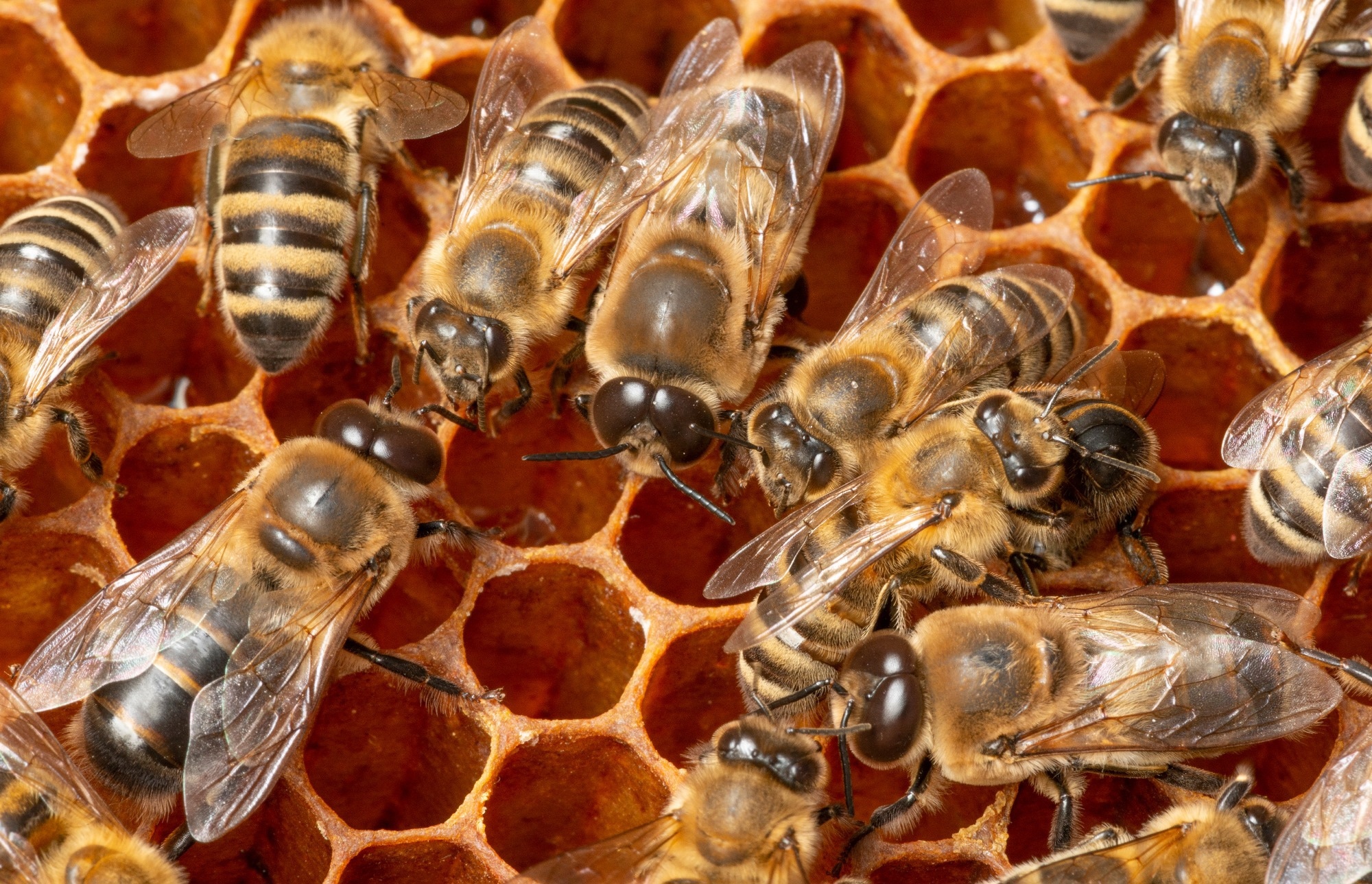 Image credit: Kuttelvaserova Stuchelova/Shutterstock.com
Male bees, also known as "drones," face challenges in acquiring vital proteins. This is because they cannot digest pollen, the primary protein source for bees. To prevent starvation, they rely on worker bees to feed them a pre-digested food that the workers create from pollen. However, to get this paste, the drones must persuade workers to give the food by exhibiting a set of behaviors.
Such cooperative behavior is a complex matter in the animal kingdom, as it requires close coordination between social partners. In our research, we ask ourselves what is required to orchestrate this interaction.
Dr. Martin Beye, Professor, Institute of Evolutionary Genetics, HHU
Professor Beye's research team studied the genetic and neural foundations of cooperative behavior in bees. The biologists looked for regulators that shape the male honeybee's brain during development, enabling the insects to exhibit their inherent social behavior for food sharing.
The scientists found that the behavioral interactions required for food transfer are linked to a transcription factor known as the "Fruitless" or "Fru" protein. A transcription factor is a protein that can activate or deactivate numerous other genes within the genome. This factor is only active in male bees.
Employing genetic technologies (CRISPR-Cas9), the researchers inserted a gene that codes for a green fluorescent protein into the Fru gene. This allowed them to mark the cells where the transcription factor is active.
We detected it in neurons in the nervous system, which process sensory information and are used for decision-making. From this, we concluded that Fru can determine the innate behavior of males.
Dr. Sven Köhnen, Study Lead Author, HHU
Fru generally impacts a neural network of approximately 1,800 neurons, which is strongly associated with collaborative behavior.
The team subsequently generated what are known as knockout mutants, deactivating the Fru transcription factor. The researchers affixed QR codes to the mutant drones and monitored their actions using an automated camera system developed in Düsseldorf.
Köhnen adds, “The decision-making behavior of these bees was disrupted. They were unable to approach their conspecifics properly, begged for food less frequently, and interacted in such a way that they received less food.”
Co-author and doctoral student Pia Ulbricht notes: “However, other typical behaviors of the drones were not affected. Only in the context of food intake did the knockout mutants behave conspicuously.”
The mutants' odor profiles were also indistinguishable. Individual odors are determined by the body's hydrocarbons, which are crucial for animal interaction. The olfactory center, where odors are processed, was also unchanged.
Our study shows that these cooperative behaviors are specified by a genetic programme that has been newly formed in the course of evolution. This program defines the neural controls, which determine whether and for how long the behavior sequence is executed based on perceived sensory information. Such mechanisms enable the necessary behavioral adaptations to social partners.
Dr. Martin Beye, Professor, Institute of Evolutionary Genetics, HHU
Source:
Journal reference:
Köhnen, S., et al. (2025) The fru gene specifies male cooperative behaviors in honeybee colonies. Nature Communications. DOI: 10.1038/s41467-025-67392-2. https://www.nature.com/articles/s41467-025-67392-2.
 Scientists Discover How Brain Cells Overcome the Effects of a Disease-Causing Genetic Deletion