This article examines why endosomal escape remains the central bottleneck in oligonucleotide therapeutics and how peptide-based carriers are engineered to overcome it. By integrating mechanistic, experimental, and design insights, it clarifies how peptides enable cytosolic delivery and guide next-generation drug platforms.
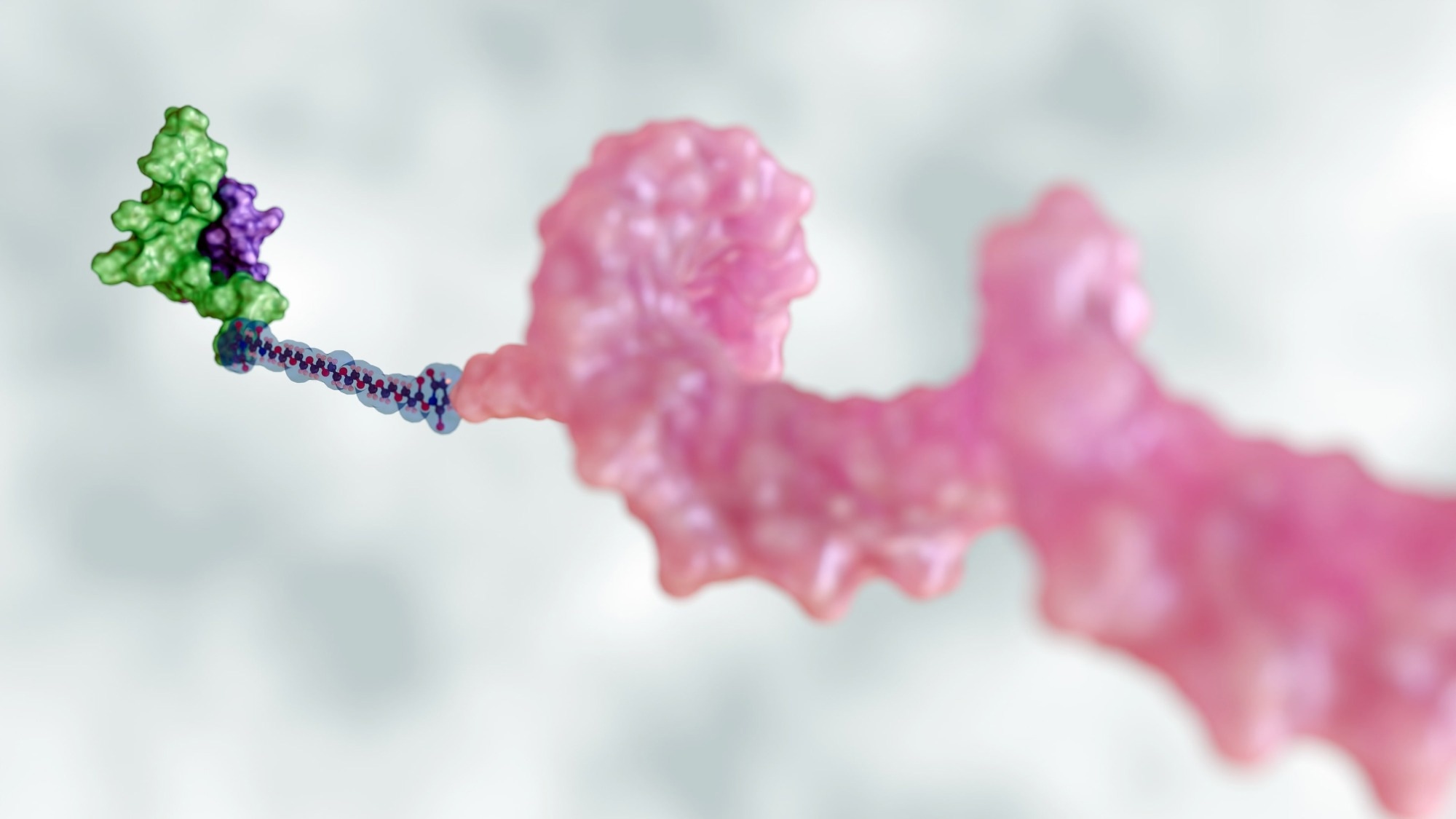 Image credit: Love Employee/Shutterstock.com
The clinical potential of therapeutic oligonucleotides has expanded rapidly over the past decade. These synthetically modified nucleic acid agents enable sequence-specific regulation of gene expression, allowing the targeting of disease-causing genes that have been historically difficult to reach with conventional drugs.
A fundamental biological bottleneck remains: endosomal escape. Peptide-based carriers are being engineered to overcome this barrier, with recent mechanistic studies revealing how these approaches can enhance cytosolic delivery while also underscoring persistent efficiency limitations.1
This article reviews why endosomal escape is a major challenge, how peptide-based carriers aid intracellular access of oligonucleotides, and experimental insights guiding the design of next-generation therapeutic platforms.
Endosomal Escape in Oligonucleotide Delivery
Therapeutic oligonucleotides are large, polyanionic molecules that cannot cross cell membranes by simple diffusion. They are internalized predominantly via endocytosis, in which the plasma membrane invaginates to form vesicles that traffic cargo, before eventual fusion with lysosomes.1
Along this pathway, the endosomal membrane acts as a lipid bilayer barrier, limiting cytosolic availability. Most internalized cargo is retained, degraded, or recycled, with quantitative imaging and modeling studies suggesting that, in vivo, less than 1–2 % of internalized oligonucleotides reach the cytosol or nucleus to exert biological activity.1
Recent stochastic and computational analyses further indicate that endosomal escape occurs as rare, probabilistic release events rather than a continuous process, with substantial cell-to-cell variability even within the same population.12
This makes endosomal escape a critical mechanistic challenge and highlights the need for strategies that improve cytosolic access of oligonucleotides.
Need to save this read for later? Download your PDF copy here.
Mechanistic Principles of Peptide-Based Carriers
Peptide-based delivery systems have been developed to overcome intracellular barriers that limit the cytosolic delivery of oligonucleotide therapeutics.
By combining defined structural features with environmentally responsive behavior, these systems can be tuned to facilitate endosomal escape and promote cytosolic access. Integrating distinct functional elements demonstrates that peptide organization can be designed to optimize intracellular delivery performance, although establishing direct quantitative enhancement of endosomal escape remains difficult in many systems.2
Recent experimental studies have shown that peptide properties, including pH-sensitive conformational switching, charge distribution, amphipathicity, and transition pH profiles, govern interactions with endosomal membranes.3
These interactions modulate both the efficiency and kinetics of cytosolic cargo release. By carefully regulating these characteristics, peptides can achieve membrane perturbation while minimizing cytotoxicity, enabling spatially controlled cargo release along the endosomal maturation pathway.
Notably, de novo designed pH-responsive peptides have been shown to self-assemble into defined nanoscale pores (2–10 nm) within acidified endosomal membranes, directly enabling macromolecular escape rather than relying on indirect osmotic or fusion-based mechanisms.3
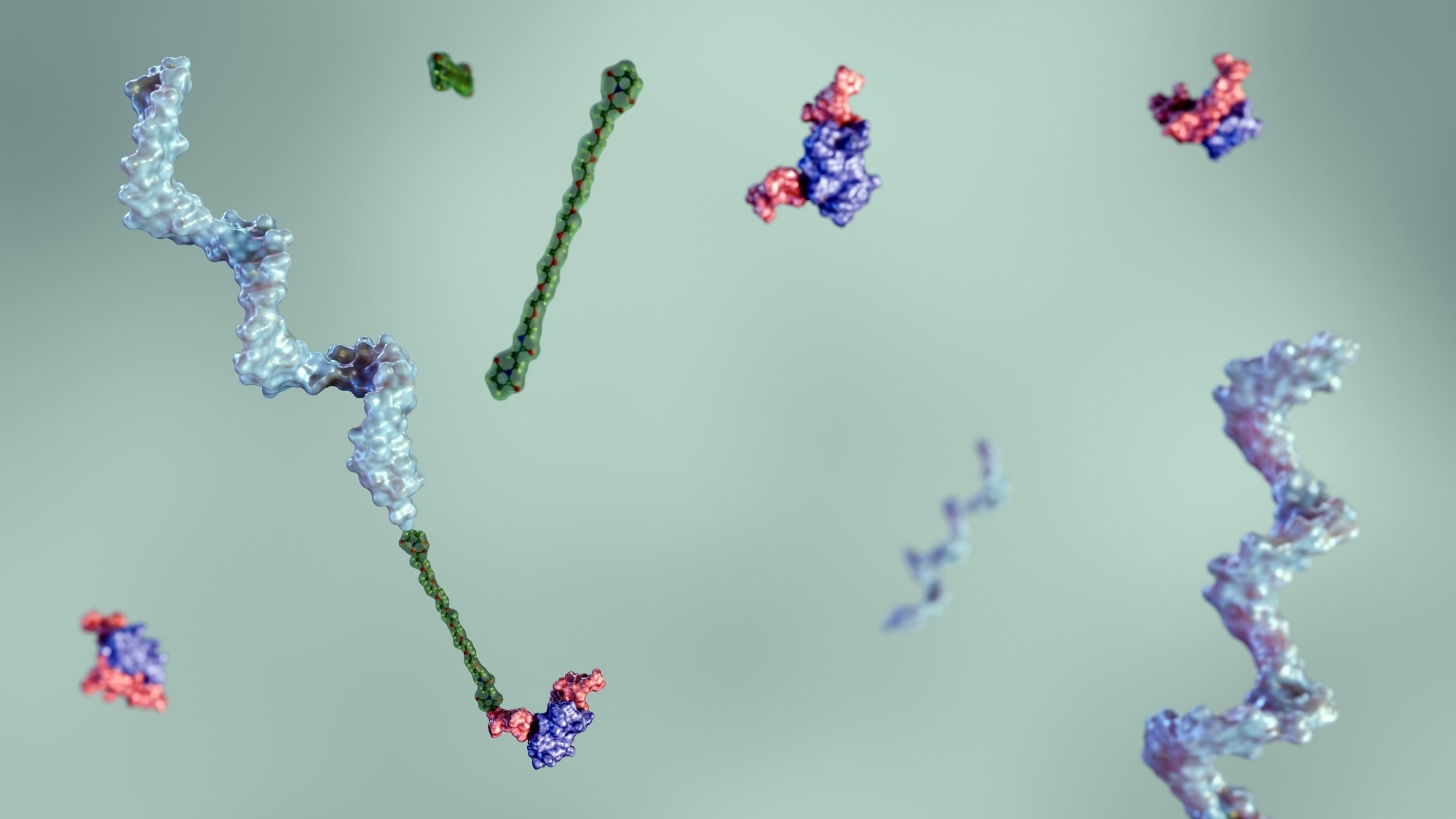 Image credit: Love Employee/Shutterstock.com
Peptide-Based Carriers: Classes and Mechanisms
Among peptide-based delivery systems, cell-penetrating peptides (CPPs) are short, often cationic sequences that enhance cellular uptake of cargoes, including oligonucleotides, through interactions with membranes and endocytic pathways.4
Examples such as TAT, penetratin, and arginine-rich sequences have been extensively studied, though multiple comparative reviews emphasize that increased uptake does not necessarily correlate with efficient endosomal escape.10
To further enhance delivery, fusogenic or membrane-active modules can be incorporated, which respond to endosomal acidification by promoting membrane destabilization. These peptides typically adopt α-helical structures that insert into and perturb the endosomal lipid bilayer. Representative motifs include INF7, LAH4, and hemagglutinin-derived sequences.2
Comparative analyses indicate that peptide-mediated endosomal escape efficiencies remain low (often below ~3 %), similar to those observed for lipid nanoparticles, reinforcing the need for mechanism-guided optimization rather than empirical uptake enhancement alone.10
Histidine-enriched peptides provide an alternative mechanism. Protonation of histidine imidazole side chains under acidic endosomal conditions can promote osmotic imbalance, potentially contributing to vesicle destabilization via the proton sponge effect, although its quantitative contribution remains debated.5
Multidomain peptide carriers integrate complementary functional elements within a single assembly, such as RNA-binding motifs and endosomolytic sequences, to improve intracellular delivery. Such architectures can enhance cargo protection and promote endosomal membrane perturbation, though balancing efficacy and toxicity remains a key design constraint.6
Recent hybrid designs combining peptide vectors with inorganic, polymeric, or cell-mediated platforms further extend delivery capabilities by leveraging complementary mechanisms such as receptor-mediated targeting, enhanced stability, and cooperative endosomal escape.13
Balancing Efficacy, Toxicity, and Delivery Efficiency
To enhance endosomal escape while minimizing cytotoxicity, pH-triggered mechanisms confine peptide–membrane interactions to acidic endosomes. Peptides remain largely inert at neutral pH but become membrane-active under acidic conditions.7
In addition, modular architectures that separate cargo binding, targeting, and endosomal escape allow each step to be optimized independently, improving safety margins and design flexibility.7
Stability enhancements such as D-amino acid incorporation, acylation, or backbone cyclization can increase in vivo peptide half-life and proteolytic resistance without substantially increasing immunogenicity.8
Emerging Strategies for Next-Generation Peptide-Based Delivery
Although existing strategies have improved efficiency and safety, endosomal entrapment continues to limit cytosolic bioavailability. Future efforts emphasize mechanistic understanding, quantitative modeling, and direct measurement of endosomal escape events.10
Advanced imaging combined with stochastic and Bayesian modeling frameworks now enables direct quantification of individual endosomal escape events over time, providing predictive insights into how peptide design parameters influence cytosolic delivery probability.12
Machine learning and computational design approaches, such as explainable predictive models, are emerging as tools to accelerate peptide optimization by identifying sequence features correlated with cellular uptake and endosomal interaction.11
Escaping the Endosome: The Road Ahead
Endosomal escape remains a defining limitation in the therapeutic application of oligonucleotides. Peptide-based carriers offer versatile design opportunities, but current evidence indicates that efficient, controllable, and scalable endosomal escape remains an unresolved challenge.10 Continued integration of mechanistic studies, quantitative modeling, and rational peptide design will be essential to realize the full clinical potential of peptide-mediated oligonucleotide delivery.
References and Further Reading
- Mangla, P., Vicentini, Q., & Biscans, A. (2023). Therapeutic Oligonucleotides: An Outlook on Chemical Strategies to Improve Endosomal Trafficking. Cells, 12(18), 2253. DOI:10.3390/cells12182253, https://www.mdpi.com/2073-4409/12/18/2253
- Sun, X., Setrerrahmane, S., Li, C., Hu, J., & Xu, H. (2024). Nucleic acid drugs: recent progress and future perspectives. Signal Transduction and Targeted Therapy, 9, 316. DOI:10.1038/s41392-024-02035-4, https://www.nature.com/articles/s41392-024-02035-4
- Wu, E., Ellis, A., Bell, K., Moss, D. L., Landry, S. J., Hristova, K., & Wimley, W. C. (2024). pH‑Responsive Peptide Nanoparticles Deliver Macromolecules to Cells via Endosomal Membrane Nanoporation. ACS Nano, 18(50), 33922–33936. DOI:10.1021/acsnano.4c07525, https://pubs.acs.org/doi/10.1021/acsnano.4c07525
- Jankowski, A. M., Ensign, M. A., & Maisel, K. (2025). Cell‑penetrating peptides as facilitators of cargo‑specific nanocarrier‑based drug delivery. Nanoscale, 17, 20006–20019. DOI:10.1039/D5NR00617A, https://pubs.rsc.org/cs/content/articlehtml/2025/nr/d5nr00617a
- Timotievich, E. D., Shilovskiy, I. P., & Khaitov, M. R. (2023). Cell‑Penetrating Peptides as Vehicles for Delivery of Therapeutic Nucleic Acids. Mechanisms and Application in Medicine. Biochemistry (Moscow), 88, 1800–1817. DOI:10.1134/S0006297923110111, https://link.springer.com/article/10.1134/S0006297923110111
- Zhang, Y., Qin, L.‑M., Feng, M.‑F., Yu, X., & Wu, Y. (2024). RNA‑binding peptide and endosomal escape‑assisting peptide (L2) improved siRNA delivery by the hexahistidine–metal assembly. Journal of Materials Chemistry B, 12(10309–10319). DOI:10.1039/D4TB01433B, https://pubs.rsc.org/en/content/articlehtml/2024/tb/d4tb01433b
- Grau, M., & Wagner, E. (2024). Strategies and mechanisms for endosomal escape of therapeutic nucleic acids. Current Opinion in Chemical Biology, 81, 102506. DOI:10.1016/j.cbpa.2024.102506, https://www.sciencedirect.com/science/article/pii/S1367593124000826
- Vrbnjak, K., & Sewduth, R. N. (2024). Recent Advances in Peptide Drug Discovery: Novel Strategies and Targeted Protein Degradation. Pharmaceutics, 16(11), 1486. DOI:10.3390/pharmaceutics16111486, https://www.mdpi.com/1999-4923/16/11/1486
- Klipp, A., Burger, M., & Leroux, J.-C. (2023). Get out or die trying: Peptide‑ and protein‑based endosomal escape of RNA therapeutics. Advanced Drug Delivery Reviews, 200, 115047. DOI:10.1016/j.addr.2023.115047, https://www.sciencedirect.com/science/article/pii/S0169409X23003629
- Desai, N., Rana, D., Salave, S., Benival, D., Khunt, D., & Prajapati, B. G. (2024). Achieving Endo/Lysosomal Escape Using Smart Nanosystems for Efficient Cellular Delivery. Molecules, 29(13), 3131. DOI:10.3390/molecules29133131, https://www.mdpi.com/1420-3049/29/13/3131
- Maroni, G., Stojceski, F., Pallante, L., Deriu, M. A., Piga, D., & Grasso, G. (2025). LightCPPgen: An Explainable Machine Learning Pipeline for Rational Design of Cell Penetrating Peptides. International Journal of Antimicrobial Agents, 66(6), 107611, DOI:10.1016/j.ijantimicag.2025.107611, https://www.sciencedirect.com/science/article/pii/S0924857925001669
- Yadav, N., Boulos, J., Alexander‑Bryant, A., & Cook, K. (2025). Stochastic model of siRNA endosomal escape mediated by fusogenic peptides. Mathematical Biosciences, 387, 109476. DOI:10.1016/j.mbs.2025.109476, https://www.sciencedirect.com/science/article/pii/S0025556425001026
- Erdei, E., Deme, R., Balogh, B., & Mandity, I. M. (2025). Cell‑Mediated and Peptide‑Based Delivery Systems: Emerging Frontiers in Targeted Therapeutics. Pharmaceutics, 17(12), 1597. DOI:10.3390/pharmaceutics17121597, https://www.mdpi.com/1999-4923/17/12/1597
- Wang, Z., Zhang, J., Wang, Y., Zhou, J., Jiao, X., Han, M., Zhang, X., Hu, H., Su, R., Zhang, Y., & Qi, W. (2024). Overcoming Endosomal Escape Barriers in Gene Drug Delivery Using De Novo Designed pH‑Responsive Peptides. ACS Nano, 18, 14, 10324–10340. DOI:10.1021/acsnano.4c02400, https://pubs.acs.org/doi/abs/10.1021/acsnano.4c02400
- Allen, R., & Yokota, T. (2024). Endosomal Escape and Nuclear Localization: Critical Barriers for Therapeutic Nucleic Acids. Molecules, 29(24), 5997. DOI:10.3390/molecules29245997, https://www.mdpi.com/1420-3049/29/24/5997
Last Updated: Feb 5, 2026