As the festive season approaches, campaigns like Save the Children’s Christmas Jumper Day remind us of the urgent ambitions of the WHO Immunisation Agenda 2030: to “leave no one behind” by ensuring every person, especially children, benefits from vaccines.1
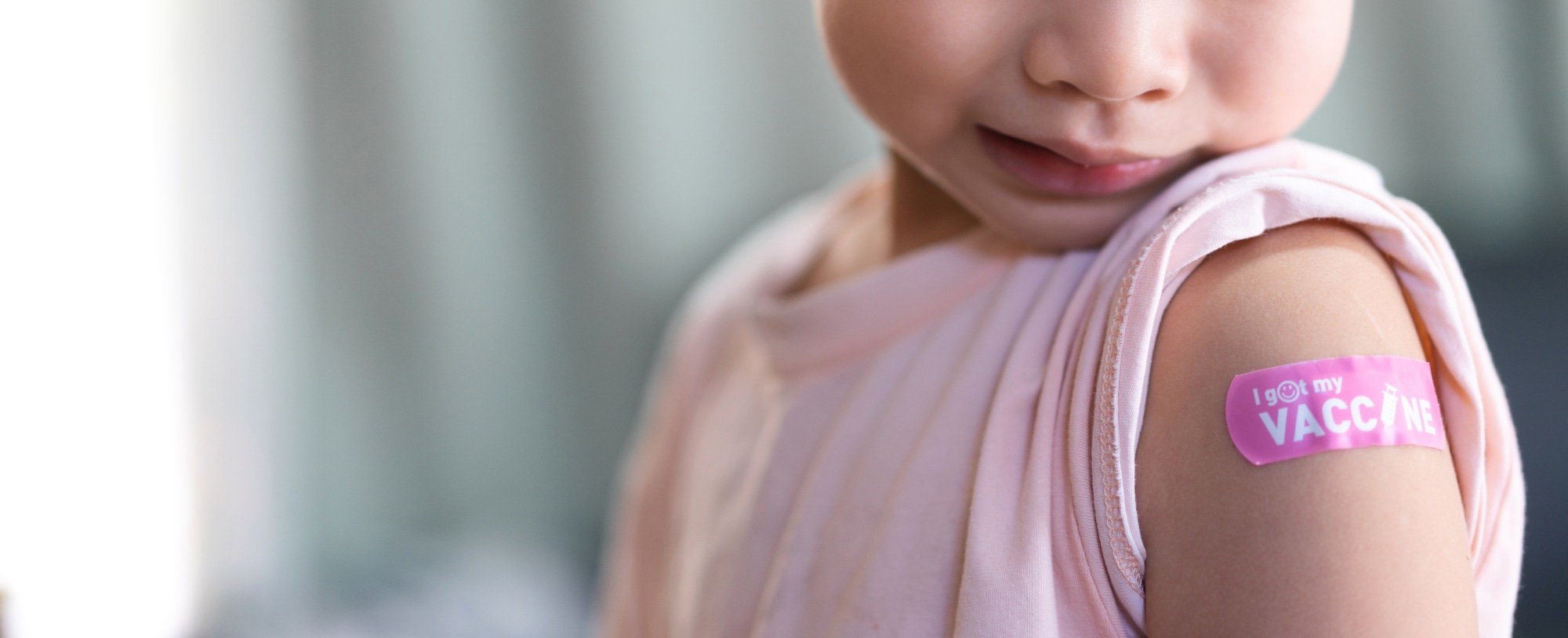 Image Credit: Art_Photo/Shutterstock.com
Immunization is not only essential to primary health care, but it is also a fundamental human right. Yet, many people still have insufficient access to vaccines around the world, including over 20 million infants each year - a gap climate change threatens to widen as extreme weather disrupts supply chains and isolates communities from essential services.1
The Ripple Effect of Vaccine Protection
As one of the most cost-effective tools in public health, routine vaccination protects children and strengthens the resilience of families and societies alike.
A story from a neonatal unit in Massachusetts, US, illustrates why universal access matters.2 In 1995, a premature twin whose health was failing stabilized when a nurse placed her beside her stronger sister in the same incubator. The stronger baby wrapped a small arm around her sibling; vital signs improved almost immediately. This case of the “rescue hug” showed the power of healthy children and social connections in sustaining the lives of others.
Vaccines offer that same collective protection: they help children survive and thrive, keep siblings in school, protect caregivers’ ability to work, and support social stability. Safeguarding one child strengthens many. Today, this ripple effect is more essential than ever as climate change reshapes global health.
Climate Change: A Direct Threat to Vaccine Equity
Rising temperatures and extreme weather pose health risks to vulnerable populations.
Climate change accelerates the spread of pathogens and widens the reach of vector-borne diseases, such as malaria, dengue, and West Nile virus, disproportionately affecting children in poverty.3-5
In Africa, worsening droughts, floods, and cyclones are exacerbating malnutrition, displacement, and outbreaks of infectious diseases.3 In coastal regions, warming seas and decreased salinity have created favorable growth conditions for Vibrio bacteria.
The 2025 report of the Lancet Countdown on health and climate change showed that 85 countries had coastal conditions suitable for Vibrio transmission in 2024, placing 1.68 billion people within 100 km of exposed waters and contributing to a record 722,780 global vibriosis cases4
These risks intensify as health systems struggle to respond to unpredictable environmental disruptions. When clinics flood, roads collapse, or electricity fails, vaccination programs stall. Those who need protection most are often the least able to receive it, particularly young children with developing immune systems.
Protecting the Cold Chain in a Warming World
Most vaccines must remain between 2 °C and 8 °C, and even brief deviations can reduce efficacy.6
As heatwaves and power disruptions intensify, ensuring vaccine cold chain resilience is vital to prevent costly vaccine wastage and deepening inequalities in access.
Recent development of advanced mRNA vaccines has played a vital role against SARS-CoV-2; however, most approved formulations require storage at −20 °C or −70 °C, limiting availability where ultra-cold infrastructure is scarce.7
Emerging thermostable innovations, such as Lyophilized SARS-CoV-2 mRNA–lipid nanoparticle vaccines, have shown stability for over six months at 25 °C while maintaining immunogenicity in mice, rabbits, and non-human primates.7
Early human data also suggest lyophilized Omicron boosters can elicit strong neutralizing antibody responses, more than 250-fold increases, without severe adverse events.
Although wider validation is still required, these advances hold promise for improving mRNA vaccine access in remote regions despite the warming climate.
Climate-smart logistics innovation is equally vital in protecting planetary and child health.
Solar-powered refrigeration enables safe off-grid storage, while passive cold devices protect doses during outreach.
Cold-chain performance also depends on strict storage-specification standards, including vaccine packaging, humidity control, and stable temperatures, which become harder to maintain as climates grow more volatile.6
Real-time monitoring and AI-enabled logistics using artificial neural network can forecast failures and optimize routing in severe weather, helping ensure timely delivery to remote communities.6,8
Clean-energy solutions are crucial for sustainable logistics, as lower-carbon transport strengthens resilience while reducing emissions.
Sustainable biofuel, such as microalgae-derived aviation fuels developed by the EU-based SusAlgaeFuel consortium, can help support long-distance vaccine distribution while decarbonizing supply chains in the near future.9
Climate-Adapted Health Systems
Science and Technology alone cannot guarantee vaccine equity. Policymakers must address the need to strengthen climate-adapted health systems to withstand climate volatility while delivering medical care.
Climate-resilient infrastructure, dependable supply chains, and strong primary care are essential to keep immunization accessible during emergencies.10
Yet limited funding, insufficient data, and slow policy implementation continue to undermine adaptation in high-burden regions affected by climate change.11
World leaders disregarding the growing body of scientific evidence on health and climate change, often in favor of short-sighted economic and political interests, compound climate threats and exacerbate health risks globally.
The US's withdrawal from WHO may soon reveal its actual costs on a global scale,12 as vaccination is far more effective - and far less costly - than responding to outbreaks once they escalate, protecting stability even as environmental pressures intensify in our interconnected world.
The life sciences sector has a critical role in translating scientific evidence on the impact of climate change into urgent and actionable agendas to aid policymakers in protecting vulnerable populations from worsening climate impacts.
Investment in translational research can accelerate the deployment of practical solutions, from local vaccine production to resilient logistics, while public-private partnerships help ensure innovations reach communities with the greatest need.
Alongside innovation, raising awareness and improving health communication can support faster policy change that recognizes preventive care as essential to climate resilience.
Conclusion: A Global “Rescue Hug” To Every Child
The neonatal twins’ story shows how one child’s strength can sustain another. Vaccination delivers that principle at scale: every protected child uplifts families, communities, and societies.
Climate change is accelerating challenges, but also innovation and solidarity.
With science, technology, policymaking, and compassion aligned, every child will have access to life-saving vaccines in the rapidly warming world.
In the spirit of WHO’s Immunisation Agenda 2030, global solidarity will help achieve the goal of “Leave No One Behind”.
References and Further Reading
- World Health Organisation. Immunization Agenda 2030. Accessed December 7, 2025. https://www.who.int/teams/immunization-vaccines-and-biologicals/strategies/ia2030
- American Society of Registered Nurses. Nurse Puts Dying Baby Next To Her Twin To Say Final Goodbye. Then She Witnesses A Miracle. 2018. Accessed December 8, 2025. https://www.asrn.org/journal-advanced-practice-nursing/1869-nurse-puts-dying-baby-next-to-her-twin-to-say-final-goodbye-then-she-witnesses-a-miracle.html
- Atwoli L, Erhabor GE, Gbakima AA, et al. COP27 Climate Change Conference: Urgent action needed for Africa and the world. Health SA Gesondheid. 2022;27:2218. doi:10.4102/hsag.v27i0.2218
- Romanello M, Walawender M, Hsu SC, et al. The 2025 report of the Lancet Countdown on health and climate change. The Lancet. 2025;0(0). doi:10.1016/S0140-6736(25)01919-1
- Wiemers P, Graf I, Addo MM, Arck PC, Diemert A. Mothers and mosquitoes: climate change contributes to the spread of vector-borne pathogens posing a substantial threat to pregnant women. Semin Immunopathol. 2025;47(1):25. doi:10.1007/s00281-025-01050-z
- Pambudi NA, Sarifudin A, Gandidi IM, Romadhon R. Vaccine cold chain management and cold storage technology to address the challenges of vaccination programs. Energy Reports. 2022;8:955-972. doi:10.1016/j.egyr.2021.12.039
- Ai L, Li Y, Zhou L, et al. Lyophilized mRNA-lipid nanoparticle vaccines with long-term stability and high antigenicity against SARS-CoV-2. Cell Discov. 2023;9(1):9. doi:10.1038/s41421-022-00517-9
- Lorenc A, Czuba M, Szarata J. Big data analytics and anomaly prediction in the cold chain to supply chain resilience. FME Transactions. 2021;49:315-326. doi:10.5937/fme2102315L
- SusAlgaeFuel. SusAlgaeFuel - Innovative approaches to enable microalgae aviation fuels. SusAlgaeFuel. October 28, 2025. Accessed December 8, 2025. https://www.susalgaefuel.eu/
- Lugten E, Hariharan N. Strengthening Health Systems for Climate Adaptation and Health Security: Key Considerations for Policy and Programming. Health Secur. 2022;20(5):435-439. doi:10.1089/hs.2022.0050
- Ansah EW, Amoadu M, Obeng P, Sarfo JO. Health systems response to climate change adaptation: a scoping review of global evidence. BMC Public Health. 2024;24(1):2015. doi:10.1186/s12889-024-19459-w
- Johns Hopkins Bloomberg School of Public Health. The Consequences of the U.S.’s Withdrawal from the WHO | Johns Hopkins | Bloomberg School of Public Health. January 30, 2025. Accessed December 8, 2025. https://publichealth.jhu.edu/2025/the-consequences-of-the-us-withdrawal-from-the-who
Last Updated: Dec 11, 2025