A study uncovers how gut microbes can reprogram ovarian gene activity in mice, hinting that microbiome shifts may influence reproductive aging and fertility through an unexpected gut–ovary connection.
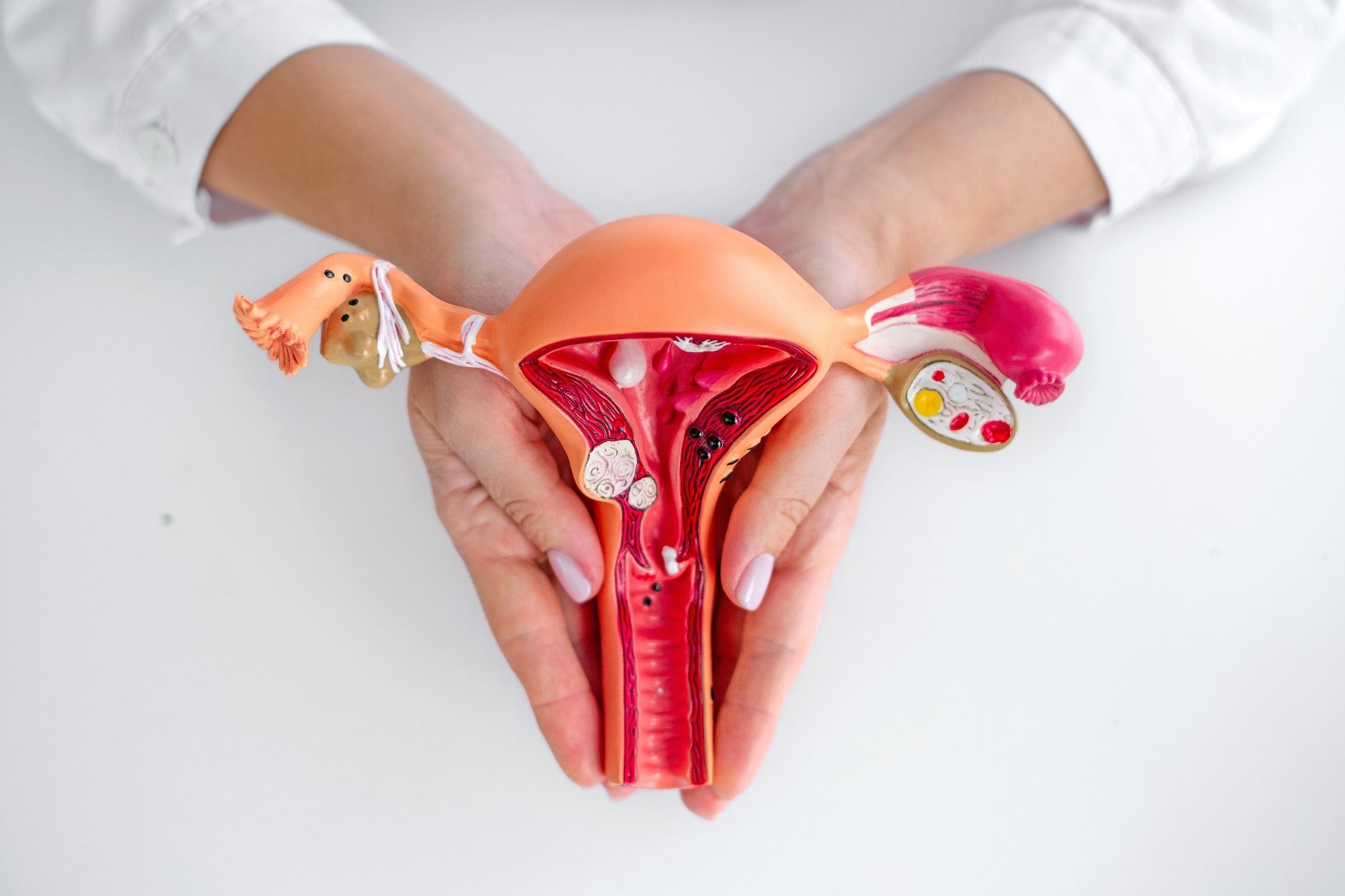 Study: Estropausal gut microbiota transplant improves measures of ovarian function in adult mice. Image credit: Maryna_Auramchuk/Shutterstock.com
A new study in Nature Aging reveals an unexpected gut–ovary link, showing that microbial communities may directly influence female reproductive aging. In mice, ovarian aging tracked with gut microbiome patterns.
Notably, transferring microbes from estropausal females into young adult female recipients reshaped ovarian gene activity, reduced inflammatory signaling, and induced transcriptomic signatures consistent with ovarian rejuvenation. These shifts coincided with improved ovarian health metrics and faster time to first pregnancy, highlighting the gut microbiome as a potential experimental target for preserving aspects of reproductive health in mice.
Gut Microbes Emerge as Players in Ovarian Aging
Age-related ovarian decline not only limits fertility but is also linked to health risks such as osteoporosis and dementia, with earlier menopause tied to a shorter lifespan. However, the biological drivers of ovarian aging remain unclear. Emerging evidence suggests the gut microbiota is a key contributor. Altered microbial profiles are reported in premature ovarian insufficiency (POI) and polycystic ovary syndrome (PCOS), where they correlate with hormone changes.
Animal studies further show that disrupting the microbiome affects estrogen levels, sexual maturation, and ovarian function. Together, these findings highlight a meaningful gut–ovary connection with implications for female reproductive health.
Mouse Models and Sequencing Map Microbiome–Ovary Interactions
In the present study, researchers combined multi-omics profiling with functional experiments to test whether age-related shifts in the gut microbiome influence ovarian aging and reproductive function. The team collected fecal samples from young and aged (“estropausal”) female mice and performed 16S ribosomal ribonucleic acid (rRNA) V3–V4 amplicon sequencing. They compared results with chemically induced ovarian failure models and age-matched males to help distinguish ovarian-specific from broader aging-related effects.
The team characterized alpha diversity and beta diversity in the microbial communities. The Shannon index measured alpha diversity, whereas the Bray–Curtis dissimilarity and Jaccard index assessed beta diversity. Researchers conducted differential abundance testing and predicted functional capacity with phylogenetic investigation of communities by reconstruction of unobserved states 2 (PICRUSt2). Analyses included assessments for estrobolome-related pathways and β-glucuronidase activity.
To model ovarian aging, the researchers used a 4-vinylcyclohexene diepoxide (VCD)- induced follicle depletion model. Female mice received daily intraperitoneal injections of vehicle or VCD (160 mg/kg/day) for 15 days, followed by a 100-day recovery. Subsequently, the team compared microbial profiles and ovarian health metrics.
Furthermore, the researchers performed fecal microbiota transplantation (FMT) to test causality. After antibiotic treatment, young females received microbiota from young or estropausal donors. Researchers confirmed microbial transfer by sequencing and profiled communities using shotgun metagenomics. Ovarian tissues were then subjected to bulk RNA sequencing. The team analyzed gene expression of inflammatory cytokines and estimated immune cell composition using single-cell RNA-seq datasets. They also identified transcription factors via Gene Transcription Regulation Database (GTRD) gene set enrichment analysis.
The researchers assessed cellular senescence using the SenMayo gene set and several biological markers. These included cluster of differentiation 38 (CD38), cyclin-dependent kinase inhibitor 1A (CDKN1A), and interleukin-1 alpha (IL1A). Functional analyses included quantification of menaquinones (MK6–MK13) and untargeted serum metabolomics by liquid chromatography–mass spectrometry (LC–MS). Causal mediation analyses linked microbial features to ovarian transcriptome remodeling.
Distinct Gut Microbes Track Ovarian Aging in Mice
The researchers identified distinct gut microbial signatures linked to ovarian aging. Eestropausal mice showed poorer ovarian health, including fewer follicles, lower anti-Müllerian hormone (AMH) and inhibin A, higher follicle-stimulating hormone (FSH), and lower ovarian health index scores than young mice.
Microbiome analyses showed clear group separation, with estropausal mice exhibiting higher microbial alpha diversity. Nine microbial genera differed in abundance, largely from the Lachnospiraceae family. Functional predictions showed reduced phospholipase activity unique to ovarian aging, alongside vitamin B6 and lysine pathway changes that overlapped with general aging signatures.
Chemically induced ovarian failure also reduced ovarian health scores and reshaped gut microbial communities, supporting the idea that ovarian dysfunction itself can influence the microbiome. Aging males showed milder changes, highlighting sex-specific effects.
FMT confirmed a functional link between the gut and the ovary. Ovarian RNA sequencing identified 2,131 differentially expressed genes. Recipients of estropausal donor microbiota showed reduced inflammatory signaling, lower IL-6 levels, and suppression of aging-related gene programs. Senescence markers also declined, indicating a more youthful ovarian profile.
These molecular improvements translated into functional gains. Recipients of estropausal microbiota had better ovarian health scores, conceived sooner, and showed a non-significant trend toward larger litters. Their gut microbiota and blood metabolite profiles were distinct, including enrichment of vitamin K–related and nicotinamide adenine dinucleotide (NAD)–supporting pathways. Causal mediation analyses identified microbes statistically linked to ovarian gene expression changes, strengthening evidence that gut microbes can influence ovarian health and reproductive function in mice.
Gut Microbiome Manipulation May Influence Reproductive Aging Biology
The study provides evidence that modifying the gut microbiome can influence ovarian biology in mice, highlighting a functional gut–ovary axis. Microbial transfer reshaped ovarian gene activity, reduced inflammation, and improved reproductive outcomes, suggesting potential to slow some molecular features of ovarian aging.
Vitamin K2 metabolism and CD38–NAD biology emerged as candidate mechanistic pathways and possible therapeutic targets. However, further research must confirm causal pathways, validate candidate microbes and metabolites, and clarify sex-specific effects. Larger, longer-term studies are needed to determine whether microbiome-based strategies can safely extend reproductive healthspan and whether similar effects occur in humans.
Download your PDF copy by clicking here.
Journal Reference
Kim, M., Wang, J., Pilley, S.E. et al. (2026). Estropausal gut microbiota transplant improves measures of ovarian function in adult mice. Nat Aging. DOI: 10.1038/s43587-026-01069-3. https://www.nature.com/articles/s43587-026-01069-3
 Collective Cell Migration Establishes Tissue Scale Planar Cell Polarity