Integrating multiple layers of molecular data using AI could help researchers identify more effective cancer treatments, uncover mechanisms of drug resistance, and improve therapeutic target selection, according to a review published in Acta Pharmacologica Sinica.
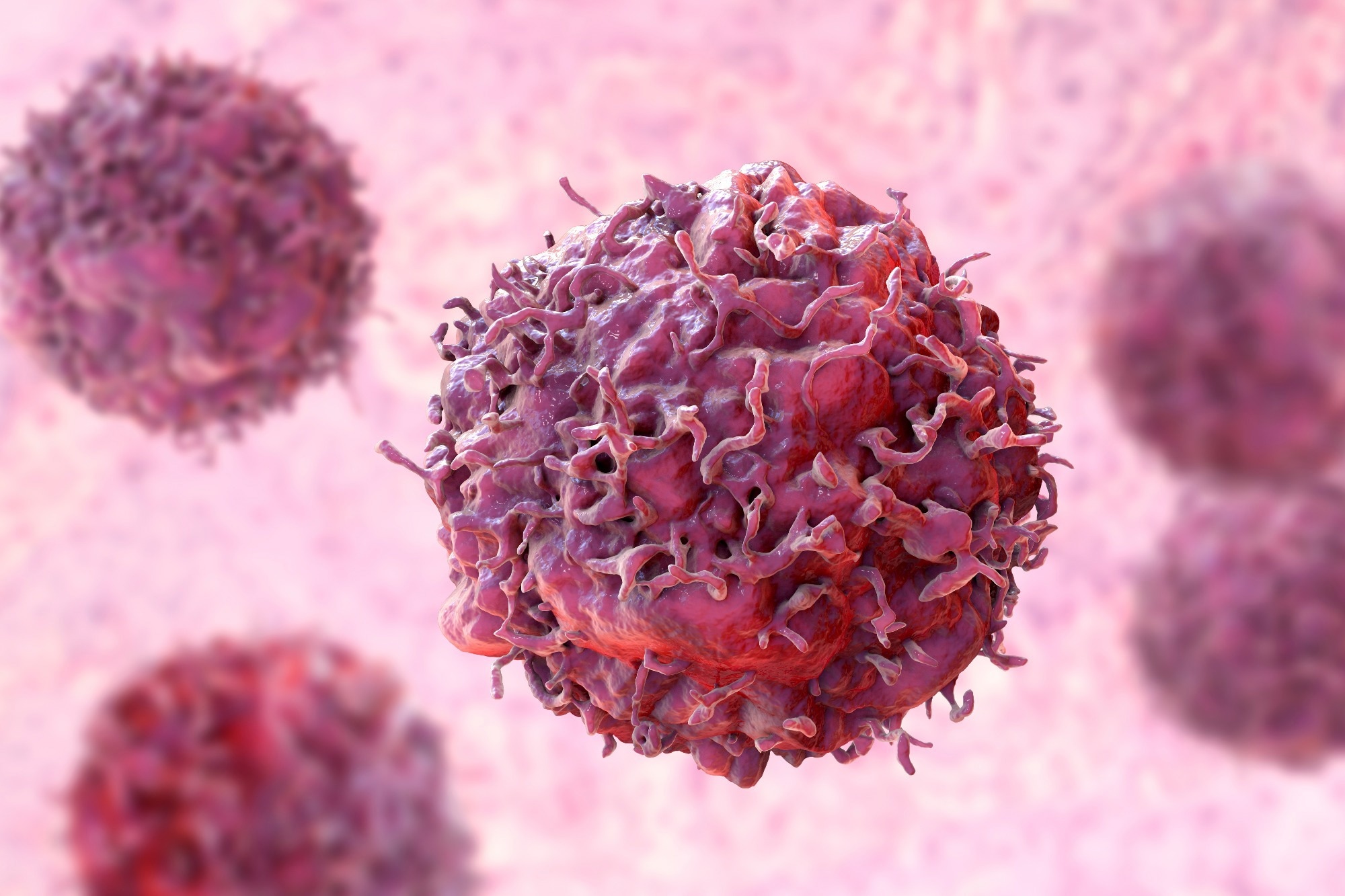 Study: Artificial intelligence aids multi-omics data integration in cancer drug discovery and development: from targets to drug synergy. Image Credit: Kateryna Kon/Shutterstock.com
Their findings highlight the importance of combining complementary biological information while identifying the barriers preventing emerging molecular profiling technologies from entering routine clinical practice.
The Evolution of Multi-Omics in Cancer Research
Advances in high-throughput technologies have laid the foundation for multi-omics, a systems biology approach that integrates genomics, epigenomics, transcriptomics, proteomics, and metabolomics.
Single-cell and spatial profiling technologies have further increased biological resolution, enabling researchers to investigate cellular heterogeneity and the tumor microenvironment. However, the complexity and dimensionality of the resulting datasets present challenges for conventional bioinformatics approaches.
Although previous reviews have explored multi-omics in cancer research, challenges surrounding the integration and interpretation of molecular data persist, and universally applicable computational frameworks remain lacking.
Understanding the Molecular Layers of Cancer
Cancer is characterized by alterations across several interconnected molecular layers. Genomics identifies mutations, copy number variations, and chromosomal rearrangements, supporting the development of targeted therapies such as epidermal growth factor receptor (EGFR) and poly(ADP-ribose) polymerase (PARP) inhibitors. Meanwhile, epigenomics captures modifications that regulate gene expression without altering the underlying DNA sequence.
Download a free copy of this page here!
Transcriptomics quantifies ribonucleic acid (RNA) output, supporting tumor subtyping, investigations into drug resistance, and the identification of potential biomarkers. However, transcript levels do not always accurately predict protein abundance.
Proteomics complements transcriptomic analysis by measuring protein abundance and post-translational modifications, providing more direct insights into the molecules responsible for cellular functions. Metabolomics, in turn, profiles small-molecule metabolites that reflect cellular biochemical activity.
These molecular layers are interdependent. Genomic mutations can alter epigenetic regulation, epigenetic changes can reshape gene expression, and changes in gene expression and protein activity can influence cellular metabolism.
Single-cell multi-omics provides additional insights into cellular heterogeneity associated with treatment resistance and tumor evolution, while spatial omics preserves information about the organization of cells within their native tissue environment.
AI-based integration strategies range from combining datasets directly to more complex graph-based and attention-based approaches, with different methods suited to different biological questions.
Importantly, the review defines multi-omics integration as the joint modeling of two or more molecular layers in a way that explicitly captures relationships between them, distinguishing it from approaches that analyze individual datasets independently.
From Therapeutic Target Discovery to Drug Synergy
Anticancer drug discovery has progressed from empirical screening to targeted therapies and precision-guided interventions. Nevertheless, high clinical attrition rates and variable patient responses remain significant challenges.
Multi-omics offers a systems-level view of cancer biology that could help researchers connect molecular alterations with potential therapeutic opportunities.
The authors emphasize that therapeutic target identification should be treated as a process of accumulating evidence rather than relying on individual analytical techniques.
Population-scale genomic association studies can identify candidate genetic regions, while quantitative trait locus (QTL) analyses, colocalization, and regulatory mapping help establish potential causal relationships between genetic variation and molecular activity.
Pathway, network, single-cell, and spatial analyses can then provide biological context. Pooled CRISPR and RNA interference (RNAi) screens, together with single-cell perturbation profiling, offer functional evidence of a target's biological relevance.
Further pharmacological testing, patient-derived models, normal-tissue profiling, and clinical association data can help determine which targets warrant further therapeutic investigation.
The review cites a human genetics analysis reporting that drugs with genetic support were approximately twice as likely to receive regulatory approval, highlighting the potential value of genetic evidence in therapeutic target selection.
For drug-response prediction, studies using large cancer cell-line datasets indicate that combining complementary molecular data can offer advantages over single-omics approaches.
AI foundation models learn representations of cellular states from transcriptomic data and have shown promise in applications such as cell annotation and drug-response prediction. However, benchmarking studies have found that simpler linear models can match or outperform deep learning approaches when predicting cellular responses to experimental perturbations.
AI-based toxicity prediction currently relies primarily on chemical structures and molecular descriptors. Pharmacogenomic studies provide complementary evidence by linking genetic variants to specific adverse drug reactions, while single-cell and spatial omics offer opportunities to investigate the biological mechanisms underlying toxicity.
For combination therapies, high-throughput screening and computational modeling can help prioritize potentially synergistic drugs. However, assessments of drug synergy depend on the scoring framework used, and retrospective computational findings do not necessarily establish clinical utility.
Bridging Biological Insights and Clinical Utility
Across all four application areas, the evidence points to a consistent conclusion: the benefits of multi-omics integration depend more on the biological complementarity of the datasets than on the number of molecular layers included.
Although emerging molecular profiling technologies offer increasingly detailed insights into cancer biology, greater biological resolution does not necessarily translate into clinical utility. Establishing clinical relevance requires rigorous benchmarking, external validation, and clinically meaningful endpoints.
Persistent limitations include incomplete proteomic and metabolomic datasets, variability between experimental batches, and a lack of standardized benchmarking frameworks for therapeutic target discovery.
Some computational approaches also fail to fully account for spatial and temporal changes in biological systems, while many models demonstrate limited generalizability across institutions and patient populations.
The authors propose several practical considerations for evaluating emerging multi-omics approaches, including the strength of the evidence supporting performance claims, whether molecular layers have been meaningfully integrated, how datasets were partitioned, and whether predictive uncertainty was quantified.
Together, these considerations provide a framework for distinguishing promising experimental findings from those with potential clinical applications.
The Future of Multi-Omics in Precision Oncology
The review highlights three principal findings regarding the application of AI-driven multi-omics integration in cancer drug discovery and development.
First, integrating complementary molecular layers can improve predictive generalizability, but the benefits diminish when datasets contain highly correlated biological information.
Second, single-cell and spatial omics can uncover treatment-resistant cell populations and microenvironmental niches that conventional bulk profiling cannot resolve. However, cost, standardization, and interpretability constraints currently limit their clinical applicability.
Finally, AI foundation models demonstrate strengths in characterizing cellular states and supporting cell annotation, but their superiority over simpler approaches in predicting cellular responses to perturbations remains unproven under stringent evaluation.
Ultimately, multi-omics integration offers opportunities to deepen understanding of cancer biology, improve therapeutic target selection, and investigate mechanisms of drug resistance. Realizing these benefits in clinical practice, however, will depend on biological relevance, rigorous validation, and demonstrable therapeutic utility rather than molecular resolution or computational complexity alone.
Journal Reference
Yang, Y-L. et al. (2026). Artificial intelligence aids multi-omics data integration in cancer drug discovery and development: from targets to drug synergy. Acta Pharmacologica Sinica. DOI: 10.1038/s41401-026-01958-8. https://www.nature.com/articles/s41401-026-01958-8.