Introduction
What Is A Transmissible Cancer?
Known Examples In Nature
How Do These Cancers Spread?
Why Does This Discovery Matter?
Future Research
References and Further Reading
Transmissible cancers are rare clonal lineages in which living cancer cells spread between individual animals and survive as infectious agents. The discovery of transmissible melanoma in brown bullhead catfish extends this form of cancer transmission to fish and freshwater environments for the first time.
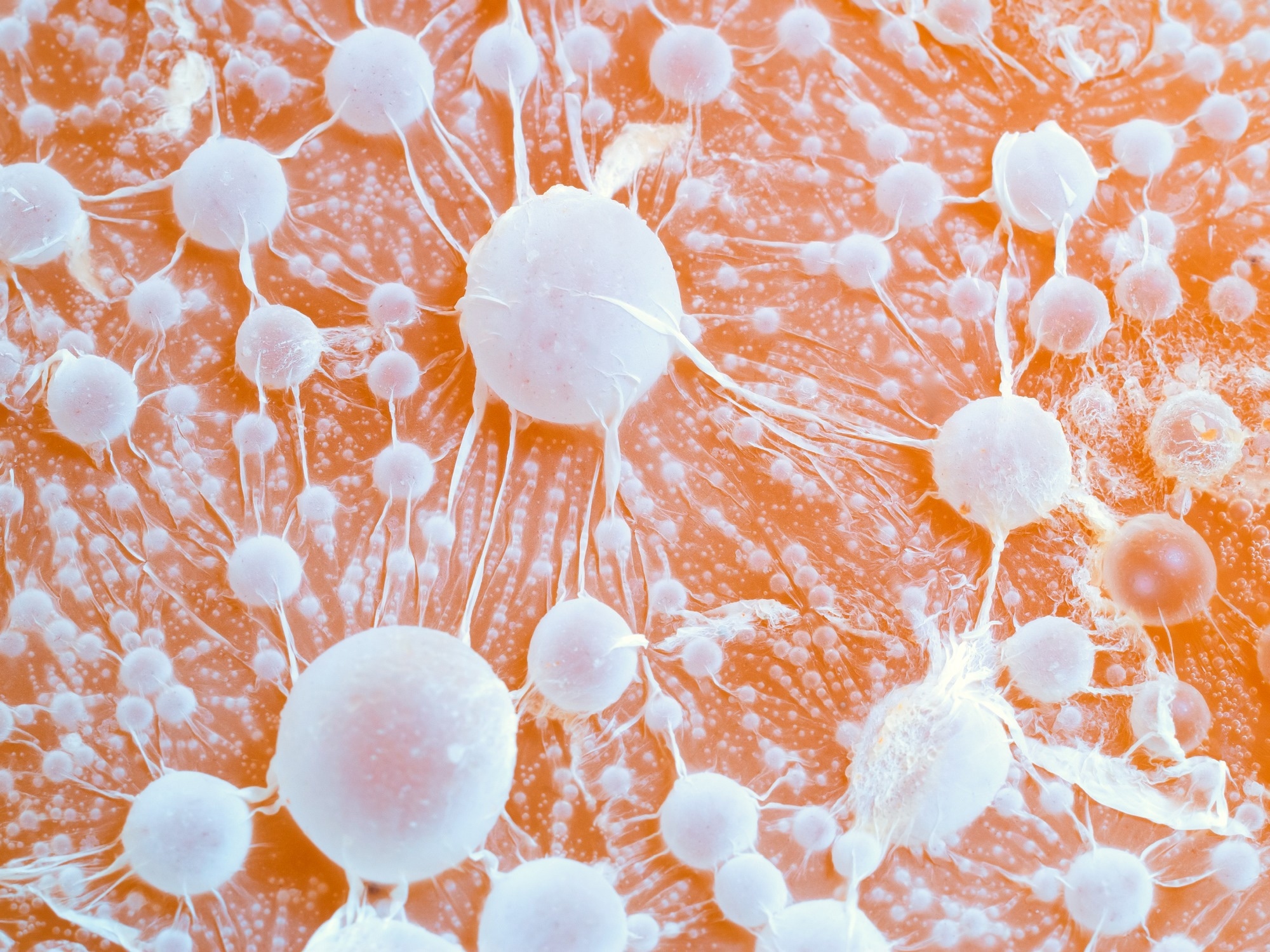 Cancer cells spreading through tissue, illustrating how transmissible cancers can survive as living cell lineages and pass between animal hosts. Image credit: Nemeziya/Shutterstock.com
In 2012, anglers on a lake spanning Vermont and Quebec began noticing something unusual across the bodies of brown bullhead catfish, Ameiurus nebulosus. The dark, raised growths they observed on the fish pointed to one of the rarest phenomena in biology: malignant cells that behave and spread like pathogens.1
Introduction
Recent studies have confirmed that the raised, dark skin growths observed in the brown bullhead catfish A. nebulosus, a bottom-dwelling species native to eastern North America, are a naturally occurring, transmissible form of cancer. Anglers and biologists discovered them in 2012 on Lake Memphremagog, a lake shared by Vermont and Quebec. Subsequent histological examination classified many of these growths as malignant melanoma, occurring in multiple bullhead catfish populations sampled between 2014 and 2020.1,2
What sets this case apart from an ordinary outbreak of skin cancer is genomic evidence indicating that the tumors are not originating independently in each affected fish. Instead, whole-genome sequencing has shown that tumor tissue collected from different individuals, across different sampling years, is more genetically similar to other tumors than to the host fish carrying it.1
This pattern is the hallmark of a transmissible cancer, where a lineage of cancer cells has been passed directly between hosts. This cancer detected in bullhead catfish is the first such cancer ever documented in a fish species, and the first found in a freshwater environment.1
UVM Researchers Discover Transmissible Cancer in Catfish
Video credit: universityofvermont/Youtube.com
What Is A Transmissible Cancer?
Most cancers begin and end with a single individual. A cell in the body accumulates mutations, begins dividing uncontrollably, and forms a tumor that, however dangerous, is genetically bound to its host and dies along with it. A transmissible cancer breaks this rule. Rather than arising anew in each affected animal, it originates once, in a single founding individual, and then survives by moving directly from one body to the next as living cells.3
This process differs fundamentally from the other ways cancer can appear to run in a population. Inherited mutations raise a family's cancer risk by altering the genetic instructions every cell in the body starts with, while an environmental carcinogen or a cancer-causing virus can trigger tumors independently in many individuals exposed to the same trigger.3,4
In none of those scenarios do the tumor cells themselves pass between bodies as they do in transmissible cancer. The cancer cell lineage becomes the infectious agent and transfers through allogeneic grafts to a new host, and then evades that host's immune defenses.1,5
Known Examples In Nature
Before the discovery in brown bullhead, naturally occurring transmissible cancers were known from three broad animal groups: dogs, Tasmanian devils, and bivalve mollusks. The most studied form is the canine transmissible venereal tumor (CTVT), a genital tumor spread among dogs mainly through mating, which arose in a single founder animal thousands of years ago and has since been detected across more than 90 countries.1,3,6,8
Tasmanian devils harbor two separate facial tumor lineages. Devil facial tumor 1 (DFT1) disease, first observed in 1996, spreads through biting during feeding and mating and has driven drastic population declines across the island range of the species. A second, genetically distinct facial tumor lineage, confirmed in 2014 and now designated DFT2, causes largely similar tumors but arose independently from DFT1 in a different founder animal.5,7
Marine bivalves harbor multiple independent lineages of transmissible leukemia. Bivalve transmissible neoplasia (BTN), a leukemia-like disseminated neoplasia, spreads between bivalves as an infectious allograft and has now been identified in at least 10 bivalve species. The first lineage, Mytilus BTN1, was identified in bay mussels (Mytilus trossulus) in British Columbia, Canada. A second, independently arisen lineage, Mytilus BTN2, was later found in M. chilensis and M. edulis, in South America and Europe, respectively. Genetic evidence indicates that Mytilus BTN2 originated in M. trossulus and subsequently crossed species boundaries.1,8-10
The newly described melanoma in brown bullhead catfish now extends this list to fish and to freshwater habitats, for the first time. In initial Lake Memphremagog surveys conducted in 2014–2017, melanistic lesions were observed in 23–37% of brown bullheads at least 200 mm long; surveys from 2014–2020 found lesions only in fish at least 200 mm long. Whole-genome sequencing of tumor mitochondrial and nuclear genomes indicates a single clonal lineage of malignant cells.1,2
How Do These Cancers Spread?
Unlike ordinary tumors, transmissible cancers must physically move from one body to another and, once there, avoid being destroyed by a new, genetically distinct immune system. Transmission mechanisms for these contagious tumors vary by species. Canine venereal tumors pass through direct genital contact during mating, while Tasmanian devils transmit their facial tumors through bites and other physical contact.3,7,8
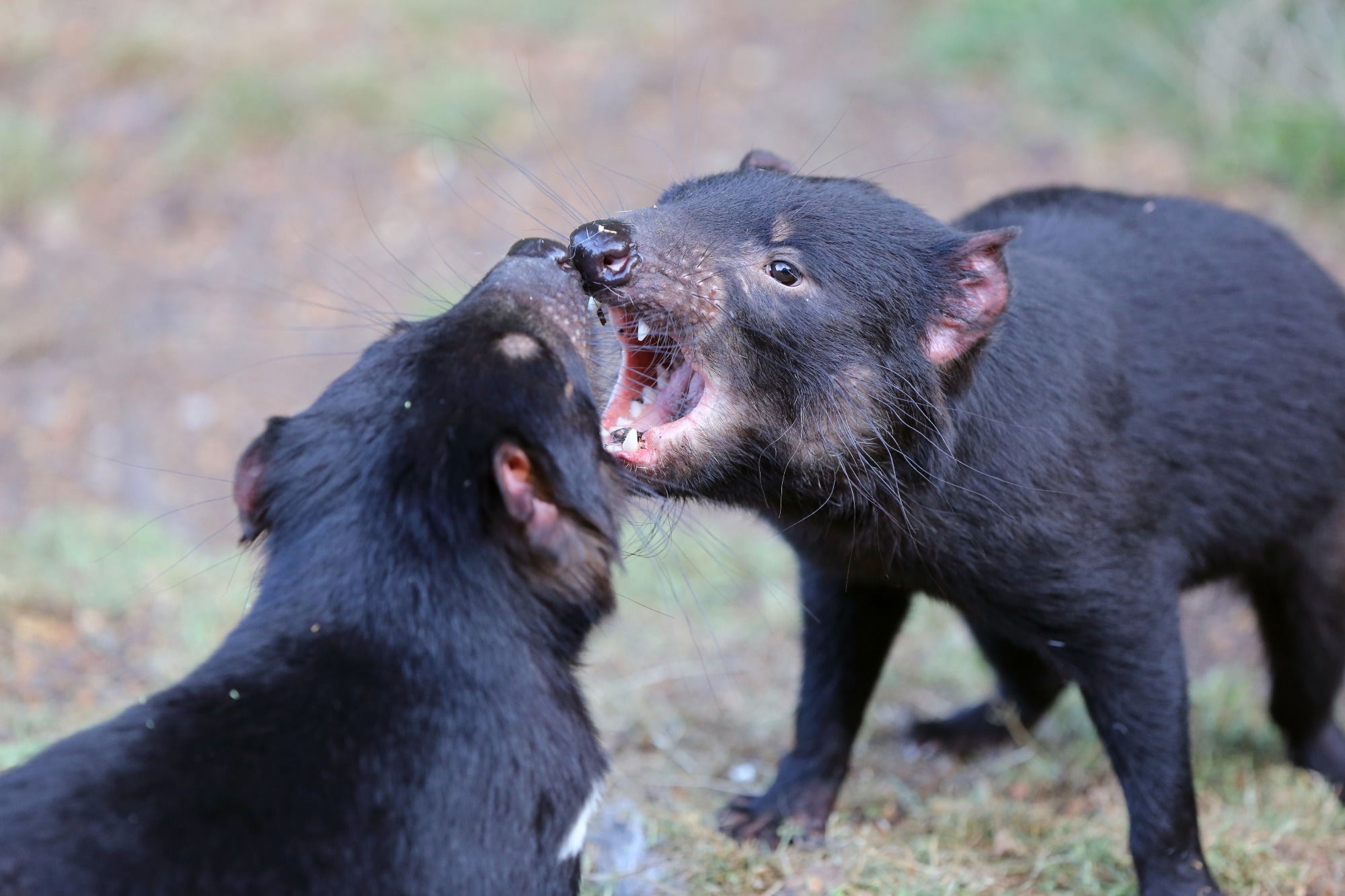 Tasmanian devils frequently bite during social interactions, providing a route for living cancer cells to pass between animals. Image credit: Bernhard Richter/Shutterstock.com
Bivalve cancers are believed to spread by releasing cancer cells into seawater. For brown bullhead catfish, the precise route remains unresolved, though researchers suspect it may involve close contact during spawning aggregations, or possibly transfer of cells through water or sediment, given the bottom-dwelling habits of the species.1,9,10
Moreover, because tumor cells are essentially a foreign tissue graft, a host's immune system would normally reject them. However, documented transmissible cancers appear to sidestep immune rejection through mechanisms such as reduced expression of major histocompatibility complex molecules, which limits the immune system's ability to recognize tumor cells as foreign.3,5
Among all the known individual cancers that arise across all species, very few have become self-sustaining, transmissible lineages. The ability of these transmissible cancers to undergo horizontal transmission and resist host immune rejection has made them an extraordinarily rare evolutionary outcome.6
Why Does This Discovery Matter?
The identification of a transmissible cancer in brown bullhead catfish carries numerous implications. Comparative studies of long-lived transmissible cancer lineages, such as the CTVT, have shown that these clones can accumulate many mutations through neutral genetic drift alone, indicating how cancer genomes behave once freed from the constraints of a single host and can persist for thousands of years. Studying how a tumor lineage persists across generations of hosts also sheds light on the broader relationship between cancer and the immune system.5,6
For wildlife conservation, the stakes are far more severe. DFT1 has caused major population declines in Tasmanian devils, demonstrating that a transmissible cancer can have population-level consequences for a wildlife species. These cases show the importance of genomic surveillance.5,7
Moreover, the clonal and transmissible nature of these cancers would likely have gone undetected if not for the whole-genome sequencing studies that compared tumor and host tissue. In the brown bullhead study, hundreds of thousands of genetic variants were shared among tumors but absent from host fish, while mitochondrial and nuclear analyses independently grouped tumors together rather than with the fish carrying them. Without the genomic sequence data, these cancers might have been mistaken for a series of unrelated, environmentally triggered tumors.1
Future Research
The confirmation of a fourth broad type of naturally occurring transmissible cancer, and the first in a fish species, raises the question of how many more such lineages may exist undetected in wild populations. Given that transmissible cancers have now been documented across mammals, mollusks, and fish, the brown bullhead researchers suggest that transmissible cancers may be more common and ecologically important than previously thought.1
Several questions also remain regarding the melanoma in brown bullhead catfish. Researchers have not yet established the precise mechanism by which tumor cells move between fish, whether through direct contact during spawning, indirect transfer via lake sediment or water, or some other route tied to the species' bottom-dwelling behavior. They also do not yet know the disease's effect on brown bullhead abundance in Lake Memphremagog or how widely the clonal lineage occurs in other North American populations.1
Moreover, elevated levels of arsenic and zinc have been found in the melanistic lesions, along with elevated concentrations of several other metals, and histopathology showed evidence consistent with oxidative damage. These findings suggest chronic environmental exposure may contribute to the initiation or promotion of melanistic lesions. Continued genomic monitoring and broader population sampling will be essential to understand the lineage's origin, geographic distribution, transmission, and long-term ecological impact.1,2
References and Further Reading
- Curd, E. E., Hart, S. F. M., Lubkowitz, J., Tracy, K. M., Milazzo, L., Bodnar, M., Jones, T., Henderson, M. J., Emerson, P., & Dragon, J. A. (2026). Brown bullhead catfish melanoma represents a novel transmissible cancer. Nature. DOI:10.1038/s41586-026-10828-6, https://www.nature.com/articles/s41586-026-10828-6
- Blazer, V. S., Emerson, P., Bodnar, M., Jones, T., Russell, D. R., Pehrson, M., Smith, C. R., Cleveland, D., Henderson, M. J., & Mazik, P. M. (2026). Melanoma and other melanistic lesions in brown bullhead Ameiurus nebulosus from waterbodies in the northeastern United States and Canada: Identification of risk factors. Journal of Fish Diseases. DOI:10.1111/jfd.70207, https://onlinelibrary.wiley.com/doi/10.1111/jfd.70207
- Ostrander, E. A., Davis, B. W., & Ostrander, G. K. (2016). Transmissible Tumors: Breaking the Cancer Paradigm. Trends in Genetics : TIG, 32(1), 1–15. DOI:10.1016/j.tig.2015.10.001, https://www.cell.com/trends/genetics/fulltext/S0168-9525(15)00202-1
- Welsh J. S. (2011). Contagious cancer. The Oncologist, 16(1), 1–4. DOI:10.1634/theoncologist.2010-0301, https://academic.oup.com/oncolo/article/16/1/1/6400721
- Stammnitz, M. R., Coorens, T. H. H., Gori, K. C., Hayes, D., Fu, B., Wang, J., Martin-Herranz, D. E., Alexandrov, L. B., Baez-Ortega, A., Barthorpe, S., Beck, A., Giordano, F., Knowles, G. W., Kwon, Y. M., Hall, G., Price, S., Pye, R. J., Tubio, J. M. C., Siddle, H. V. T., … Murchison, E. P. (2018). The origins and vulnerabilities of two transmissible cancers in Tasmanian devils. Cancer Cell, 33(4), 607–619.e15. DOI:10.1016/j.ccell.2018.03.013, https://www.cell.com/cancer-cell/fulltext/S1535-6108(18)30118-7
- Baez-Ortega, A., Gori, K., Strakova, A., Allen, J. L., Allum, K. M., Bansse-Issa, L., Bhutia, T. N., Bisson, J. L., Briceño, C., Castillo Domracheva, A., Corrigan, A. M., Cran, H. R., Crawford, J. T., Davis, E., de Castro, K. F., B de Nardi, A., de Vos, A. P., Delgadillo Keenan, L., Donelan, E. M., Espinoza Huerta, A. R., … Murchison, E. P. (2019). Somatic evolution and global expansion of an ancient transmissible cancer lineage. Science, 365(6452), eaau9923. DOI:10.1126/science.aau9923, https://www.science.org/doi/10.1126/science.aau9923
- Pye, R. J., Pemberton, D., Tovar, C., Tubio, J. M., Dun, K. A., Fox, S., Darby, J., Hayes, D., Knowles, G. W., Kreiss, A., Siddle, H. V., Swift, K., Lyons, A. B., Murchison, E. P., & Woods, G. M. (2016). A second transmissible cancer in Tasmanian devils. Proceedings of the National Academy of Sciences, 113(2), 374–379. DOI:10.1073/pnas.1519691113, https://www.pnas.org/doi/10.1073/pnas.1519691113
- Metzger, M. J., & Goff, S. P. (2016). A Sixth Modality of Infectious Disease: Contagious Cancer from Devils to Clams and Beyond. PLoS Pathogens, 12(10), e1005904. DOI:10.1371/journal.ppat.1005904, https://journals.plos.org/plospathogens/article?id=10.1371/journal.ppat.1005904
- Yonemitsu, M. A., Giersch, R. M., Polo-Prieto, M., Hammel, M., Simon, A., Cremonte, F., Avilés, F. T., Merino-Véliz, N., Burioli, E. A., Muttray, A. F., Sherry, J., Reinisch, C., Baldwin, S. A., Goff, S. P., Houssin, M., Arriagada, G., Vázquez, N., Bierne, N., & Metzger, M. J. (2019). A single clonal lineage of transmissible cancer identified in two marine mussel species in South America and Europe. eLife, 8, e47788. DOI:10.7554/eLife.47788, https://elifesciences.org/articles/47788
- Giersch, R. M., Sevigny, J. K., Weinandt, S. A., Mayo, C., Garrett, F. E. S., Tindbaek, K., Yonemitsu, M. A., Hart, S. F. M., & Metzger, M. J. (2025). Variation in natural infection outcomes and cancer cell release from soft-shell clams (Mya arenaria) with bivalve transmissible neoplasia. PLoS pathogens, 21(9), e1013537. DOI:10.1371/journal.ppat.1013537, https://journals.plos.org/plospathogens/article?id=10.1371/journal.ppat.1013537
Last Updated: Sep 29, 2026