Transforming Personal Healthcare Through Next-Generation Wearable Biosensors
How Battery-Free Biosensors Work
From Reactive to Proactive Health Monitoring
Emerging Applications of Battery-Free Biosensor Technologies
Conclusions
References and Future Reading
Advances in battery-free biosensors, flexible electronics, and artificial intelligence are reshaping how health data are collected, analyzed, and applied in clinical practice. As these technologies mature, overcoming challenges related to long-term reliability, biocompatibility, data security, and clinical validation will be essential to unlocking their full potential in precision medicine and continuous patient care.
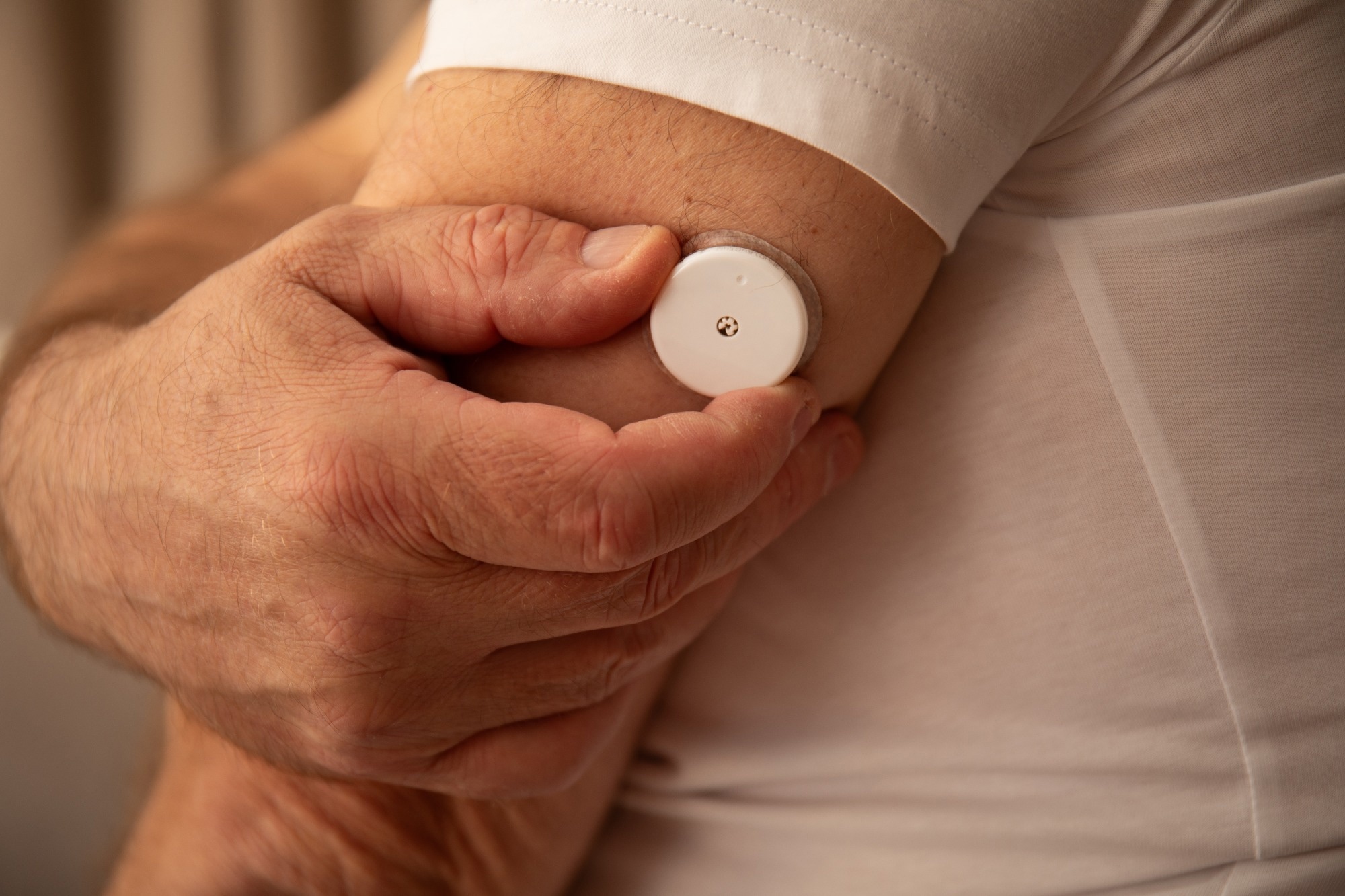 Image credit: ProShine Studio/Shutterstock.com
The emergence of next-generation biosensors is driving the rapid advancement of digital health technologies. Wearable, wireless, and battery-free devices now enable continuous, unobtrusive physiological monitoring, establishing a new benchmark for integrated health data acquisition.
Advances in flexible materials, wireless power transfer, low-power electronics, and artificial intelligence have further accelerated the development of systems capable of continuously monitoring both physiological and biochemical signals in real-world settings. These innovations enhance user comfort and accessibility, while facilitating earlier clinical detection and supporting the development of personalized healthcare solutions.2,4,8
Download your PDF copy now!
Transforming Personal Healthcare Through Next-Generation Wearable Biosensors
Wearable biosensors are non-invasive devices that continuously track physiological signals and biomarkers, providing real-time health data. While early generations improved personal health monitoring, they faced limitations in battery life, device rigidity, and basic data processing.1
Recent technological advances, including microfluidics, nanomaterials, miniaturized sensors, wireless communication modules, flexible electronics, wireless power, and artificial intelligence (AI)-based data analytics, have overcome these setbacks. Incorporating flexible and stretchable substrates such as polydimethylsiloxane (PDMS), hydrogels, graphene, and carbon nanotubes has further improved sensitivity, durability, miniaturization, and the ability to maintain conformal contact with the body. These soft, mechanically compliant materials can also improve skin conformity, reduce motion artifacts, and support prolonged wear without substantially compromising user comfort.2,4,9
These technological advances have enabled biosensors to become more comfortable, adaptive, and capable of advanced data analysis and personalized feedback. Recent advances have also emphasized the importance of mechanical compliance, including flexibility, stretchability, fatigue resistance, adhesion, and tissue-matched elastic properties, to maintain stable sensor performance during prolonged wear while minimizing motion artifacts, tissue irritation, delamination, and device failure.5
Modern wearable biosensors increasingly integrate multiple sensing modalities, allowing simultaneous measurement of physical parameters, alongside biochemical biomarkers obtained from sweat, saliva, tears, wound exudate, or interstitial fluid. Wearable biosensors can now be embedded in clothing, skin patches, watches, and other everyday items, enabling unobtrusive, continuous monitoring of vital signs, including heart rate, body temperature, glucose, and blood oxygen levels.2,5,8,9
By enabling seamless, ubiquitous health monitoring, wearable biosensors minimize the need for clinic visits, support early detection of health conditions, and empower users to make informed decisions about their health. For chronic disease management, these devices facilitate timely interventions and can help reduce hospitalizations and healthcare costs. However, their clinical adoption also depends on robust analytical accuracy, long-term sensor stability, interoperability with healthcare systems, secure management of patient data, and validation across representative patient populations.3,5,8,13
How Battery-Free Biosensors Work
Battery-free biosensors are innovative devices that operate without requiring conventional batteries, instead obtaining energy through wireless power transfer or harvesting energy from their environment. Common methods include radio-frequency identification (RFID), near-field communication (NFC), inductive coupling, far-field radio-frequency power transfer, ultrasound, or energy-scavenging techniques that draw power from sources such as body heat, motion, or ambient light. Selection of the power-transfer strategy depends on the required operating distance, implant depth, power consumption, communication bandwidth, tissue absorption, antenna alignment, and intended wearable or implantable application. By utilizing these energy sources, battery-free biosensors can support long-term operation without an internal electrochemical battery.4,12
These biosensors can monitor a wide range of physiological signals, including heart rate, the electrical activity of the skin, body temperature, and blood oxygen levels, using optical and electrical sensing methods. More advanced models can detect sweat biomarkers, such as glucose, lactate, electrolytes, and cortisol, with enzyme-coated electrodes or selective membranes. Other emerging platforms target hormones, therapeutic drugs, inflammatory biomarkers, proteins, nucleic acids, metabolites, and other clinically relevant analytes in sweat, saliva, tears, wound exudate, and interstitial fluid. Integrated motion sensors can provide measurements of breathing and physical activity, making the devices suitable for a variety of health-monitoring applications.2,9
Specialized materials and components, such as enzymes, antibodies, or nanomaterials, allow the biosensor to selectively detect and respond to target biomarkers, producing measurable electrical or optical signals. Additional biorecognition elements, including aptamers and molecularly imprinted polymers, are expanding the range of detectable biomarkers beyond those measurable using enzyme-based sensing alone. The harvested or wirelessly transferred energy powers the sensor electronics, enabling signal acquisition, processing, and wireless transmission of biological information to external devices.9
After processing, the biosensor transmits data wirelessly to an external device, such as a smartphone, computer, wearable relay, or dedicated reader. This eliminates the need for an internal battery or frequent battery maintenance, making these systems attractive for continuous health monitoring and situations where replacement or recharging would be impractical. For implantable systems, battery-free architectures may also reduce device volume, permit softer mechanical designs, and avoid surgical procedures associated with battery replacement.4,12
Some long-term systems combine battery-free implants with a separate wearable interface. The wearable unit can harvest far-field radio-frequency energy, use NFC to power and communicate with an implanted sensor, and transmit collected data to an external device through Bluetooth Low Energy. This hybrid architecture can support chronic implant operation while reducing the size and power-storage requirements of the implanted component.12
Learn more: See how neuromorphic sensors process information like the human brain while consuming remarkably little power.
From Reactive to Proactive Health Monitoring
AI is transforming wearable, wireless, battery-free biosensors for health monitoring. These sensors generate large volumes of physiological and biochemical data, surpassing what traditional analytics can process. AI algorithms enable the devices to filter noise, identify meaningful patterns, and provide real-time, actionable health insights, establishing a strong foundation for personalized medicine. Recent advances also enable multimodal data fusion, allowing AI models to integrate physiological signals, biochemical biomarkers, behavioral data, and environmental information to improve diagnostic accuracy and reduce false-positive alerts.5,8
How the Dexcom CGM Works
Video credit: dexcomCGM/Youtube.com
A key advancement is energy-efficient edge computing. Machine learning (ML) models embedded in low-power, energy-harvesting chips enable biosensors to analyze and interpret data locally, reducing the need for constant wireless data transmission. Leveraging AI methods, researchers have developed sweat-powered wearables that can detect dehydration and provide immediate alerts, while smart glucose patches interpret biochemical signals directly on the device before sending concise updates to smartphones.6,7
Local data processing also reduces communication energy requirements, lowers transmission latency, and can improve privacy by minimizing the amount of raw health data transmitted to external devices. Recent research also emphasizes that clinically useful AI systems require interpretable models capable of distinguishing genuine physiological changes from motion artifacts, sensor drift, and environmental interference before supporting clinical decision-making.5
Most notably, AI enables predictive diagnostics. By continuously monitoring individual baseline vital signs and detecting subtle changes, advanced biosensors, such as ultrathin electrocardiogram (ECG) patches and AI-powered respiratory monitors, can alert users and clinicians to early warning signs like arrhythmias, respiratory distress, or metabolic imbalances. Although these predictive capabilities continue to improve, extensive clinical validation across diverse patient populations remains essential before widespread routine clinical implementation. This shift from reactive to proactive health monitoring, driven by AI and battery-free technology, supports earlier interventions and improved health outcomes.5,8,13
Emerging Applications of Battery-Free Biosensor Technologies
Recent advances have expanded the applications of wearable, battery-free biosensors. Key applications are discussed below:
Chronic disease management:
Battery-free glucose monitors and wound patches use enzymatic sensing, energy harvesting, and advanced transistors to provide continuous monitoring of glucose, urea, and creatinine, eliminating the need for frequent clinic visits. Beyond diabetes, wearable biosensors are increasingly being investigated for cardiovascular disease, respiratory disorders, neurological diseases, chronic kidney disease, cancer monitoring, mental health assessment, and rehabilitation, supporting more continuous and personalized disease management.3,9,13
Cardiovascular monitoring
Implantable wireless vascular systems use inductive stents and printed soft sensors to track arterial pressure, pulse, and blood flow in real time without batteries or conventional electronic circuits. These devices are specifically engineered for minimally invasive catheter deployment while maintaining mechanical performance comparable with conventional vascular stents. Their soft printed pressure sensors provide rapid response, high durability, and multiplex monitoring of hemodynamic parameters, enabling continuous assessment of vascular health over extended periods. Wearable ECG patches and photoplethysmography-based devices are also increasingly used for long-term rhythm monitoring and early detection of cardiovascular abnormalities.3,8,10
Sports and performance medicine
Microfluidic sweat sensors with ion-selective electrodes track lactate, electrolytes, and muscle activity during exercise, while motion sensors monitor respiration and biomechanics in athletes. Continuous monitoring of hydration status, metabolic responses, electrolyte balance, and exercise recovery further supports individualized training, performance optimization, and injury prevention strategies.1,6
Elderly care
Wireless, battery-free wearable sensors can detect bed and chair exits in older patients, helping to reduce fall risk in hospitals. In a pilot study, these systems showed high accuracy for movement recognition and were well accepted by elderly patients. These systems demonstrate how battery-free sensing technologies can support continuous monitoring while minimizing maintenance requirements and reducing the burden on patients and caregivers.4,11
Post-operative recovery
Battery-free implantable biosensors support uninterrupted physiological monitoring with minimal patient involvement. Recent battery-free implant systems have demonstrated continuous monitoring of fracture healing for up to 11 months in large-animal models using wearable biosymbiotic hubs that wirelessly power and communicate with implanted NFC-enabled sensors. These systems provide high-fidelity measurements of bone healing while minimizing patient interaction and eliminating routine battery maintenance, highlighting their potential for long-term postoperative monitoring and rehabilitation.12
Precision medicine and closed-loop therapeutics
Wearable and implantable biosensors are increasingly being integrated with AI algorithms, wireless communication, and digital health platforms to support precision medicine. Emerging systems combine continuous monitoring with automated therapeutic feedback, enabling future closed-loop drug delivery and bioelectronic interventions that adapt treatment in real time according to an individual's physiological status.3,5,8
Conclusions
Wearable, battery-free biosensors for healthcare must maintain high sensor accuracy, long-term stability, and robust data privacy to ensure reliable, trusted health insights. Regulatory approval is challenging, demanding strict safety and efficacy standards and thorough clinical validation.13
Additional challenges include biofouling, long-term material biocompatibility, reliable calibration of biochemical biomarkers, interoperability with electronic health records, secure wireless communication, and maintaining consistent sensor performance during prolonged operation. Addressing these issues will be essential for widespread clinical adoption and long-term patient use.2,5,9,13
As technology advances, seamless integration with digital therapeutics and precision medicine will drive more personalized, proactive care. Continued advances in flexible electronics, mechanically compliant device architectures, wireless power transfer, artificial intelligence, and multimodal biosensing are expected to enable increasingly autonomous health monitoring and support future closed-loop therapeutic systems that combine continuous sensing with personalized clinical interventions. Future progress will depend not only on improvements in sensing performance but also on long-term biocompatibility, clinically interpretable AI, and seamless integration between wearable and implantable platforms capable of continuous wireless power transfer and communication.4,5,8,9,12
These biosensors have the potential to transform healthcare by enabling real-time monitoring, empowering clinicians and patients, and supporting data-driven decisions in diverse, everyday settings.
References and Future Reading
- Vo DK, Trinh KTL. Advances in Wearable Biosensors for Healthcare: Current Trends, Applications, and Future Perspectives. Biosensors (Basel). 2024;14(11):560. DOI:10.3390/bios14110560, https://www.mdpi.com/2079-6374/14/11/560.
- Mondal R, Saikia MJ. Advances in Wearable Biosensors for Non-Invasive Biofluid Monitoring. Biosensors. 2026;16(6):336. DOI:10.3390/bios16060336, https://www.mdpi.com/2079-6374/16/6/336.
- Ghazizadeh E, et al. Approaches of wearable and implantable biosensor towards developing precision medicine. Front Med (Lausanne). 2024;11:1390634. DOI:10.3389/fmed.2024.1390634, https://www.frontiersin.org/journals/medicine/articles/10.3389/fmed.2024.1390634/full.
- Stuart T, et al. Wireless and battery-free platforms for collection of biosignals. Biosens Bioelectron. 2021;178:113007. DOI:10.1016/j.bios.2021.113007, https://www.sciencedirect.com/science/article/pii/S0956566321000439.
- Suryaprabha T, Choi C, Wu Y, Liu L, Hwang B. Smart wearable and implantable biosensors for continuous health monitoring: materials, biocompatibility, and AI integration. npj Flexible Electronics. 2026;10:46. DOI:10.1038/s41528-026-00560-6, https://www.nature.com/articles/s41528-026-00560-6.
- Gao F, et al. Wearable and flexible electrochemical sensors for sweat analysis: a review. Microsystems & Nanoengineering. 2023;9:1. DOI:10.1038/s41378-022-00443-6, https://www.nature.com/articles/s41378-022-00443-6.
- Umapathi K, et al. Smart patches for healthcare industry: a review of emerging technologies, challenges, and developmental opportunities. Biomed Eng Online. 2026;25(1):23. DOI:10.1186/s12938-025-01485-3, https://link.springer.com/article/10.1186/s12938-025-01485-3.
- Huang G, et al. AI-Driven Wearable Bioelectronics in Digital Healthcare. Biosensors (Basel). 2025;15(7):410. DOI:10.3390/bios15070410, https://www.mdpi.com/2079-6374/15/7/410.
- Duan H, et al. Wearable Electrochemical Biosensors for Advanced Healthcare Monitoring. Advanced Science. 2025;12(2):e2411433. DOI:10.1002/advs.202411433, https://advanced.onlinelibrary.wiley.com/doi/10.1002/advs.202411433.
- Herbert R, et al. Fully implantable wireless batteryless vascular electronics with printed soft sensors for multiplex sensing of hemodynamics. Science Advances. 2022;8(19):eabm1175. DOI:10.1126/sciadv.abm1175, https://www.science.org/doi/10.1126/sciadv.abm1175.
- Shinmoto Torres RL, et al. A battery-less and wireless wearable sensor system for identifying bed and chair exits in a pilot trial in hospitalized older people. PLoS One. 2017;12(10):e0185670. DOI:10.1371/journal.pone.0185670, https://journals.plos.org/plosone/article?id=10.1371/journal.pone.0185670.
- Kasper KA, et al. Continuous operation of battery-free implants enables advanced monitoring of fracture recovery. Science Advances. 2025;11(19):eadt7488. DOI:10.1126/sciadv.adt7488, https://www.science.org/doi/10.1126/sciadv.adt7488.
- Jafleh EA, et al. The Role of Wearable Devices in Chronic Disease Monitoring and Patient Care: A Comprehensive Review. Cureus. 2024;16(9):e68921. DOI:10.7759/cureus.68921, https://www.cureus.com/articles/290934-the-role-of-wearable-devices-in-chronic-disease-monitoring-and-patient-care-a-comprehensive-review.
Last Updated: Jul 17, 2026