Importance of Early Cancer Detection and Potential Barriers
Biological and Analytical Principles of MCED Platforms
Promise and Challenges of MCED Tests
Future Recommendations for Equitable and Effective MCED Test Implementation
References and Future Reading
Early detection is critical for improving cancer survival rates, yet traditional screening methods target only a handful of cancer types and often miss many cases. To address these limitations, researchers are advancing Multi-Cancer Early Detection (MCED) assays that simultaneously screen for numerous cancers by identifying molecular changes before symptoms develop.
 Image credit: Innovative Creation/Shutterstock.com
Importance of Early Cancer Detection and Potential Barriers
Cancer is among the most significant global health challenges worldwide, responsible for approximately 20 million estimated cases and 9.7 million cancer-related deaths in 2022. Multiple studies have indicated that patient outcomes depend heavily on the stage at which the disease is diagnosed. For instance, early-stage cancers, confined to the organ of origin, are associated with significantly better survival rates, while late-stage cancers involving lymphatic spread or distant metastasis show markedly poorer prognoses.1,2
Nearly half of all cancer diagnoses, and the majority of projected cancer deaths, occur in cancers without recommended screening tests, such as pancreatic, ovarian, esophageal, and liver cancers. These cancers are often diagnosed at an advanced stage, when prognosis is poor, largely because early symptoms are absent or nonspecific and no effective population screening exists.
Even for cancers with established screening tests, such as lung, breast, and colorectal cancers, participation rates are often low. This is primarily due to time constraints, limited awareness, and concerns about discomfort. In addition, the tests themselves may have limitations in sensitivity.1
As a result, only a minority of cancers are detected at a stage when they are treatable and localized. In response, researchers have developed MCED tests that instantaneously screen for multiple cancer types by analyzing molecular signals associated with malignancy in a single blood sample, potentially overcoming many limitations of conventional approaches.3
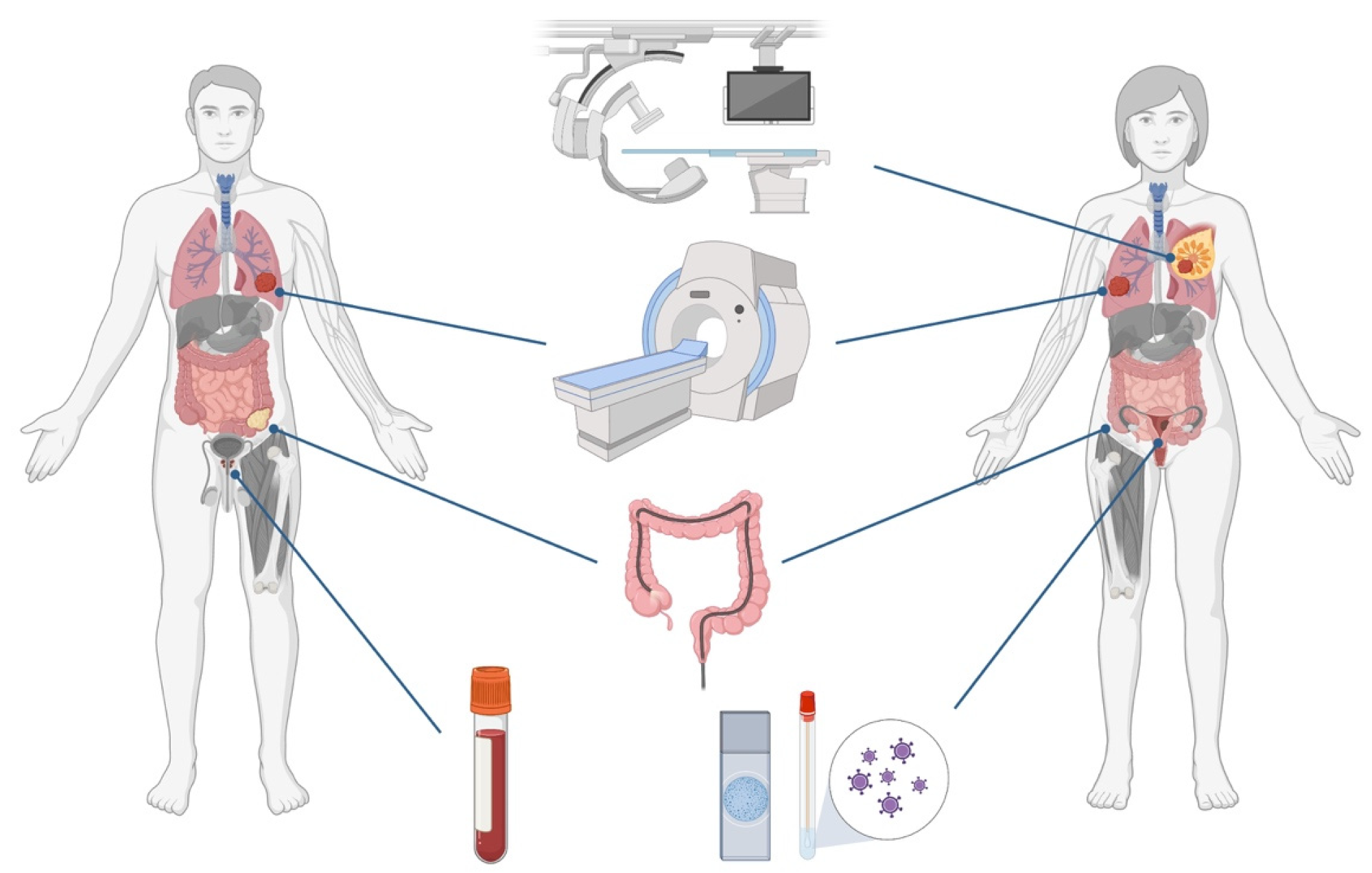 Current cancer screening recommendations highlight substantial gaps in population screening. Established screening methods are available for breast, lung, colorectal, cervical, and prostate cancers, while many high-mortality cancers, including pancreatic, ovarian, liver, and esophageal cancers, currently lack routine population-based screening. These unmet needs have driven the development of multi-cancer early detection (MCED) blood tests. Image credit: Brito-Rocha et al (2023).
MCED tests are high-throughput screening assays designed to detect a broad range of malignancies from a single biological specimen, most commonly peripheral blood, although other body fluids such as urine and saliva are also being investigated for selected applications. These assays are predicated on the principle that neoplastic processes shed molecular traces, such as nucleic acids and proteins, into the circulation, typically even at early, asymptomatic stages.4,7
To identify potential cancer signals, MCED assays examine a diverse array of circulating analytes, including cell-free DNA (cfDNA), cell-free RNA (cfRNA), circulating tumor DNA (ctDNA), tumor-derived exosomes, DNA methylation patterns, and cancer-associated protein biomarkers, as well as circulating tumor cells, extracellular vesicles, fragmentomic signatures, immune-related biomarkers, and, in some platforms, tumor-educated platelets. Tumorigenic processes release these components into the bloodstream through mechanisms such as apoptosis, necrosis, and active secretion. Notably, ctDNA harbors somatic mutations, copy number alterations, and epigenetic modifications specific to malignant cells, providing a molecular fingerprint of neoplasia.5-7
Analysis of these biomarkers is enabled by advanced molecular technologies, including next-generation sequencing (NGS), digital polymerase chain reaction (PCR), bisulfite sequencing for methylation profiling, and multiplex proteomic approaches. Integrated multi-omics strategies facilitate a comprehensive assessment of the genome, epigenome, and proteome in a single assay. Increasingly, machine learning algorithms are applied to high-dimensional data sets to distinguish cancer-derived signals from background noise, classify tumor types, and, in some cases, estimate tumor burden or disease stage.5
Some MCED platforms also predict the cancer signal origin, or tissue of origin, by mapping molecular signatures to reference tissue-specific databases. Tissue-of-origin prediction is considered a key feature of many leading MCED assays because it helps guide subsequent diagnostic imaging and site-specific investigations after a positive screening result. However, a positive MCED result requires confirmatory diagnostic procedures, as false positives and indeterminate results remain important limitations, and a positive result alone is not sufficient to establish a cancer diagnosis.4,7
Read the Full Free PDF to Discover How Researchers Are Improving Early Cancer Detection.
Promise and Challenges of MCED Tests
Commercially available MCED tests, such as GRAIL's Galleri test, detect cancer signals in blood by analyzing cfDNA. Galleri is currently offered as a Clinical Laboratory Improvement Amendments (CLIA)-regulated laboratory-developed test and has not been approved by the U.S. Food and Drug Administration or incorporated into major clinical practice guidelines. The Galleri test, based on the Circulating Cell-Free Genome Atlas (CCGA) study, achieves high specificity (99%) and substantially reduces false positives and unnecessary follow-up procedures. However, sensitivity varies significantly, ranging from 11–34% for cancers like prostate and breast, to over 80% for colorectal, liver, and head and neck cancers.7
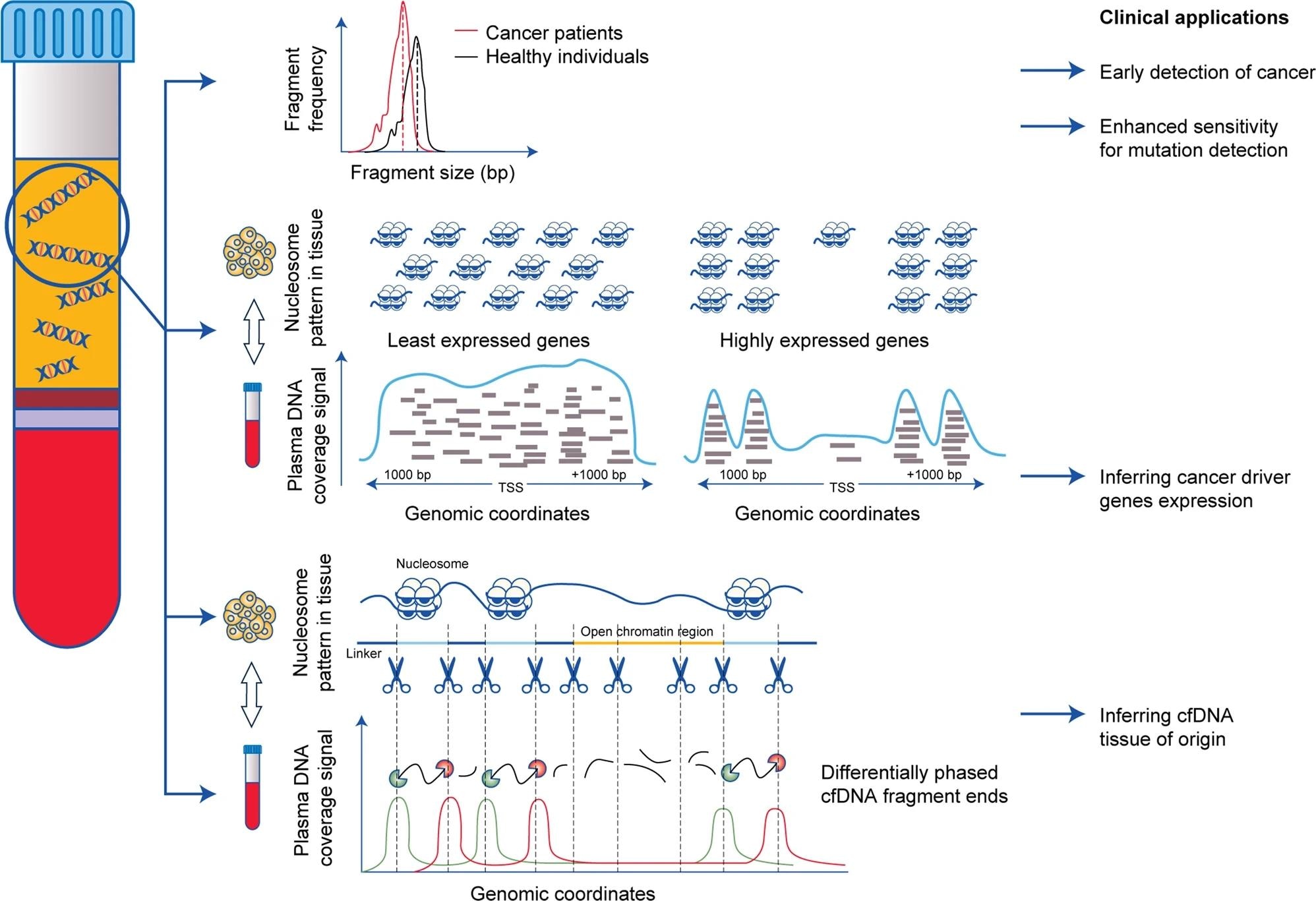 Cell-free DNA fragmentomics enables multi-cancer early detection and tissue-of-origin prediction. Analysis of circulating cell-free DNA (cfDNA) fragment size, nucleosome positioning, and genome-wide fragmentation patterns can distinguish cancer-derived DNA from normal cfDNA, improve mutation detection, infer gene expression, and identify the tissue of origin for multi-cancer early detection (MCED) assays. Image credit: Keller et al (2021).
Sensitivity for early-stage cancers is notably limited, with 16.8% for stage I and 40.4% for stage II, which remains a significant drawback compared to traditional single-cancer screening methods. Large prospective studies, including the NHS-Galleri trial, are underway to determine whether MCED screening can reduce the incidence of late-stage cancers and ultimately improve patient outcomes. Other MCED platforms, such as Exact Sciences’ Cancerguard, have demonstrated significant potential. While these tests generally offer higher positive predictive value (PPV) than single-cancer screening, they face similar limitations in detecting early, localized disease.8
Overall, MCED tests represent a meaningful advance in multi-cancer detection. However, their lower sensitivity for early-stage cancers and inability to detect precancers restrict them to a complementary role alongside established screening programs, rather than as replacements.
Current evidence remains insufficient to demonstrate reductions in cancer-specific mortality through randomized clinical trials, and important questions remain regarding optimal diagnostic follow-up pathways, overdiagnosis, and cost-effectiveness. Broader implementation of MCED tests also depends on successful integration into healthcare systems, regulatory approval, equitable reimbursement, and the resolution of ethical and access challenges.4,7,9
Future Recommendations for Equitable and Effective MCED Test Implementation
To ensure MCED tests benefit all populations, future research and clinical trials must actively include people from diverse racial, ethnic, geographic, ability, and socioeconomic backgrounds. Without broad representation, findings may lack generalizability and could further widen health disparities. High specificity is also crucial to minimize unnecessary follow-up testing, anxiety, and costs from false positives.9
Affordability is also essential. Current MCED tests are costly and usually not covered by insurance, restricting access for lower-income individuals. Expanding insurance coverage, reducing costs, and enacting supportive policies will be key to making these technologies accessible and fully realizing their potential to shift cancer diagnoses to earlier, more treatable stages.
Future research should prioritize prospective, multi-institutional studies that evaluate clinical utility, health equity, patient outcomes, and the integration of MCED testing alongside, rather than replacing, established evidence-based cancer screening programs.4,7,9
References and Future Reading
- Aguiar-Ibáñez R, et al. Barriers to cancer screening uptake and approaches to overcome them: a systematic literature review. Front Oncol. 2025;15:1575820. DOI:10.3389/fonc.2025.1575820, https://www.frontiersin.org/journals/oncology/articles/10.3389/fonc.2025.1575820/full.
- Butnari V, et al. The crucial role of early diagnosis for patients and the nation, understanding the costs of late-stage cancer diagnosis from a large district general hospital in England. Cost Eff Resour Alloc. 2025;23(1):60. DOI:10.1186/s12962-025-00657-1, https://link.springer.com/article/10.1186/s12962-025-00657-1.
- Walter N, Groth J, Zu Zwerger BVU. Evaluation of an innovative multi-cancer early detection test: high sensitivity and specificity in differentiating cancer, inflammatory conditions, and healthy individuals. Front Oncol. 2025;15:1520869. DOI:10.3389/fonc.2025.1520869, https://www.frontiersin.org/journals/oncology/articles/10.3389/fonc.2025.1520869/full.
- Imai M, Nakamura Y, Yoshino T. Transforming cancer screening: the potential of multi-cancer early detection (MCED) technologies. Int J Clin Oncol. 2025;30(2):180-193. DOI:10.1007/s10147-025-02694-5, https://link.springer.com/article/10.1007/s10147-025-02694-5.
- Brito-Rocha T, et al. Shifting the Cancer Screening Paradigm: The Rising Potential of Blood-Based Multi-Cancer Early Detection Tests. Cells. 2023;12(6):935. DOI:10.3390/cells12060935, https://www.mdpi.com/2073-4409/12/6/935.
- Keller L, et al. Clinical relevance of blood-based ctDNA analysis: mutation detection and beyond. Br J Cancer. 2021;124(2):345-358. DOI:10.1038/s41416-020-01047-5, https://www.nature.com/articles/s41416-020-01047-5.
- Hoffman RM, et al. Multicancer early detection testing: Guidance for primary care discussions with patients. Cancer. 2025;131(7):e35823. DOI:10.1002/cncr.35823, https://acsjournals.onlinelibrary.wiley.com/doi/10.1002/cncr.35823.
- Neal RD, Johnson P, Clarke CA, Hamilton SA, Zhang N, Kumar H, Swanton C, Sasieni P. Cell-Free DNA-Based Multi-Cancer Early Detection Test in an Asymptomatic Screening Population (NHS-Galleri): Design of a Pragmatic, Prospective Randomised Controlled Trial. Cancers (Basel). 2022;14(19):4818. DOI:10.3390/cancers14194818, https://www.mdpi.com/2072-6694/14/19/4818.
- Miller SJ, Sly JR, Rolfo C, Mack P, Villanueva A, Mazor M, Weber E, Lin JJ, Smith CB, Taioli E. Multi-cancer early detection (MCED) tests: prioritizing equity from bench to bedside. Health Aff Sch. 2024;2(5):qxae039. DOI:10.1093/haschl/qxae039, https://academic.oup.com/healthaffairsscholar/article/2/5/qxae039/7680375.
Last Updated: Jun 26, 2026