After decades of cosmetic fixes, researchers are engineering living follicles from stem cells, smart scaffolds, and molecular cues, edging closer to turning baldness into a reversible condition.
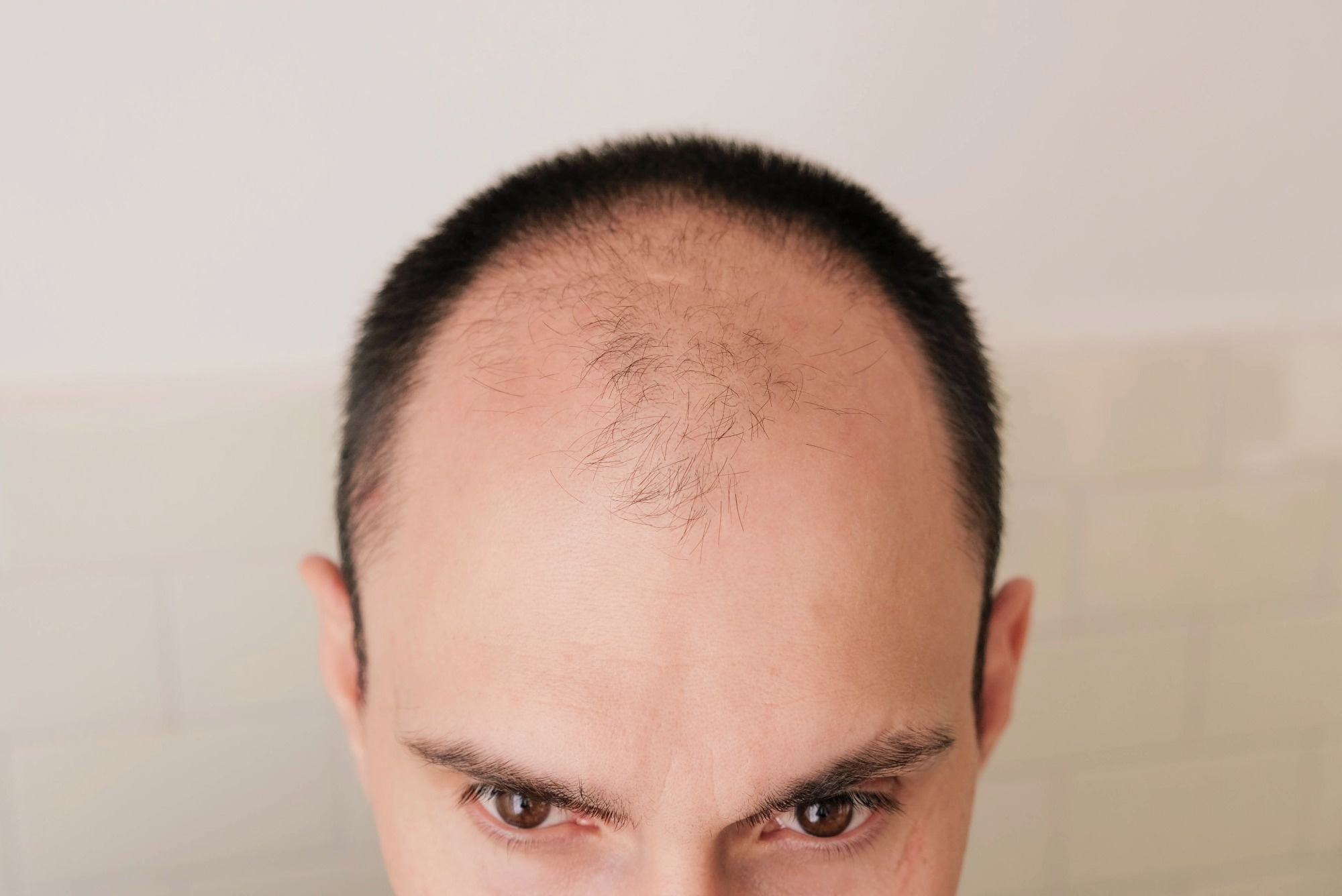
Image credit: PippiLongstocking/Shutterstock.com
Introduction
The hair follicle is a cyclic mini-organ whose growth and renewal depend on tightly coordinated epithelial-mesenchymal crosstalk, immune tone, and mechanobiology. However, hair loss, principally androgenetic alopecia (AGA) and alopecia areata (AA), is highly prevalent and carries heavy psychosocial and economic costs.
Current therapies, ranging from minoxidil and 5-alpha-reductase inhibitors to platelet-rich plasma, low-level lasers, and transplantation, primarily thicken existing fibers or redistribute follicles; they do not create new ones. True regeneration means forming new follicles, not merely prolonging anagen. Biotechnology is entering a transformative phase in which cell therapies, organoid systems, engineered biomaterials, molecular pathway modulation, and exosome therapeutics are uniting to shift treatment from symptomatic management to follicle-level regeneration.¹
This article explains the burden of hair loss and why true follicle regeneration, not just thicker strands, is needed; it then reviews advances in cell therapies, hair organoids, smart biomaterials, targeted pathway modulation, and exosome approaches that move care toward follicle-level repair.
The Burden and Biological Complexity of Hair Loss
Hair loss is widespread across AGA and AA and carries a disproportionate psychosocial burden, with anxiety, loss of self-confidence, and quality-of-life decline often rivaling more serious chronic illnesses. Stress can both precipitate telogen effluvium and amplify existing disorders, creating a vicious cycle of hair loss and distress. Biologically, the hair follicle is a mini-organ that cycles through anagen, catagen, and telogen under tight molecular and cellular control. Dermal papilla and bulge stem cells coordinate with surrounding epithelial and mesenchymal compartments, while adipocytes and immune cues modulate phase transitions.1,2
Canonical pathways, including Wingless/Integration-1 (Wnt)–beta-catenin (β-catenin) pathway, Bone Morphogenetic Protein (BMP), Hedgehog, Fibroblast Growth Factor (FGF), Transforming Growth Factor beta (TGF-β), and Notch, orchestrate induction, organogenesis, and cytodifferentiation, setting follicle fate and cycling tempo.
During growth, stromal-epithelial dialogue maintains matrix proliferation and shaft production. During regression, apoptotic and inflammatory programs prune the lower follicle. During rest, niche signals poise quiescent stem cells for re-entry into growth.
Clinically, most approved or adjunctive treatments lengthen anagen or thicken miniaturized fibers but do not rebuild a depleted follicular unit. True regeneration requires reconstructing architecture and restoring bidirectional signaling between dermal papilla, stem cell niches, and their extracellular milieu rather than only prolonging the growth phase.1,2
Limits of Current Pharmacologic, Adjunctive, and Surgical Care
Current hair-loss care primarily focuses on modifying what is already present rather than creating new follicles. Topical minoxidil can thicken hair but shows limited benefit over 6-12 months and regresses once stopped. Finasteride and dutasteride modestly slow miniaturization but carry adherence and side-effect concerns.3 Intralesional or systemic corticosteroids offer short-term control, with local atrophy or systemic metabolic effects, whereas other immunosuppressants lack strong evidence from randomized controlled trials.
In autoimmune AA, Janus kinase (JAK) inhibitors such as tofacitinib and ruxolitinib can trigger substantial regrowth in many patients. However, durability remains a challenge, as relapse often occurs within weeks to months after treatment stops, and topical formulations tend to be less effective than oral therapy.
Adverse effects are generally mild and temporary, commonly upper respiratory infections, acne-like eruptions, or transient lab abnormalities, emphasizing that these drugs temper immune activity rather than achieve long-term immune tolerance.4
Adjunctive treatments, including low-level light therapy, microneedling, and platelet-rich plasma, demonstrate inconsistent and modest gains across studies, and do not overcome the biological limit set by the number of follicles. Hair transplantation surgery redistributes a limited number of donor follicles, but outcomes are restricted by supply, scarring, and ongoing pattern progression. Today’s pharmacologic, adjunctive, and surgical options slow miniaturization, reduce inflammation, or cosmetically redistribute coverage, but they do not generate new follicles or reliably restore immune privilege.4
Biotechnological Pathways to Follicle Regeneration
Emerging biotechnological pathways of follicle regeneration are centered on five pillars.
Cellular foundations restore dermal papilla inductivity, partnering hair-follicle stem cells with supportive niche cells, and leveraging wound-induced follicle neogenesis to reawaken epithelial-mesenchymal programs. Recent preclinical work using human dermal papilla spheroids in microfluidic or 3D-printed scaffolds has successfully induced follicle-like structures in mice.5
Hair organoids induce pluripotent stem cell-derived skin that forms appendage-bearing organoids now models placode-to-germ transitions and offers scalable “follicle germ” factories for testing and future grafting. While human-derived hair-follicle organoids have achieved early proof of concept, full terminal hair formation remains limited to murine systems.6
Smart biomaterials such as extracellular matrix–mimetic hydrogels, decellularized matrices, and 3D bioprinting create spatially organized microenvironments with tuned stiffness and ligand presentation that preserve dermal papilla signaling, align epithelium and mesenchyme, and enable automated microgel production.7
Molecular modulation uses timed cues across Wnt, FGF, TGF-β, Sonic Hedgehog (SHH), BMP, and JAK pathways steer morphogenesis, lineage choice, and cycling. Small-molecule modulators, such as GSK3β inhibitors (to activate Wnt/β-catenin) and BMP antagonists, have been shown to initiate do novo follicle germ formation.8
Exosome-based therapies are exploring standardized extracellular vesicle cargo from inducible cells to enhance dermal papilla potency, angiogenesis, immune quiescence, and graft survival, while reducing the variability seen with whole-cell approaches. Together, these strategies aim to shift care from thickening existing fibers to forming cycle-competent hair follicles.7,9
Translation to Clinic: Requirements, Risks, and Outlook
Translation to Clinic will likely require combination products: therapeutic cells integrated into a biocompatible scaffold, guided by temporally sequenced morphogen cues, with optional exosome augmentation to enhance angiogenesis, survival, and inductivity. Manufacturing must shift to scalable Good Manufacturing Practice (GMP) workflows with validated potency assays, stringent release criteria, and continuous attention to the cost of goods, ensuring doses remain affordable.
Safety and durability demand immune compatibility strategies, rigorous tumorigenicity and biodistribution testing, and proof of maintenance across multiple hair cycles. Because secretome and exosome compositions vary by source and process, standardization is essential to control variability.10
Clinical development should use objective imaging endpoints, such as phototrichograms, hair counts, shaft caliber, and global photography, starting with staged indications where the benefit–risk ratio is favorable, and then expanding.
Integration with evolving Advanced Therapy Medicinal Product frameworks from regulators and ISO stem-cell standards will be critical to enable multinational regulatory harmonization.11 Engineering discipline, plus carefully staged trials, can convert laboratory regeneration into consistent patient benefit.10
Conclusions
Emerging platforms are encouraging, yet none currently deliver scalable, durable follicle neogenesis in routine practice. The most credible path is a combination approach: inductive cells paired with instructive scaffolds, coordinated by timed molecular cues, with standardized exosomes as optional amplifiers.
Critical hurdles remain, such as vascular integration, immune compatibility, long-term cycling durability, and manufacturing reproducibility. The development path should progress through careful staged indications, rigorous trials, validated potency assays, and interoperable, quality-focused manufacturing. A defensible route to true regeneration is taking shape, but broad, reliable clinical adoption still lies ahead and will require disciplined execution.
References and Further Reading
- Liu, D., Xu, Q., Meng, X., Liu, X., & Liu, J. (2024). Status of research on the development and regeneration of hair follicles. Int. J. Med. Sci., 21(1), 80–94. https://pubmed.ncbi.nlm.nih.gov/38164355/
- Hadshiew, I. M., Foitzik, K., Arck, P. C., & Paus, R. (2004). Burden of hair loss: stress and psychosocial impact. J. Invest. Dermatol., 123(3), 455–457. https://www.sciencedirect.com/science/article/pii/S0022202X15309635
- Escamilla-Cruz, M., Magaña, M., Escandón-Pérez, S., Bello-Chavolla, O.Y. (2023). Use of 5-Alpha Reductase Inhibitors in Dermatology: A Narrative Review. Dermatology and Therapy. https://link.springer.com/article/10.1007/s13555-023-00974-4
- Dillon, K. A. L. (2021). A comprehensive literature review of JAK inhibitors in alopecia areata. Clin. Cosmet. Investig. Dermatol., 14, 691–714. https://pubmed.ncbi.nlm.nih.gov/34211288/
- Kang, M. S., Kwon, M., Park, R. et al (2025). Harnessing the Intradermal Delivery of Hair Follicle Dermal Papilla Cell Spheroids for Hair Follicle Regeneration in Nude Mice. Biomaterials Research. https://pmc.ncbi.nlm.nih.gov/articles/PMC11725629/
- Vatanashevanopakorn, C. & Sartyoungkul, P. (2023). iPSC-based approach for human hair follicle regeneration. Frontiers in Cell and Developmental Biology, 11:1149050. https://www.frontiersin.org/journals/cell-and-developmental-biology/articles/10.3389/fcell.2023.1149050/full?utm_source=chatgpt.com
- Zeng, D. et al. (2025). Advances in engineered organoid models of skin for biomedical research. Burns & Trauma, 13, tkaf016. https://pubmed.ncbi.nlm.nih.gov/40799298/
- Bellani D. et al., (2025). Pathophysiological mechanisms of hair follicle regeneration: Wnt/β‑catenin, Shh, BMP and Notch signalling. Stem Cell Research & Therapy. https://stemcellres.biomedcentral.com/articles/10.1186/s13287-025-04420-4
- Li, C. Y. et al. (2024). Extracellular vesicles from dermal papilla cells promote human hair growth: a randomized controlled pilot study. Stem Cells Transl. Med., 13(7), 511–523.
- Shimizu, Y. et al. (2022). Regenerative medicine strategies for hair growth and regeneration: a narrative review. Regenerative Therapy, 21, 527–539. https://www.sciencedirect.com/science/article/pii/S235232042200102X
- European Medicines Agency. (2024). Guideline on quality, non-clinical and clinical aspects of advanced therapy medicinal products. [Online]. Available at: https://www.ema.europa.eu/en/guideline-quality-non-clinical-clinical-requirements-investigational-advanced-therapy-medicinal-products-clinical-trials-scientific-guideline EMA/CHMP/410869/2024. [Accessed on 3/11/25].
Last Updated: Nov 13, 2025