A newly engineered wound dressing can read the chemistry of infected wounds and respond in real time, fighting bacteria when infection strikes, then switching gears to promote blood vessel growth, reduce inflammation, and accelerate tissue regeneration as healing unfolds. 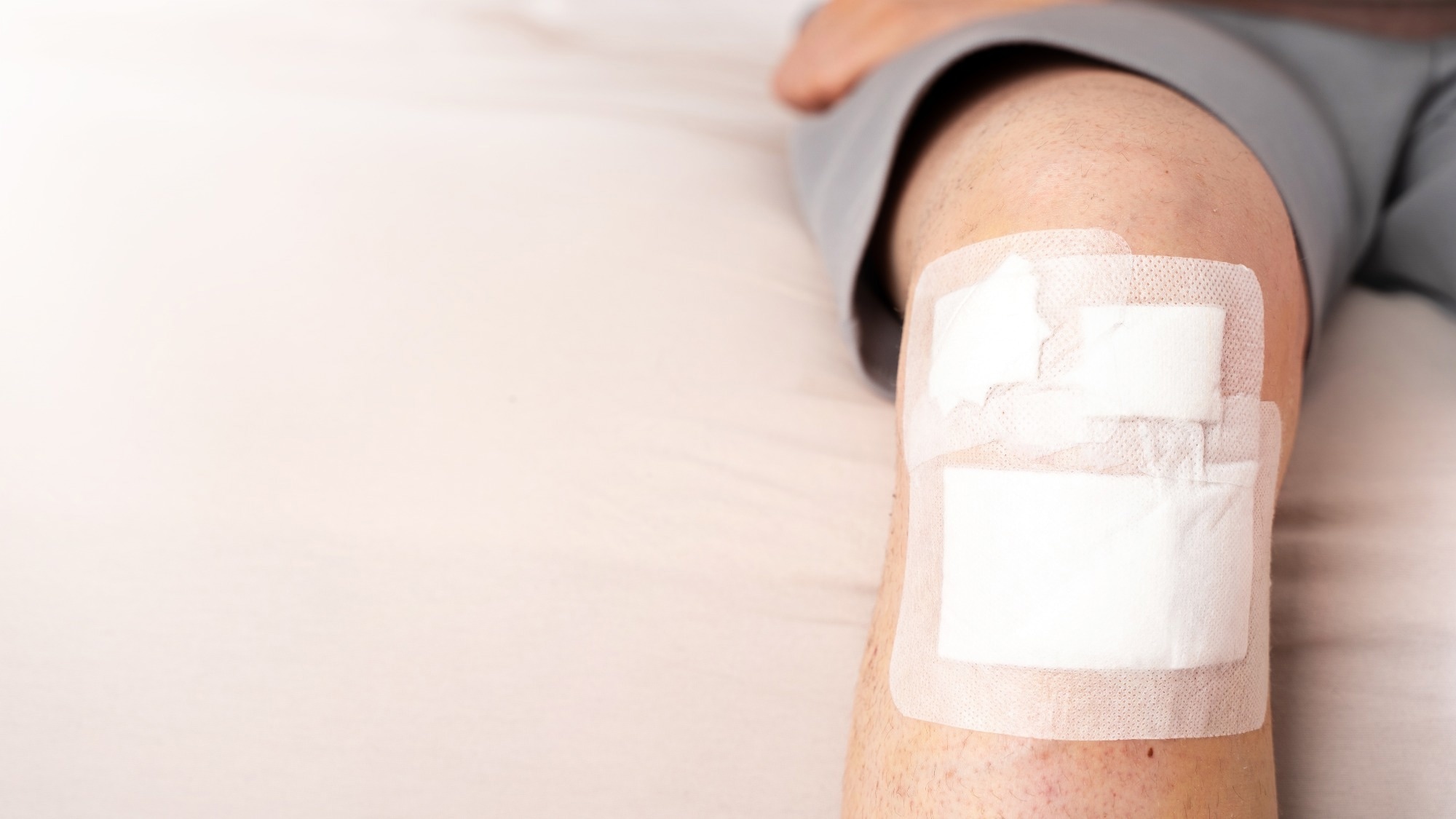
Image credit: Garnar/Shutterstock.com
In a recent study published in Biomedical Technology, researchers developed a smart, pH-responsive hydrogel that adapts to the changing microenvironment of acute infected wounds, allowing for precise, stage-specific healing.
The material contracts in acidic, infection-prone conditions to rapidly release the antibacterial agent tannic acid (TA), then expands as the wound becomes alkaline, facilitating the delivery of zinc and calcium ions that support angiogenesis, reduce inflammation, and promote tissue repair.
Unlike traditional wound dressings, which provide static protection and limited therapeutic control, this microenvironment-feedback system actively responds to wound conditions, offering a promising strategy for sequential wound healing.
Static Wound Dressings Fail Dynamic Healing Biology
Acute infected wounds pose a persistent clinical challenge because healing unfolds through multiple, biologically distinct stages that demand different therapeutic actions. Yet most conventional wound dressings act as passive barriers, providing limited control over infection, moisture balance, and the evolving wound microenvironment.
Even antibacterial dressings typically statically deliver drugs, failing to adapt as wounds transition from the stage of infection to repair. This disconnect underscores a key research gap: the need for wound dressings that can dynamically respond to local conditions and deliver stage-specific therapies.
Designing a Hydrogel That Senses Wound pH
In the present study, researchers designed a pH-based hydrogel intended to align with the sequential biological stages of infection control and wound healing. They engineered the material as an interpenetrating network of carboxymethyl chitosan (CMCS) and sodium alginate (SA), exploiting electrostatic interactions between carboxyl and amino groups.
The team incorporated zinc-doped bioglass (BAG) and hydrophobic interactions, providing antibacterial, anti-inflammatory, and pro-regenerative functions.
First, the researchers identified optimal concentrations of TA and BAG by performing the cell counting kit-8 (CCK-8) viability assays in human umbilical vein endothelial cells (HUVECs). They made the hydrogel by mixing SA and CMCS, adding BAG and TA, and inducing crosslinking with sodium citrate to form three-dimensional networks in ambient conditions.
They performed X-ray photoelectron spectroscopy (XPS), X-ray diffraction (XRD), Fourier-transform infrared spectroscopy (FTIR), scanning electron microscopy (SEM), and energy-dispersive spectroscopy (EDS) for structural and chemical characterization.
The team evaluated the pH-based release of TA, zinc, and calcium ions under acidic (pH 5.5) to neutral (pH 7.4 – 7.5) conditions, which simulated the infected and healing wounds, respectively. Inductively coupled plasma mass spectrometry (ICP-MS) and atomic absorption spectroscopy (AAS) quantified ion concentrations. In vitro assays assessed cytocompatibility, cell migration, angiogenesis, antioxidant activity, antibacterial efficacy against Escherichia coli and Staphylococcus aureus, and anti-inflammatory effects.
Lastly, the researchers evaluated therapeutic performance in a rat model of full-thickness skin wounds. They analyzed wound closure, histology, collagen deposition, and macrophage polarization markers to assess in vivo healing outcomes.
Top of Form
Bottom of Form
Smart Hydrogel Suppresses Infection and Accelerates Regeneration
The team successfully fabricated the pH-based CMCS/SA/BAG/TA hydrogel with a stable, porous interpenetrating network capable of staged therapeutic delivery. Spectroscopic and microscopic analyses confirmed effective crosslinking and uniform incorporation of BAG, producing an amorphous yet mechanically robust structure favorable for bioactivity and ion exchange.
The hydrogel exhibited distinct pH-dependent release behavior. In acidic environments that mimic infected wounds, the material contracted and promoted a front-loaded but sustained release of TA, achieving considerable early antibacterial delivery while partially limiting the efflux of zinc and calcium ions. With a shift towards neutral or mildly alkaline conditions, the hydrogel expanded, enhancing the dissociation of zinc and calcium ions, which support the formation of new blood vessels and tissue repair.
In vitro assays demonstrated excellent biocompatibility, with minimal cytotoxicity and significantly enhanced endothelial cell migration, cytoskeletal organization, and proliferation. The composite hydrogel showed potent antibacterial activity against S. aureus and E. coli, markedly reducing biofilm viability and colony formation. It also displayed strong antioxidant effects, significantly lowering intracellular reactive oxygen species (ROS) levels.
Immunological analyses revealed effective changes of inflammation, with reduced expression pro-inflammatory M1 macrophage markers (e.g., iNOS, CD86) and increased expression of pro-healing M2 markers (e.g., CD206, Arg-1). Angiogenesis assays confirmed robust formation of capillary-like structures, indicating strong pro-vascularization potential.
In the rat full-thickness infected wound model, the CMCS/SA/BAG/TA hydrogel significantly accelerated wound closure, promoted dense collagen deposition, and restored tissue architecture, achieving near-complete healing by day 14. Together, the findings highlight the hydrogel’s capacity to coordinate infection control and regeneration through microenvironment-responsive, sequential therapy.Top of Form
Bottom of Form
A Step Toward Intelligent Wound Dressings
The study findings highlight the practicality of this pH-based hydrogel as a next-generation wound dressing for acute wound infections. By dynamically adapting to changes in the wound microenvironment, the material delivers early, intensified antibacterial activity alongside sustained regenerative support as healing progresses, capabilities that conventional dressings lack.
Its demonstrated ability to control bacterial burden, modulate inflammation, reduce oxidative stress, and accelerate tissue repair suggests clear clinical relevance. If translated successfully, this microenvironment-responsive approach could improve healing outcomes, shorten recovery times, and reduce complications in patients with complex infected wounds, offering a more precise and effective strategy for modern wound care.
Download your PDF copy now!
Journal Reference
Tang, Z. et al. (2025). Microenvironment-feedback hydrogel for precise sequential repair of acute infectious wounds. Biomedical Technology, 12, 100120. DOI: 10.1016/j.bmt.2025.100120. https://www.sciencedirect.com/science/article/pii/S2949723X25000522
 Scientists Use Virus to Dismantle Gum Disease Bacteria