When many disease-causing bacteria come into contact with penicillin, they do not necessarily die immediately; instead, they enter a brief survival state known as antibiotic tolerance. This condition enables them to survive drug levels that would normally kill them. Tolerance is not the same as complete antibiotic resistance, but experts increasingly regard it as a potential precursor to it.
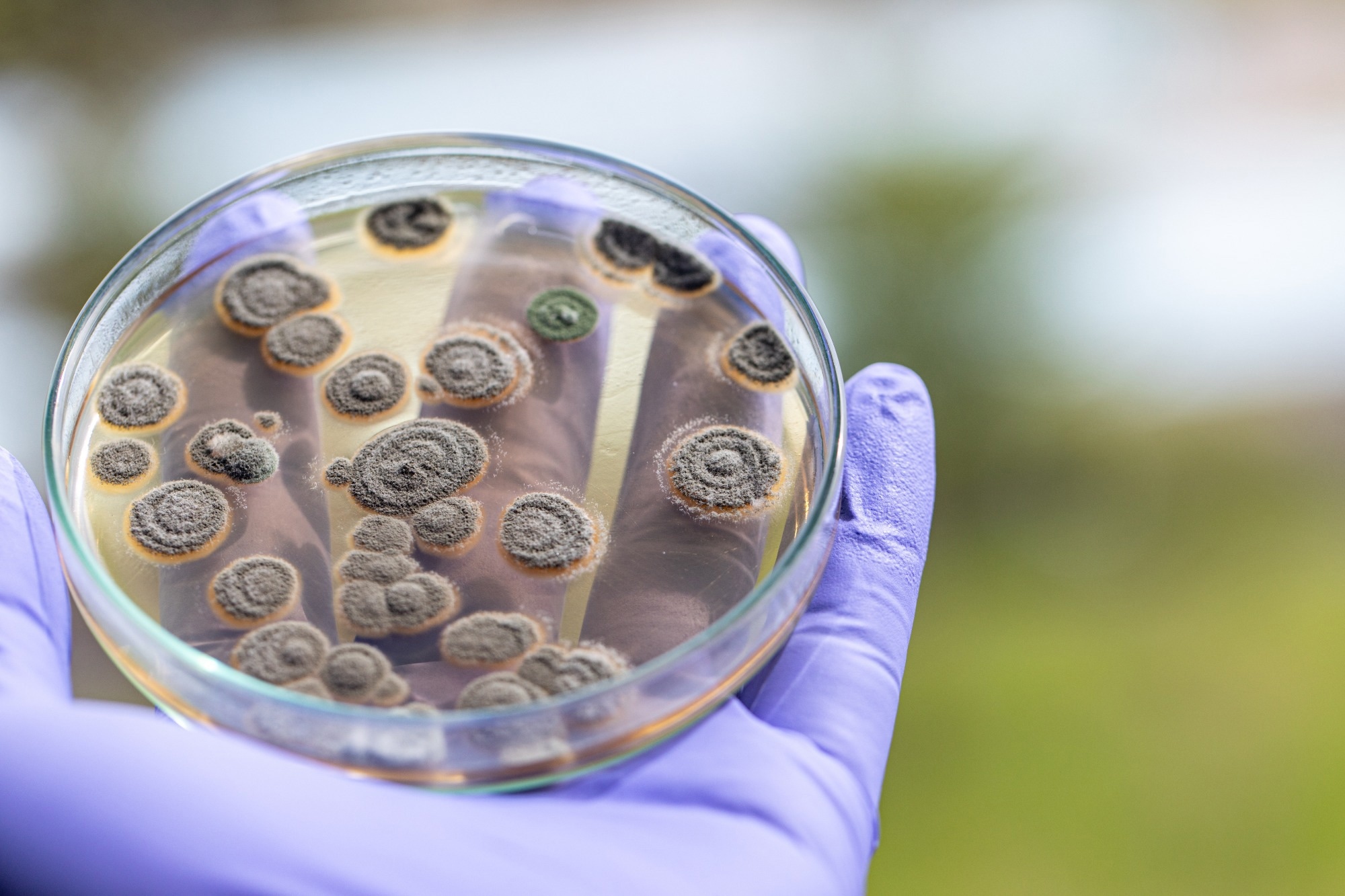 Image credit: Sinhyu Photographer/Shutterstock.com
For the first time, the metabolic changes that enable bacteria to withstand high doses of penicillin, a traditional β-lactam antibiotic, are revealed in a new study. The study also discovered a flaw in how bacteria survive, which may help scientists develop new strategies to combat antibiotic resistance in the future.
The study, published in npj Antimicrobials & Resistance, reveals a startling weakness of the bacteria: when exposed to penicillin, they become famished for nucleotides. These are the fundamental molecular building blocks required for several critical cell functions that allow the cell to survive. The study focuses on Vibrio cholerae, a bacterium that causes cholera and is frequently used to investigate antibiotic tolerance.
When exposed to penicillin, the bacteria stop dividing while the drug is present, but they stay metabolically active and survive. Once the antibiotic fades, they can return to normal growth and continue the infection.
Tobias Dörr, Study Senior Author and Associate Professor, Microbiology, College of Agriculture and Life Sciences, Cornell University
Keller and the group employed two primary techniques to understand how bacteria endure such harsh circumstances. They analyzed thousands of molecules produced by the cell simultaneously and investigated whether genes were turned on or off during penicillin treatment. This provided them with the most comprehensive map of what occurs inside bacteria under severe β-lactam (penicillin-type) antibiotic stress.
Several expected shifts occurred. Genes involved in cell wall repair became more active as the bacteria worked to repair the damage caused by the drug. Both the purine and pyrimidine pathways, which contribute to nucleotide synthesis, were more active.
The most striking change our research revealed, though, was a sharp drop in nucleotides, the critical precursors for DNA and other important cell components.
Tobias Dörr, Study Senior Author and Associate Professor, Microbiology, College of Agriculture and Life Sciences, Cornell University
“Bacteria disassemble sugars and use their molecular subcomponents to make cell wall materials, amino acids, and nucleotides. Penicillin causes runaway cell wall synthesis, which essentially makes all the glucose go into the cell wall synthesis pathway. This means there is not enough material left to make, for example, nucleotides,” Dörr added.
This prompted a new question: if the bacteria are already deficient in nucleotides, could inhibiting nucleotide synthesis render them more vulnerable to destruction? To test this, the researchers gave cholera bacteria penicillin and trimethoprim, which are known to inhibit nucleotide formation.
The results were deemed remarkable. Either treatment alone eliminated a small number of bacteria, but when combined, they reduced V. cholerae survival by more than 100,000-fold. The same impact was observed in other medically relevant species, such as Klebsiella pneumoniae, which causes antibiotic-resistant pneumonia and urinary tract infections, and E. coli, a food-borne pathogen.
The study, which identified a metabolic bottleneck that bacteria must overcome to survive penicillin, suggests novel treatment strategies. Instead of using higher antibiotic dosages, which can lead to resistance and harm patients, future drugs could incorporate compounds that take advantage of penicillin's nucleotide scarcity, according to Dörr.
In clinical settings, it could be feasible to repurpose older drugs like trimethoprim as adjuvants to β-lactams, which might increase the efficacy of currently available antibiotics. According to Dörr, combination medication “cocktails” are already widely utilized as treatments, but they have not been explicitly employed to target nucleotide synthesis in conjunction with β-lactam antibiotics.
Source:
Journal reference:
Keller, M. R. et.al. (2026) Global response to antibiotic exposure reveals a critical role for nucleotide metabolism in high-level β-lactam tolerance. npj Antimicrobials & Resistance. DOI: 10.1038/s44259-026-00183-x. https://www.nature.com/articles/s44259-026-00183-x#Sec9.
 Scientists Uncover Unexpected Mechanism Behind Extreme Antibiotic Resistance