A screen of more than a thousand chemicals, including many found in food, water, and consumer products, shows that everyday pollutants can act like antibiotics inside the gut, reshaping microbial communities and potentially driving resistance. This could have huge implications for regulation, health, and chemical safety.
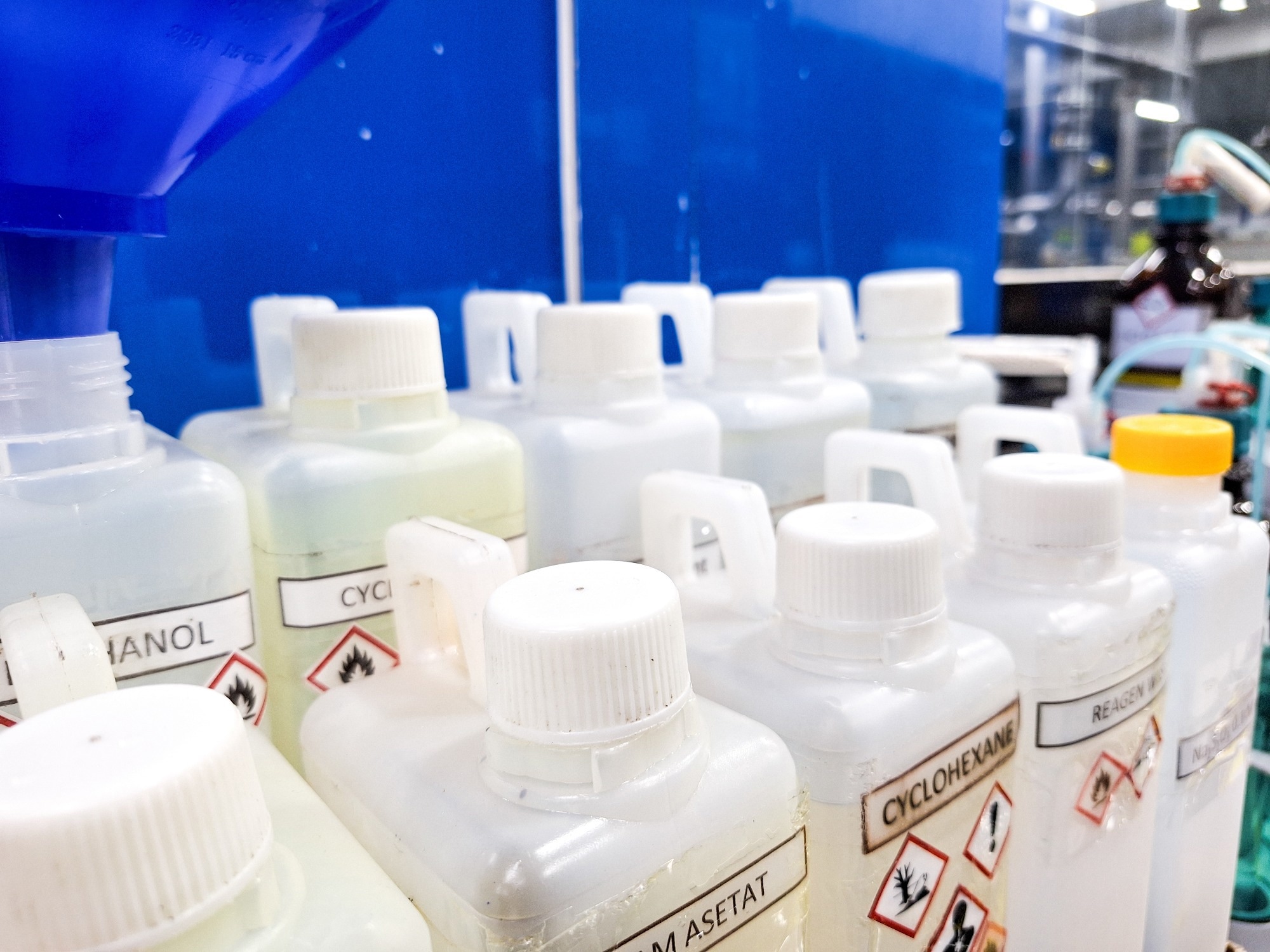 Image credit: Bro-12/Shutterstock.com
A recent study published in Nature Microbiology screened 1,076 industrial and agricultural pollutants. The screen uncovered 588 inhibitory interactions across 168 chemicals, many with previously unrecognized antibacterial activity. Nearly one-third of tested fungicides and industrial compounds affected gut bacteria, revealing a broader toxicity range than assumed.
These findings highlight an overlooked threat to the gut microbiome and underscore the need to reassess chemical safety, health impacts, and contributions to antimicrobial resistance.
Hidden Antibacterial Effects Found In Common Chemicals
Industrial and agricultural chemicals, including pesticides, are often assumed to act only on target organisms, yet growing evidence suggests their biological activity may be far broader. Humans are continuously exposed to these pollutants through food and water, with hundreds of pesticide residues and persistent industrial contaminants, such as per- and polyfluoroalkyl substances (PFAS) and plasticizers, routinely detected.
These chemicals may affect the gut microbiota, a community essential for metabolic and immune function. However, their impacts remain largely untested, and current safety assessments seldom consider microbiome effects.
Reports of off-target antimicrobial activity in other ecosystems raise concerns that similar interactions may occur in humans, highlighting a critical gap in chemical risk evaluation and the impact of such exposures on microbial community structure over time.
In Vitro Tests Reveal Unexpected Antimicrobial Behaviour
The present study researchers undertook an extensive in vitro investigation of 1,076 chemical contaminants, including 829 pesticides, 119 pesticide metabolites, 75 related compounds, 48 industrial chemicals (e.g., bisphenols, nitrosamines), and five mycotoxins. These substances reflect contaminants commonly found in food, water, and the environment. Integrated metadata, including toxicology summaries and residue data from the Food and Drug Administration (FDA)/European Food Safety Authority (EFSA), enhances relevance to human exposure.
To test the antimicrobial activity, the team screened all compounds at 20 μM against 22 representative gut bacterial strains, which were maintained under strict anaerobic conditions. They monitored bacterial growth over 24 hours at 37°C. They defined interactions as inhibitory if growth decreased by more than 20 % in at least two of three replicates. They verified the minimum inhibitory concentrations (MICs) using freshly prepared chemical stocks.
To explore the mechanisms driving susceptibility, the researchers conducted chemical–genetic profiling using a pooled transposon mutant library of Phascolarctobacterium merdae combined with barcoded transposon sequencing (TnBarSeq). They also screened additional transporter-deficient mutants of Bacteroides thetaiotaomicron to identify gene pathways involved in xenobiotic resistance.
The team evaluated community-level impacts using Com20, a synthetic consortium of 20 phylogenetically diverse gut species that collectively encode over 60 % of metabolic pathways present in healthy human microbiomes. They added selected pollutants, including bisphenol AF (BPAF) and tetrabromobisphenol A (TBBPA), to Com20 cultures, followed by 16S ribosomal ribonucleic acid (rRNA) sequencing to assess community shifts and liquid chromatography-tandem mass spectrometry (LC-MS) analysis to measure chemical depletion and bacterial bioaccumulation.
Lastly, the researchers developed machine learning models incorporating structural fingerprints and deep-learning molecular embeddings to predict anti-gut-bacterial activity across the chemical library. They used random forest classifiers with stratified cross-validation to evaluate performance based on balanced accuracy and average precision values, thereby improving predictive robustness.
168 Chemicals Suppress Gut Bacteria Growth
The screen identified 588 growth-suppressing interactions, with 168 chemicals suppressing the growth of at least one of 22 representative gut bacterial strains. Most antibacterial effects have been previously unreported. Industrial chemicals and fungicides showed the highest activity, with nearly 30 % demonstrating effects against gut microbes. Notably, conazole fungicides, designed to target fungal ergosterol synthesis, unexpectedly inhibited several Firmicutes, highlighting considerable off-target activity.
Sensitivity differed markedly among taxa. Bacteroidales, particularly Parabacteroides distasonis, were the most vulnerable, while E. coli, Fusobacterium nucleatum subsp. animalis, and Akkermansia muciniphila were comparatively resistant. Several pollutants acted as broad-spectrum inhibitors, including the flame retardant TBBPA, the plastic additive BPAF, the antiparasitic closantel, and multiple fungicides and insecticides. Over 150 interactions caused >90 % growth inhibition, and some compounds, such as imazalil sulfate and prochloraz, were active at concentrations as low as 2.5 μM.
Chemical–genetic screening implicated shared efflux mechanisms, notably the acriflavine resistance regulator (acrR) locus, in mediating resistance. Inactivating mutations in metabolic genes also conferred survival advantages under xenobiotic stress. Strikingly, selection by TBBPA and closantel induced cross-resistance to ciprofloxacin, revealing shared mechanisms governing pollutant and antibiotic tolerance.
Community-level experiments using a synthetic 20-species microbiota showed significant compositional shifts. BPAF and TBBPA restructured community profiles, with evidence of bioaccumulation-driven cross-protection. For example, 64 % of BPAF was depleted from the supernatant and recovered in bacterial pellets. This suggests that community interactions can dampen or redistribute toxicity, an effect not visible in monoculture assays.
Machine learning models trained on pesticide data predicted anti-gut-bacterial activity with high accuracy (balanced accuracy up to 0.81). However, models trained on drug datasets performed poorly across pesticides. This highlights the distinct chemical and biological space occupied by environmental pollutants.
Findings Call for Exposure-Aware Chemical Oversight
The discovery that many industrial and agricultural chemicals inhibit gut bacteria underscores a critical need to incorporate microbiome-focused toxicity testing into chemical safety evaluations. Strengthened monitoring of pesticide residues and industrial pollutants is essential.
Future work should examine real-world exposure mixtures and develop predictive tools to flag off-target antimicrobial activity, guiding safer chemical design and regulation.
Download your PDF copy now!
Journal Reference
Roux, I. A., et al. (2025). Industrial and agricultural chemicals exhibit antimicrobial activity against human gut bacteria in vitro. Nat Microbiol, 10, 3107–3121. DOI: 10.1038/s41564-025-02182-6. https://www.nature.com/articles/s41564-025-02182-6
 Singlet Oxygen Oxidizes Electron-Rich Base Pairs to Cleave Bacterial DNA