A University of Waterloo-led research team is creating a unique cancer treatment technique that involves designing hungry bacteria to literally devour tumors from the inside out.
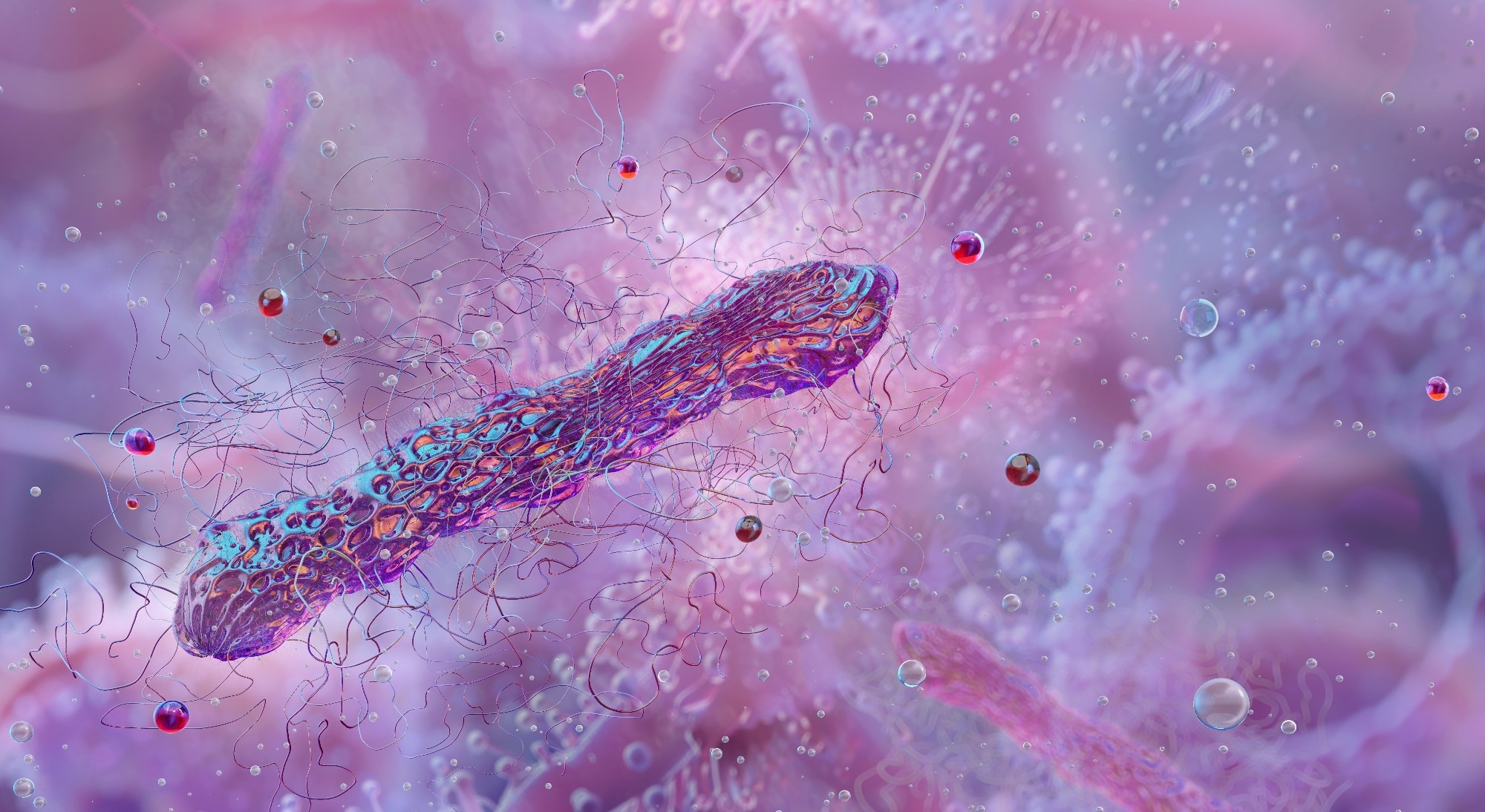 Image credit: Corona Borealis Studio/Shutterstock.com
Bacteria spores enter the tumor, finding an environment where there are lots of nutrients and no oxygen, which this organism prefers, and so it starts eating those nutrients and growing in size. So, we are now colonizing that central space, and the bacterium is essentially ridding the body of the tumor.
Marc Aucoin, Professor, University of Waterloo
The strategy centers on Clostridium sporogenes, a soil-dwelling bacterium that thrives only in completely oxygen-free environments.
The center of a solid, malignant tumor is composed of dead cells and lacks oxygen, creating an excellent environment for the bacterium to thrive.
However, there is a biological catch: when cancer-eating organisms reach the outer borders of tumors, they are exposed to low oxygen levels and die before finishing their goal to completely eliminate them.
To address this issue, the researchers first introduced a gene from a similar bacterium that can better withstand oxygen, allowing it to survive longer outside of a targeted tumor.
They then discovered a technique to activate the oxygen-resistant gene at precisely the right time, which is important for stopping bacteria from growing in oxygen-rich environments such as the bloodstream, by using a process known as quorum sensing.
In simple terms, quorum sensing refers to chemical signals produced by bacteria. Only when numerous bacteria have developed in a tumor is the signal powerful enough to activate the oxygen-resistant gene, ensuring that it does not occur too soon.
In one study, researchers showed that Clostridium sporogenes can be engineered to withstand oxygen. In a subsequent study, they evaluated their quorum-sensing system by inducing bacteria to generate a green fluorescent protein.
Using synthetic biology, we built something like an electrical circuit, but instead of wires we used pieces of DNA. Each piece has its job. When assembled correctly, they form a system that works in a predictable way.
Dr. Brian Ingalls, Professor, Applied Mathematics, University of Waterloo
Researchers intend to integrate the oxygen-resistant gene with the quorum-sensing timing mechanism in one bacterium and test it on a tumor in pre-clinical studies.
Source:
Journal references:
Sadr, S. et.al. (2023) Heterologous expression of NoxA confers aerotolerance in Clostridium sporogenes. Biotechnology Journal. DOI: 10.1002/biot.202300161. https://analyticalsciencejournals.onlinelibrary.wiley.com/doi/full/10.1002/biot.202300161.
Sadr, S. et.al. (2025) Construction and Functional Characterization of a Heterologous Quorum Sensing Circuit in Clostridium sporogenes. ACS Synthetic Biology. DOI: 10.1021/acssynbio.5c00628. https://pubs.acs.org/doi/10.1021/acssynbio.5c00628.
 Immunometabolic Reprogramming Strategy Addresses Chronic Inflammatory Conditions