A fungus known as yellow rust can destroy wheat, reducing harvests and driving up prices, which in turn can affect the price of staple foods like bread and pasta.
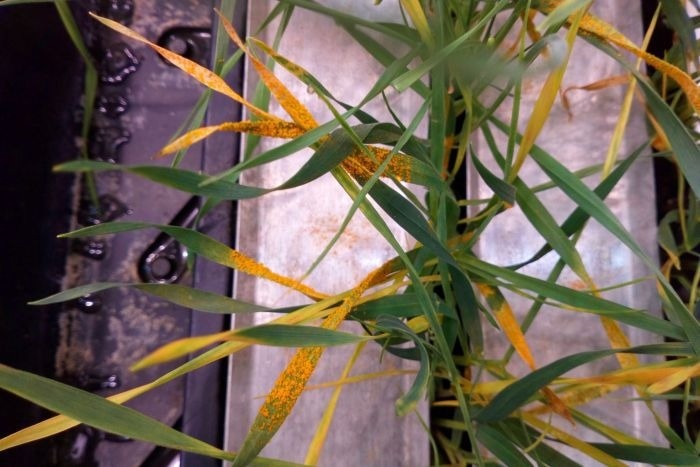 Image Credit: John Innes Centre
One mechanism keeping it under control is to use wheat varieties with natural genetic resistance to the pathogen.
New Strains of Yellow Rust in the UK
But last year, new strains of yellow rust appeared in UK wheat fields that have overcome this critical genetic defence and are posing a threat to wheat crops.
This loss of plant resilience affects half of all wheat grown in the UK, putting farmers’ livelihoods and a vital crop for food at risk.
Using more fungicide is one weapon to tackle the increased vulnerability of UK wheat, but that carries negative impacts for the environment.
That’s why UK Research and Innovation (UKRI) and the Department for Environment, Food and Rural Affairs (Defra) are investing in British crop experts, the John Innes Centre.
The John Innes Centre will lead a collaborative project to respond to this emerging threat.
The Watkins Collection
It draws on the genetic diversity found in the historic A.E. Watkins collection of bread wheat housed at the John Innes Centre.
The Watkins collection is a comprehensive collection of wheat germplasm collected across 32 countries worldwide nearly 100 years ago.
The collection is a vital resource for researchers studying wheat, and by using these ancient seeds they are working to develop more resilient wheat varieties to feed us.
Many modern wheat varieties were bred to only have one resistance gene, assuming that pesticides would be used if this was overcome.
But older varieties had to have a variety of resistance genes to survive.
Galvanizing UK Bioscience
The investment is part of UKRI’s work on tackling infections.
Rapid response funding enables us to galvanize the UK research community to tackle emerging threats against humans, animals and plants (including food crops).
The breakdown of this primary genetic defence poses a direct threat to the UK’s wheat crop.
This work demonstrates that sustained, strategic investment in UK bioscience enables a swift data-driven response to such a threat.
Through this partnership between UKRI and Defra, we are empowering British scientists to ‘mine’ the historic Watkins collection for new, natural defences.
By unlocking the genetic secrets of these 100-year-old seeds, we can help provide farmers with resilient wheat varieties, safeguarding our food security while reducing the need for chemical fungicides."
Professor Anne Ferguson-Smith, Executive Chair, Biotechnology and Biological Sciences Research Council
Responding to Emerging Threats
Farming Minister, Dame Angela Eagle, said:
"We’re backing innovation to address new threats as they emerge to help create a productive, profitable, and sustainable future for British farmers and deliver our Food Strategy."
"This joint rapid research and development program with UKRI underlines our approach to following the science to give our farmers and growers the tools they need to build a resilient food system in the face of new challenges."
Defra Chief Scientific Adviser, Professor Anjali Goswami, said:
"We’re committed to ensuring world-class science is at the heart of how we combat new and emerging threats to our food and farming sectors to build a stronger, more competitive future for British agriculture."
"This R&D program is an excellent example of our partnership working at pace with UKRI to tackle real-world challenges and build a sustainable and resilient food system, helping protect the UK’s wheat harvest."
Unlocking Wheat Diversity
Professor Diane Saunders, Group Leader at the John Innes Centre, said:
"Witnessing such a large-scale breakdown in yellow rust resistance in 2025 was unprecedented."
"However, the recently unlocked diversity in ancient wheat seeds provides us, the research community, a fantastic resource of unutilized genetic disease resistance."
"We can now mobilize this untapped genetic resistance to rapidly respond to this emergent threat and ultimately, protect the UK’s wheat harvest."
 A Tiny Worm Helps Scientists Unravel a Genetic Clue to Kidney Disease