Circadian clocks play an important role in our health and well-being by synchronizing the 24-hour biological cycles with light and dark exposure. Disruptions in the rhythms of these clocks, such as jet lag and daylight saving time, might put their everyday operations out of sync.
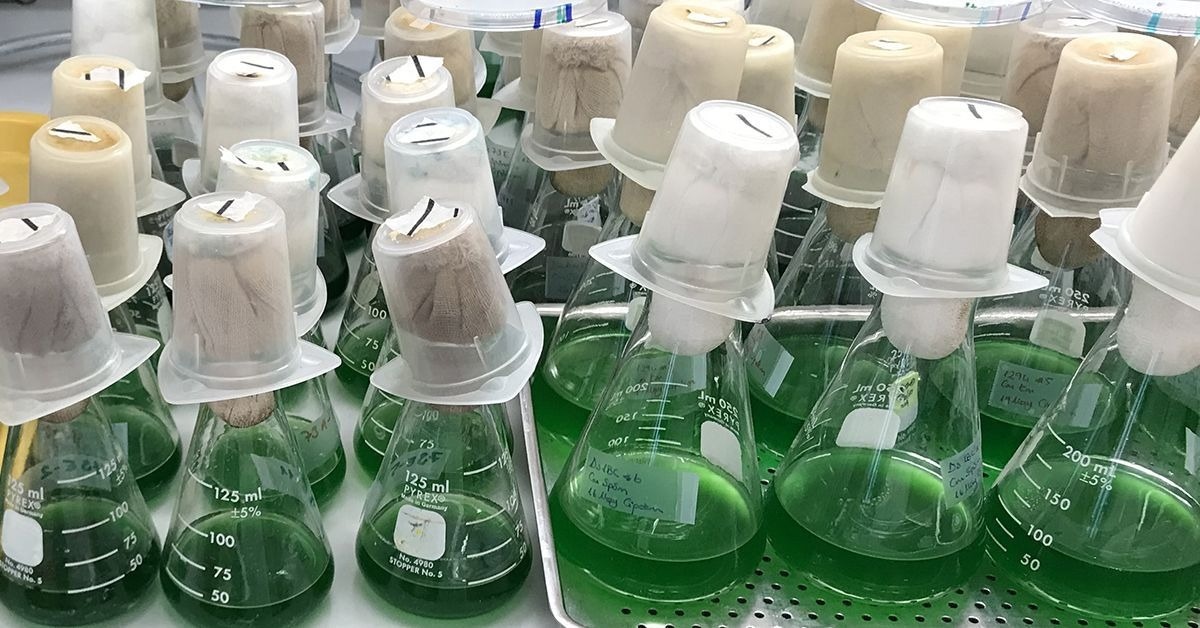 Scientists have solved how circadian clocks within cyanobacteria, tiny organisms also known as blue-green algae, are able to precisely control when different genes are turned on and off during the 24-hour cycle. Image Credit: University of California, San Diego
Scientists at the University of California, San Diego, are now getting closer to comprehending the fundamental workings of these circadian clocks.
Researchers have solved the mystery of how the circadian clocks in microscopic bacteria can precisely control when distinct genes are turned on and off during the 24-hour cycle. Their findings were published in the journal Nature Structural and Molecular Biology.
The small aquatic organisms known as blue-green algae, or cyanobacteria, are where the researchers found their findings. They discovered the connections between the essential elements of the cyanobacterial 24-hour clock, which regulate the rhythmic expression of genes.
We were able to show how a single signal from the clock can turn one set of genes on and another set off, generating opposite phases of gene expression. In that cell, that means some cellular processes are peaking at dusk and others at dawn.
Susan Golden, Study Senior Author and Biological Sciences Distinguished Professor, University of California, San Diego
Circadian clocks have gained popularity in recent years as a result of their importance in health and medicine. Medications and vaccinations are more effective when taken at specific times of the day to coincide with the circadian cycle.
In the new study, the researchers found the minimum elements required to drive circadian gene transcription, the initial stage of gene expression in cyanobacteria.
We now know the components we need to rebuild this clock to generate circadian gene transcription. In general, circadian systems are very complex but with this simplified cyanobacterial system we only need six proteins and we have a clock.
Mingxu Fang, Study First Author and Former Postdoctoral Scholar, University of California, San Diego
The research team's discovery of the cyanobacterial clock is noteworthy because it differs from the clocks found in humans and other eukaryotes.
It’s a completely independently evolved system.
Kevin Corbett, Study Coauthor and Professor, Departments of Molecular Biology and Cellular and Molecular Medicine, University of California, San Diego
Corbett oversaw the study's use of cutting-edge equipment called cryo-electron microscopy, which has become one of the most effective ways to comprehend fundamental life characteristics in recent years.
The researchers were subsequently able to use purified components to construct a clock that timed transcription after obtaining the basic clock working principles. They demonstrated how to turn on a test gene rhythmically with a predictable phase of expression using a synthetic gene expression system that may be transferable to other bacteria, including Escherichia coli (E. coli), the biotechnology workhorse.
“These are practical biological tools that can be further developed to regulate the production of valuable biological products in cyanobacteria or other types of microbes utilized in biotechnology,” stated Golden.
Coauthor Yulia Yuzenkova added, “The most astonishing feature is that the vast complexity and variability of cellular gene activity can be harmonized into a beautiful rhythmic pattern by a clocking mechanism that is remarkably simple. This research enhances our comprehension of biological rhythms and supports applications that range from microbial biotechnology to human gut health.”
Source:
Journal reference:
Fang, M., et al. (2026) Mechanism and reconstitution of circadian transcription in cyanobacteria. Nature Structural & Molecular Biology. DOI: 10.1038/s41594-025-01740-0. https://www.nature.com/articles/s41594-025-01740-0.
 Scientists Map Overlapping Genetic Markers in Serious Human Eating Disorders