A first-of-its-kind three-organ human microfluidic platform uncovers how inflammatory signals travel between the gut and brain, offering fresh mechanistic insight into the early drivers of neurodegenerative disease.
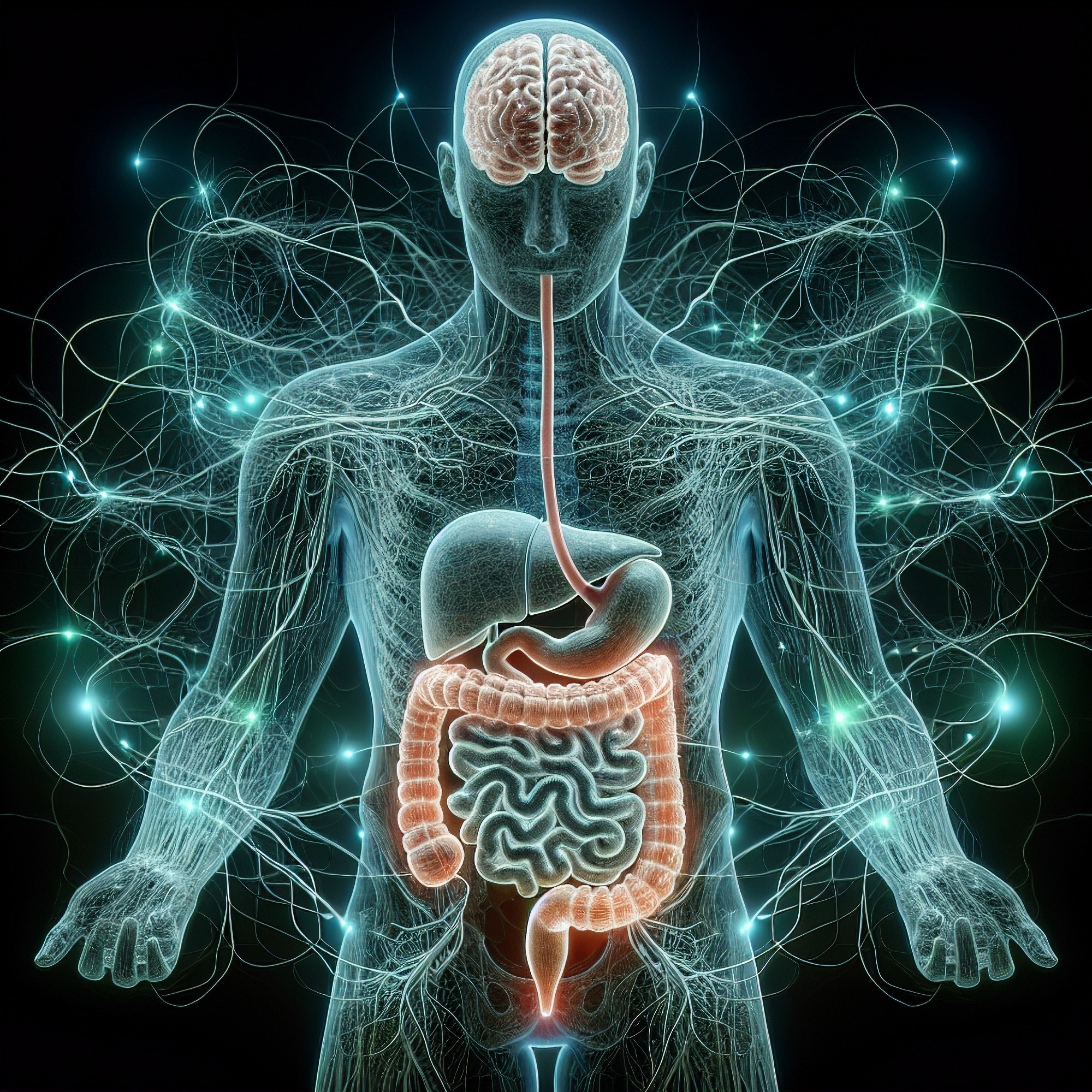 Image credit: Shutterstock AI Generator/Shutterstock.com
In a recent study published in Nature Communications, researchers developed a three-dimensional (3D) human gut–brain–vascular (hGBV) model that integrates the intestinal barrier, vasculature, and brain tissue within a single microfluidic platform. The system facilitates dynamic, circulation-mediated analysis of bidirectional gut–brain interactions.
Findings show that gut-derived toxins drive barrier leakage, neurovascular unit dysfunction, and inflammatory neurodegeneration-like injury, while brain-origin inflammation strongly disrupts the vascular interface and induces mild gut remodeling. Together, the results provide key mechanistic insight into microbiota-driven neuroinflammation and position the hGBV model as a promising tool for preclinical mechanistic studies of neurodegenerative disease research.
Why Isolated Organ Models Miss Systemic Signaling
The gut–brain axis (GBA) is increasingly recognized as a key regulator of neurological and systemic health. Mounting evidence links gut dysbiosis to neurodegenerative disorders such as Alzheimer's disease (AD) and Parkinson's disease (PD). Clinical and preclinical studies implicate microbial metabolites, immune activation, and blood–brain barrier disruption in accelerating neuronal injury.
However, most in vitro models examine isolated systems, such as gut- or brain-on-chip platforms, without integrating vascular flow or multi-organ crosstalk. The fragmentation limits mechanistic understanding of bidirectional inflammatory signaling, underscoring the need for physiologically relevant, interconnected human models to advance therapeutic development.
Engineering A Connected Gut–Brain–Vascular Microfluidic System
In the present study, researchers engineered a three-dimensional microfluidic model of gut-brain-vascular signaling to overcome the limitations of previously developed single-organ systems.
The platform comprised three compartments connected internally: a gut compartment (GC), brain compartment (BC), and vascular compartment (VC). The team constructed each compartment from human-derived cells to replicate native tissue architecture. They arranged human intestinal epithelial Caco-2 cells into a polarized, lumenized epithelium with villus-like architecture to form the gut barrier.
The vascular channel incorporated induced microvascular endothelial brain cells to simulate a blood–brain barrier (BBB)-like neurovascular interface and molecular transport mechanisms. The BC contained astrocytes and neurons derived from neural progenitor cells to recreate the neurovascular unit (NVU) structure and function.
The researchers assembled the system stepwise to ensure physiologically relevant differentiation and inter-compartment connectivity. They performed immunofluorescence imaging, gene expression analyses, and fluorescein isothiocyanate (FITC)-dextran permeability assays to validate structural and functional findings, confirming barrier integrity and compartmental separation.
In addition, the team compared static culture conditions with dynamic microfluidic flow to assess vascular morphology, tight junction formation, and transport properties. They exposed the GC to Escherichia coli-conditioned culture media or lipopolysaccharide (LPS) to mimic microbial inflammation and model gut-to-brain signaling.
Further, the researchers quantified changes in permeability, inflammatory mediators, and neurodegenerative markers, including α-synuclein and amyloid-β. They induced AD-like pathology via lentiviral expression of APPSL (familial AD) carrying the Swedish and London APP mutations. They also modeled PD-like pathology using preformed α-synuclein fibrils to evaluate brain-to-gut signaling. Subsequently, they assessed inflammatory activation, endothelial dysfunction, protein aggregation, and structural alterations across all compartments to characterize the bidirectional inflammatory crosstalk.
Gut Inflammation Drives Barrier Failure and Synaptic Loss
The hGBV platform successfully recapitulated dynamic gut–brain–vascular interactions under both physiological and inflammatory conditions. Under flow, the model developed enhanced villus-like gut architecture, tighter epithelial junctions, shear-adapted endothelial morphology, and evidence of coordinated interactions within the neurovascular unit. The findings confirmed that the model was more physiologically relevant than static culture.
Following treatment with E. coli culture supernatant or LPS, the GC exhibited marked barrier disruption. Changes included reduced occludin (OCLN) and zonula occludens-1 (ZO-1) levels, loss of villus marker villin-1 (VIL1), and increased permeability. Endotoxins translocated into the VC and BC, where endothelial tight junctions declined by 40–50 % and astrocytes adopted a reactive phenotype, marked by decreased aquaporin-4 (AQP4) and increased glial fibrillary acidic protein (GFAP).
The cascade culminated in complement activation, synaptic loss, and a pronounced pro-inflammatory cytokine signature. The team noted upregulation of pro-inflammatory cytokines, including interferon-gamma–induced protein 10 kDa (IP-10), interleukin-6 (IL-6), and IL-8, as well as chemokines such as monocyte chemoattractant protein-1 (MCP-1) and regulated on activation, normal T-cell expressed and secreted (RANTES).
Notably, amyloid-β and α-synuclein accumulated across compartments, while phosphorylated tau and phosphorylated α-synuclein did not show broad elevation under gut-triggered inflammatory conditions, suggesting selective propagation of neurotoxic aggregates rather than widespread tauopathy.
The brain-origin pathology produced a distinct pattern. Robust amyloid-β42 accumulation and a highly pro-inflammatory cytokine milieu characterized AD-like conditions. PD-like models showed marked α-synuclein aggregation with a comparatively moderate inflammatory profile. In both cases, brain-derived inflammation disrupted astrocytic endfeet and endothelial junctions, leading to vascular leakage. However, gut alterations were modest, with partial villus remodeling but gut tight junction integrity largely preserved, consistent with limited intestinal barrier disruption relative to the pronounced vascular dysfunction.
A Preclinical Platform for Mechanistic Neurodegeneration Studies
The study findings establish the hGBV platform as a physiologically relevant human model of gut–brain–vascular crosstalk in neurodegeneration.
The findings indicate that gut-origin inflammation drives neurovascular dysfunction and neuronal injury, including synaptic loss and complement activation with selective amyloid-β and α-synuclein accumulation, while brain-derived inflammation predominantly compromises the vascular interface with comparatively mild gut remodeling.
These observations highlight the therapeutic promise of GBA-targeting in AD and PD, an area warranting further investigation rather than an established intervention.
Future studies could integrate patient-derived induced pluripotent stem cells, immune components, live microbiota, and single-cell transcriptomics to enhance physiological relevance. With continued refinement, the hGBV system offers a robust translational platform for biomarker discovery and may help inform the development of targeted therapies, while remaining complementary to in vivo models in neurodegenerative disease research.
Download your PDF copy by clicking here
Journal Reference
Tran, M. et al. (2026). A 3D gut-brain-vascular platform for bidirectional crosstalk in gut-neuropathogenesis. Nature Communications. DOI: 10.1038/s41467-026-69318-y. https://www.nature.com/articles/s41467-026-69318-y
 Scientists Pinpoint the Brain Circuit That Regulates Metabolism