Some aging-related changes in human cells occur in the cell nucleus, where the packaged form of DNA changes with age. Researchers at PSI indicate that older cells cannot respond adequately to environmental stimuli, which can lead to diseases. This discovery might help scientists prevent such changes and promote better health in old age.
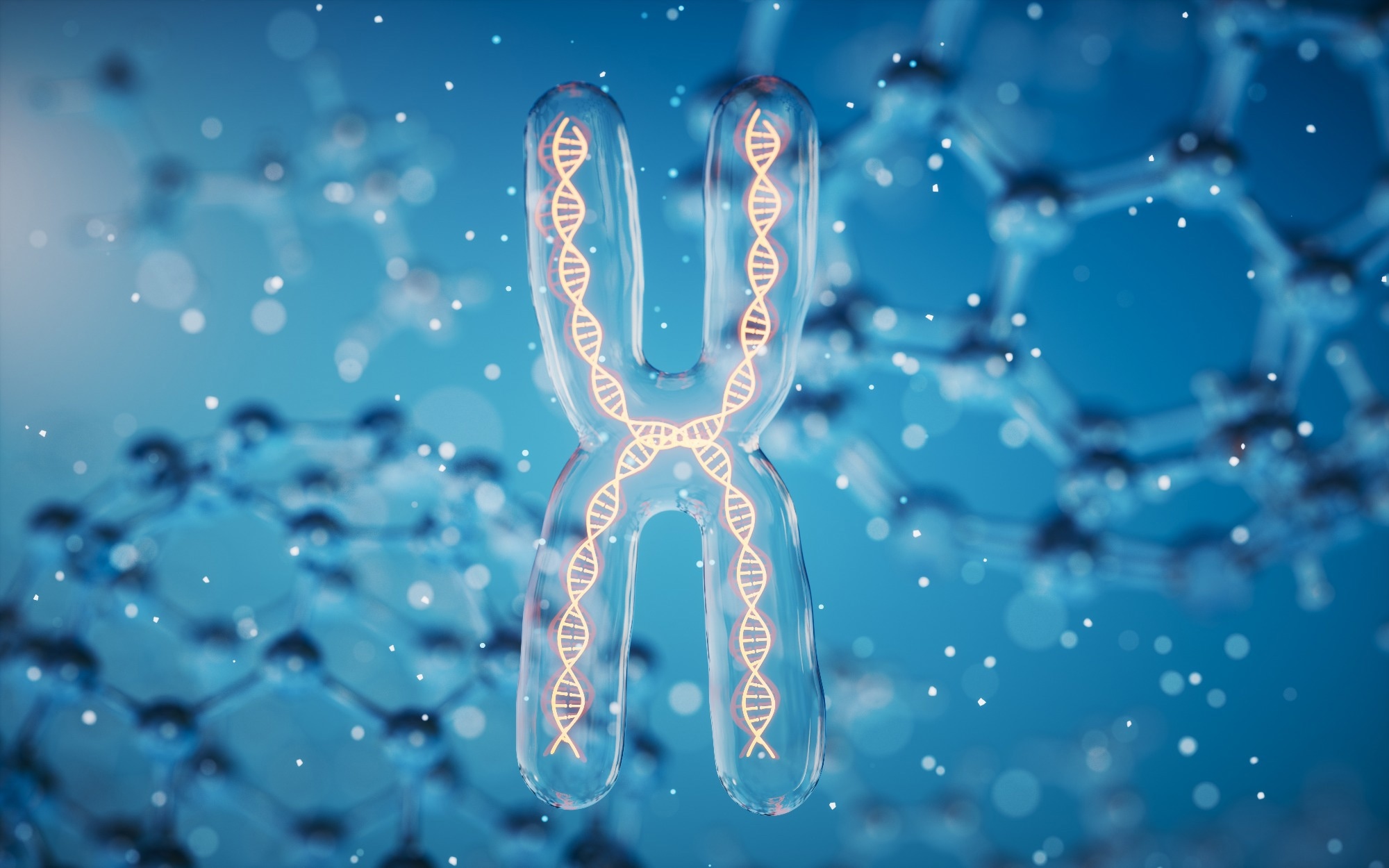 Image credit: Vink Fan/Shutterstock.com
As humans age, so do their cells. Although still active, they lose flexibility, stop dividing, and occasionally respond incorrectly to signals. The reason for this is the chromatin, a packed form of DNA, within the cell nuclei. The research examines skin cell samples from people of various ages in a laboratory setting, and the published findings are found in the scientific journal PNAS.
Scientists investigated how different skin cells reacted to a specific chemical messenger when mechanical tension was applied. They compared skin cells from 10-year-old children to those of 75-year-olds. As predicted, the response of older people's cells to the identical stimuli was distinct and substantially weaker.
The researchers were able to pinpoint a particular cause: chromatin in the cell nucleus changes with age. As a result, some genes (DNA sections) can no longer be read reliably. This process, known as gene expression, is necessary to make the proteins required by the organism since genes provide the instructions for constructing those proteins. However, if the chromatin structure changes with age, other processes may be activated instead, potentially harming the organism.
Chromatin acts like a filter for potential gene expression. Processes such as wound healing or tissue repair in the brain are impaired if the activation of the appropriate genes no longer works properly.
G. V. Shivashankar, Study Lead Researcher, Center for Life Sciences, Paul Scherrer Institute
Young Cells Versus Old
Shivashankar’s team, which included the study’s first author, PhD student Yawen Liao, conducted the study using connective tissue cells known as fibroblasts.
“We could just as easily have used brain or muscle cells. The mechanisms are basically comparable in all cells,” Shivashankar pointed out.
The cells were implanted in a 3D collagen gel matrix, a standard technique for working with tissue samples. They then exposed the gel to mechanical tension. Normally, the gel would contract like a drop of water, but a ring of glass held it taut across its surface. They also included the growth factor TGF-β, which acts as a chemical messenger to control cell maturation, division, and the immune response. This was meant to demonstrate how the cells responded to a biochemical signal.
The response to the signal that we observed in the older cells was different and significantly weaker, even though the signal was exactly the same in both cases.
Yawen Liao, PhD Student, Paul Scherrer Institute
Young cells contracted against the ring’s tensile force, increasing their rate of division. Older cells responded similarly, but much more weakly. When the ring was removed, the older cells continued to contract, whereas the younger cells relaxed again.
The researchers next investigated modifications in elderly cells that may explain the stark behavioral differences compared to young cells. Using advanced imaging techniques and molecular biological procedures, they could identify the three-dimensional structure of chromatin at the molecular level.
“Here we saw the decisive difference. It seems as though chromatin opens up with age, so to speak,” Liao added.
Areas of the genome that were previously densely packed and hence inaccessible because they included genes unrelated to that specific cell type are now more freely accessible.
The result is an increase in incorrect activations. Instead of reading the appropriate genes for the process in question, there is an increase in the expression of unsuitable genes and the production of unwanted proteins, for example. If this gets out of hand, it can lead to diseases, including cancer.
Yawen Liao, PhD Student, Paul Scherrer Institute
Can Ageing Cells be Brought Back into Shape?
Shivashankar’s team intends to conduct more studies to determine whether and how these findings might be leveraged to develop new therapeutic techniques.
“Perhaps we can selectively modify the shape of the chromatin and prevent it from changing in this way. Or else it might be possible to return it to a youth-like state,” Shivashankar stated.
Although this would not prevent aging, it might be feasible to slow down or delay age-related degeneration in particular types of tissue.
In another project, Shivashankar and his researchers created a novel imaging approach that uses artificial intelligence to detect pathologically altered chromatin patterns in high-resolution images. The AI system compares the chromatin of blood cells, which play an important part in the body's immune response to many diseases, to the chromatin of healthy blood cells using hundreds of criteria such as form, texture, and light spectrum.
These patterns are now being documented in a comprehensive reference database. In conjunction with this form of early detection, selectively changing the structure of chromatin could open up new possibilities for healthy aging in the long run.
 KAIST Researchers Develop NUDGE to Steer Cell States Without Permanent Alteration