Breast cancer’s most high-risk cells may be determined at the tumor’s origin, where a fine-tuned balance between invasion and growth dictates whether cancer spreads or remains dormant.
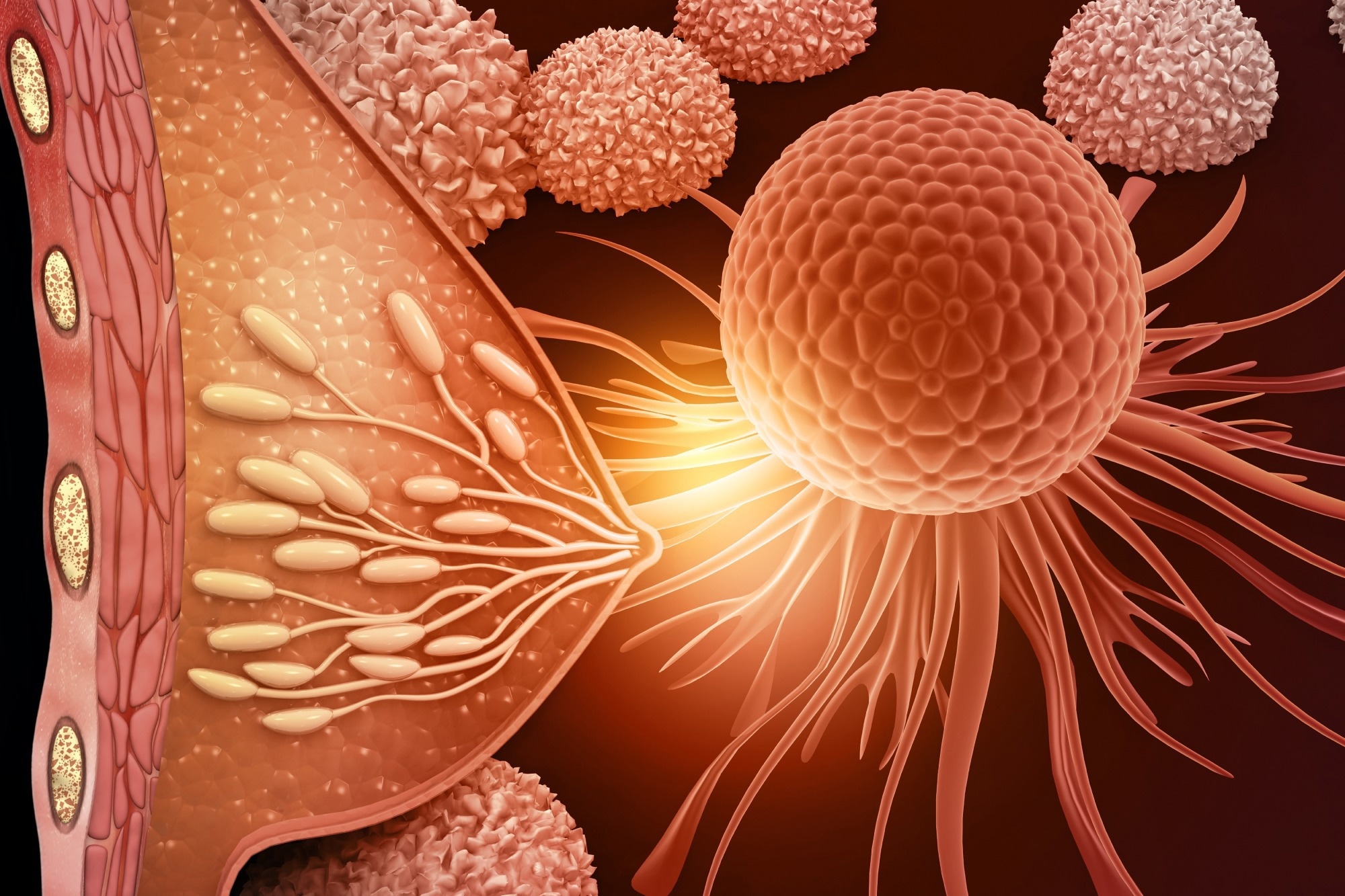 Study: A hormetic transcriptional program coregulates invasion, proliferation and dormancy to define metastatic potential. Image credit: Explode/Shutterstock.com
A recent study published in Nature Communications suggests that the metastatic potential of breast cancer cells may be established far earlier than previously recognized, within the original tumor site. By integrating human datasets, genetically engineered mouse models, and multi-omics analyses, researchers have pinpointed paired related homeobox 1 (PRRX1), a transcriptional regulator, as a key factor coordinating tumor cell invasion, growth, and dormancy states.
The results suggest that cancer cells may leave the tumor already primed with different metastatic capacities, offering fresh insight into the biological drivers of disease progression.
Why Breast Cancer Metastasis Remains Hard To Predict
Metastasis remains the leading cause of cancer-related death, yet the biological features that define metastatic cells are still poorly understood. Despite advances in therapy that have extended survival, many patients experience metastatic relapse, often with limited warning, highlighting critical gaps in current knowledge. Researchers increasingly recognize that metastasis is not driven solely by genetic mutations but also by cellular plasticity and dynamic interactions with the tumor microenvironment, and that only a small fraction of tumor cells complete the metastatic process.
However, the factors that govern metastatic competence remain unclear. Addressing these gaps is essential for improving early risk stratification, preventing disease spread, and developing more effective, targeted interventions. For patients, this uncertainty often translates into years of clinical uncertainty and monitoring after treatment, as metastasis can emerge long after the original tumor is removed, often without clear warning signs.
Multi-Omics Study Maps Metastasis Drivers Across Models
In this study, researchers combined clinical samples, advanced sequencing, and preclinical models to dissect the role of Prrx1 in metastasis. They examined 94 invasive ductal breast carcinoma samples (grade 3) from patients who underwent surgery between 2010 and 2011, performing histological and immunohistochemical assessments with independent pathological review. Using single-cell segmentation of immunofluorescence data, they quantified PRRX1 expression and stratified tumors into negative, intermediate, and high-expression groups.
To model these findings, the team used genetically engineered mouse models, including the MMTV-PyMT system crossed with conditional Prrx1 alleles and reporter lines. They isolated cancer cells using fluorescence-activated cell sorting (FACS). Subsequently, they extracted ribonucleic acid (RNA) to determine gene expression using quantitative reverse transcription-polymerase chain reaction (RT-qPCR). The researchers then performed an immunofluorescence-based assessment of tumor and lung metastases. Functional assays, including migration and growth analyses, further characterized tumor behavior.
The study integrated spatial transcriptomics with single-cell RNA sequencing (sc-RNAseq) and chromatin accessibility profiling to map invasive tumor regions and define cell states. The team performed differential gene expression analyses to identify invasive cell populations and construct an invasion-associated gene signature.
The researchers complemented the data with a single-cell assay for transposase-accessible chromatin using sequencing (single-cell ATAC-seq) to examine regulatory elements and transcription factor binding. Lastly, engineered human breast cancer cell lines with graded PRRX1 expression and analysis of large clinical datasets, including the Molecular Taxonomy of Breast Cancer International Consortium (METABRIC), validated the observed molecular and phenotypic patterns across systems.
Intermediate PRRX1 Levels Linked To Highest Metastatic Burden
The team found that Prrx1 regulates metastatic potential, demonstrated by a nonlinear relationship between its expression and disease progression. Although this factor is required for invasion, its abundance influences whether cancer cells establish metastases. Tumor cells expressing elevated levels showed strong invasive behavior but largely remained dormant, limiting metastatic expansion. By contrast, those with moderate expression maintained invasive capacity and proliferation, leading to the greatest metastatic burden across patient samples and mouse models.
Single-cell and spatial transcriptomic analyses confirmed that invasive tumor regions harbor distinct cell populations enriched for epithelial-to-mesenchymal transition (EMT) signatures, with Prrx1 prominently expressed in these clusters, which represent a specialized subset of tumor cells at the invasive edge. These intermediate-Prrx1 cells retained mesenchymal traits while avoiding dormancy programs, enabling rapid expansion at metastatic sites.
Mechanistically, Prrx1 is supported as a direct regulator of genes involved in cell cycle control and dormancy, repressing proliferation at high levels while permitting growth at intermediate levels. This dose-dependent regulation underscores that subtle shifts in transcription factor activity can reshape tumor cell fate and behavior.
Importantly, patient data mirrored these findings. Tumors with moderate PRRX1 expression showed the highest incidence of metastasis, whereas PRRX1-high tumors were less likely to develop metastases, despite their invasive phenotype, likely due to activation of dormancy programs. This biphasic, or hormetic, behavior highlights that metastatic competence depends not simply on the presence of key regulators but on their precise expression levels, reinforcing the importance of quantitative biomarker assessment in clinical settings.
PRRX1 Biomarker May Improve Breast Cancer Risk Prediction
The findings position Prrx1 as both a mechanistic driver and a potential biomarker of metastatic competence, with important clinical implications. Measuring intermediate PRRX1 expression, alongside invasion and proliferation signatures, could refine risk stratification and identify patients most likely to develop aggressive disease. However, this approach remains to be validated in prospective clinical studies.
Looking ahead, large prospective multicenter studies will be essential to validate PRRX1 as a predictive biomarker across treatment settings and disease stages, including lower-grade tumors. The results also open avenues for therapeutic strategies considering dosage-dependent effects, either targeting invasive, proliferative cell states or maintaining dormancy to prevent metastatic outgrowth. Extending this framework to circulating tumor cells and other cancers may further improve early detection and personalized intervention strategies.
Download your PDF copy by clicking here.
Journal Reference
Jiménez-Castaño, R., Narwade, N., Moreno-Bueno, G. et al. (2026). A hormetic transcriptional program coregulates invasion, proliferation and dormancy to define metastatic potential. Nature Communications, 17, 3425. DOI: 10.1038/s41467-026-70242-4. https://www.nature.com/articles/s41467-026-70242-4
 Stable Isotope Carbon Tracing Proves Uncoupling Inhibits De Novo Purine Synthesis