Approximately one million people die each year from infections caused by Candida albicans, a fungus that ordinarily lives peacefully in the human mouth and gut. A recent study published in Nature Microbiology revealed the immune signals that allow C. albicans to break through the mucosal barrier and why some patients are at a greater risk of fungal infections than others.
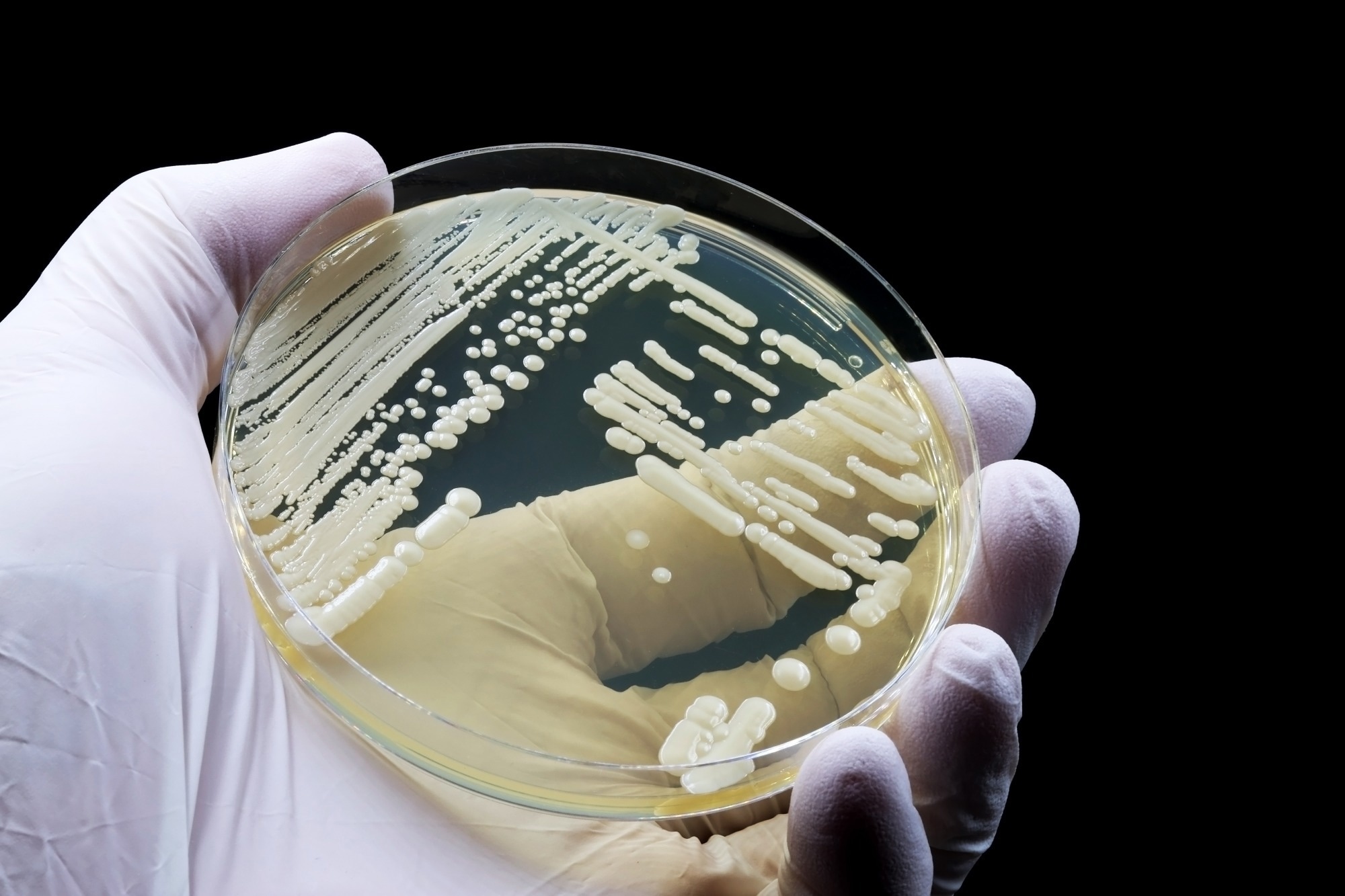 Study: IL-1 family signalling drives mucosal defence against systemic Candida albicans infection. Image Credit: TopMicrobialStock/Shutterstock.com
What are Candida albicans?
Candida albicans normally exists as a harmless member of the human microbiota, kept in balance by mucosal immune defenses. When this balance fails, the fungus can overgrow locally, producing superficial infections of the mouth or genital tract.
When the fungus crosses mucosal barriers and enters the bloodstream, it causes far more serious and invasive infections, affecting vital organs, such as the liver and spleen. This form of infection carries a strikingly high mortality rate and disproportionately affects immunocompromised patients, including those undergoing cancer treatment or living with human immunodeficiency virus (HIV).
Although mucosal defenses help contain fungal overgrowth, the precise molecular signals that initiate this protection, and why some susceptible individuals still contract lethal systemic infections, have remained unclear, limiting efforts to design targeted preventive therapies.
About the Study
Central to the fungus's ability to damage tissue is candidalysin, a toxin secreted during the invasive hyphal growth stage, which triggers a cascade of protective host responses, including antimicrobial peptide release, immune cell recruitment, and cytokine production.
The researchers exposed human oral epithelial cells to different strains of C. albicans, including a wild-type strain, a mutant strain deficient in the toxin candidalysin, which is secreted by the fungus during the invasive hyphal growth stage, as well as the corresponding revertant strain. They then performed bulk ribonucleic acid (RNA) sequencing to identify which immune signaling pathways were activated. Cells were also treated directly with synthetic candidalysin at two concentrations to confirm dose-dependent effects.
To study the consequences of losing this signaling network in a living organism, the team used mice lacking the interleukin (IL)-1 receptor accessory protein, which is required for signaling by several IL-1 family cytokines, and a control group of normal mice. Both groups were infected sublingually with C. albicans to induce oropharyngeal candidiasis, and fungal burden was measured in tongue tissue over several days through colony counting.
Additional experiments repeated this infection using the candidalysin-deficient fungal strain to determine whether the toxin itself was necessary for disease severity. Tongue tissue was examined using histological staining techniques to visualize fungal invasion and immune cell infiltration, while gene expression and flow cytometry were used to track antimicrobial peptides, cytokines, and specific immune cell populations over the course of infection.
To map cellular sources of signaling in finer detail, the researchers performed single-cell RNA sequencing on infected tongue tissue, followed by computational analysis of predicted cell-to-cell communication networks. The researchers also conducted experiments in which they selectively depleted neutrophils or blocked IL-1 or IL-17 receptors to understand how the immune system responds to C. albicans infections under conditions mimicking severe patient vulnerability.
Key Findings
A specific group of IL-1 family cytokines is essential for inhibiting C. albicans at the mucosal surface, and their absence, when combined with a weakened immune system, allows the fungus to spread throughout the body, causing systemic infection. Infection of oral epithelial cells also confirmed that the secretion of candidalysin triggered the rapid production of several IL-1 family members.
Mice lacking the IL-1 receptor accessory protein struggled to control early infection and showed substantially higher fungal loads and pronounced weight loss compared with normal mice, along with visibly disrupted mucosal tissue and fungal invasion. However, the mice were eventually able to clear the infection due to a delayed but strong neutrophil recruitment linked to a stress-associated lipid signaling pathway, which occurred independently of IL-1 signaling.
Single-cell analysis revealed that epithelial cells are the first to produce protective cytokines, with fibroblasts and immune cells amplifying the response as the infection progresses. Interestingly, when researchers combined the loss of IL-1 signaling with neutrophil depletion, mimicking the compounded immune deficits seen in vulnerable patients, C. albicans breached mucosal barriers entirely, disseminating first to the liver and later to the spleen, kidneys, and brain, closely resembling the pattern of organ involvement documented in severely immunocompromised patients.
However, blocking IL-17 or IL-1 receptor signaling alone in neutropenic mice did not result in a similar spread of the infection, which suggested that combined IL-1 family activity, rather than any single pathway, was fundamental to safeguarding against C. albicans infection. Nonetheless, the authors note that further work is needed to understand how these mechanisms extrapolate to human patients and how these pathways interact in patients with immune deficiencies.
Conclusions
The study identified the IL-1 family and neutrophil action as a central safeguard against invasive and systemic C. albicans infections. Furthermore, the absence of both IL-1 family activity and neutrophil recruitment resulted in the dissemination of the infection to vital organs and was fatal.
These findings suggest that enhancing IL-1 family activity could provide protective therapy against C. albicans infections and provide the foundation for developing methods to identify at-risk patients.
Journal reference:
Griffiths, J. S., Kempf, A., Pickering, R. J., Priest, E. L., Paulin, O. K. A., Lortal, L., Donkin, A., Hepworth, O. W., Wickramasinghe, D. N., Pellon, A., Stevens, P. A., Farnan, L., Lau, A., Papini, H., Dhami, P., Gaffen, S. L., Richardson, J. P., & Naglik, J. R. (2026). IL-1 family signalling drives mucosal defence against systemic Candida albicans infection. Nature Microbiology. DOI:10.1038/s41564-026-02431-2
https://www.nature.com/articles/s41564-026-02431-2
 KAIST Researchers Develop NUDGE to Steer Cell States Without Permanent Alteration