An extensive, first-of-its-kind research study by ARUP Laboratories clarifies the clinical value of atypical findings from prenatal cell-free DNA (cfDNA) screening and their impact on pregnancy outcomes. The study, which investigated the connection between atypical prenatal cfDNA screening results and the diagnostic yield of follow-up testing, found that atypical findings frequently indicate clinically relevant diagnoses.
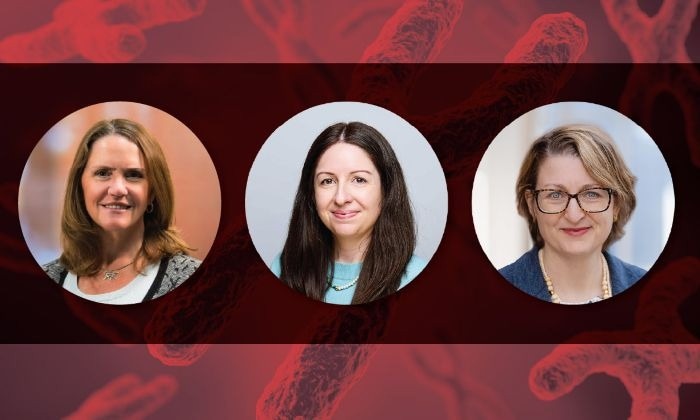 ARUP researchers, including (left to right) Danielle LaGrave, MS, LCGC, Lauren Wallace, MS, LCGC, and Katie Rudd, PhD, FACMG, have investigated the connection between atypical cell-free DNA screening results and diagnostic findings.. Image Credit: ARUP Laboratories
"No one has conducted a study as large as this on atypical findings," said Katie Rudd, PhD, FACMG, ARUP medical director of Cytogenetics and Genomic Microarray. She and her peers analyzed more than 10 years of data and more than 200 cases with atypical cfDNA findings and follow-up prenatal, postnatal, or maternal testing.
"Why Atypical Findings Matter: Follow Up Testing Finds Diagnostic Results Related to cfDNA Screen," by authors Rebekah Whitham, BS, MA, Hannah S. Anderson, MS, LCGC, Danielle LaGrave, MS, LCGC, Lauren Wallace, MS, LCGC, and Rudd, was published in Genetics in Medicine, an official journal of the American College of Medical Genetics and Genomics (ACMG).
Prenatal cfDNA screening is noninvasive, blood-based testing used to assess fetuses for common chromosomal abnormalities, such as Patau syndrome (trisomy 13), Edward syndrome (trisomy 18), and Down syndrome (trisomy 21). Atypical results have increased in recent years, likely due to improving technology and broader screening efforts, said Rudd. The uncertainty of these results makes it difficult for providers and patients to determine a clear path forward.
When healthcare providers or patients receive atypical results from cfDNA screening, they don't know what to make of them - the results could be benign or pathogenic, associated with the pregnancy or with the mom, The findings of this study indicate that atypical results shouldn't be ignored and that they provide important clues for clinical management."
Katie Rudd, PhD, FACMG, Medical Director of Cytogenetics and Genomic Microarray, ARUP Laboratories
Prenatal cfDNA screening is used to identify risk of genetic disorders and minimize the need for more invasive diagnostic testing procedures, such as chorionic villus sampling or amniocentesis, which carry a slight risk of pregnancy loss. With a better understanding of what atypical results mean, providers and patients can identify their next course of action, such as whether diagnostic follow-up testing is necessary.
The study found that 50% (102 of 204) of atypical cfDNA cases had at least one abnormal result identified by follow-up diagnostic testing. Of these cases, 55 abnormal results were determined to be pathogenic, 18 identified variants of uncertain significance, and eight were likely benign. Copy number variations, or aberrations in the number of copies of a DNA sequence, were the most common diagnostic finding, but findings also included aneuploidy, chromosome rearrangement, and others.
Wallace, who spent a decade working as a maternal-fetal medicine genetic counselor in a high-risk pregnancy clinic before joining ARUP, always found patient consultations regarding atypical results to be particularly challenging.
"For patients, it's incredibly emotional and anxiety inducing to receive atypical results," Wallace said. "As clinical providers, we have wanted data around what these findings could mean for a long time and to know how best to further investigate them."
cfDNA screening can also identify maternal genetic anomalies that may not be present in the pregnancy.
"We found a surprisingly high percentage of maternal findings, which are often more benign than findings related to baby," Wallace said. These findings indicate that maternal testing may offer valuable insights and serve as an intermediary testing option before more invasive procedures.
Wallace and Rudd emphasized that the findings of this study indicate there is value in reporting and investigating atypical cfDNA results.
 Icosagen Develops Manufacturing-Ready CHO Cell Line for EPOK Therapeutics' Complex Tetravalent Antibody-Like Protein