One biodegradable plastic broke down almost completely in just 17 days, another took nearly a year to reach 84%, and a third barely degraded at all. New research reveals how plastic chemistry and landfill microbes shape what happens to these materials after disposal.
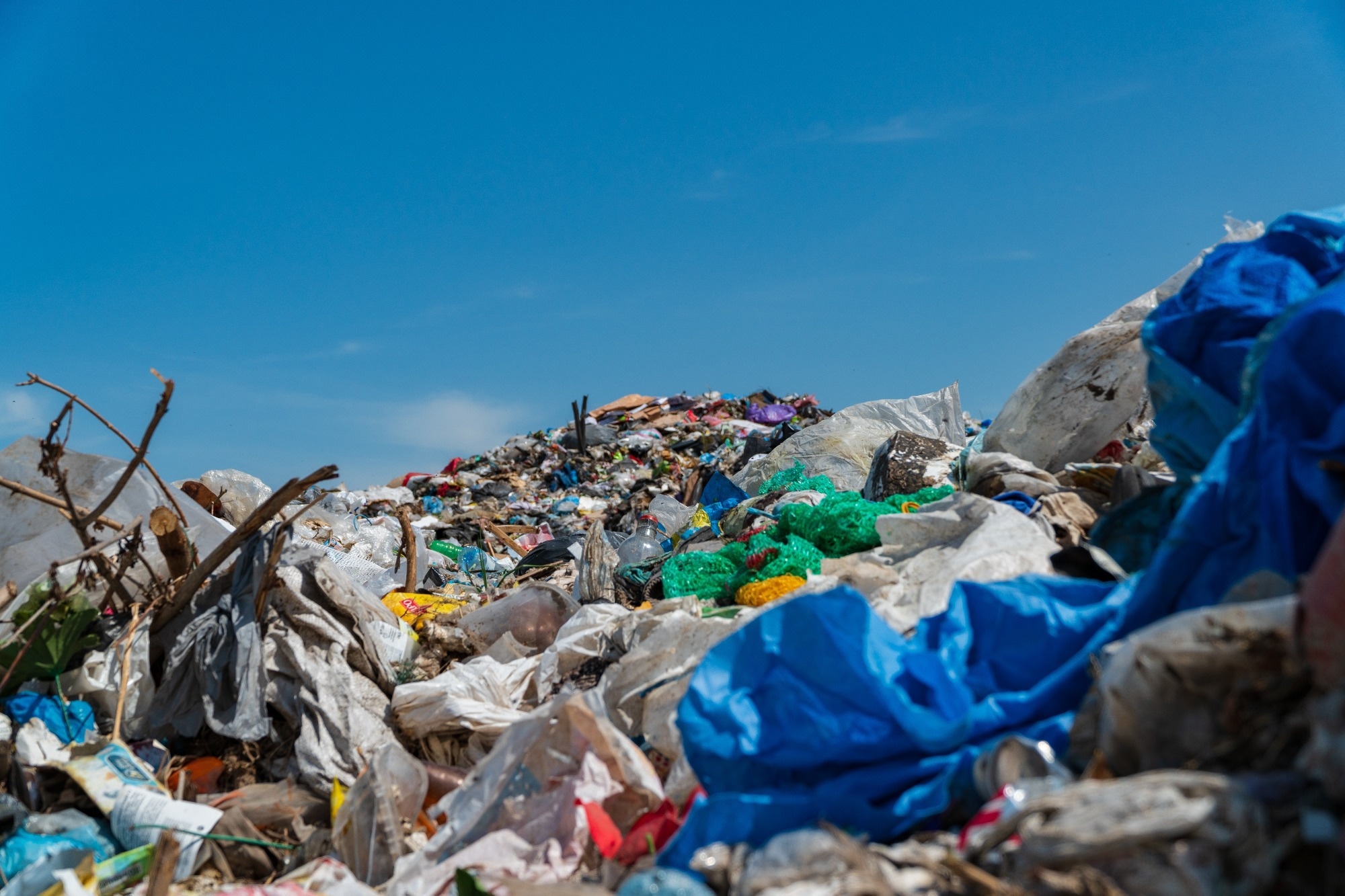 Study: Divergent anaerobic fates of biodegradable plastics in landfill leachate. Image credit: Jenya Smyk/Shutterstock.com
A recent study in Nature Communications explored how three biodegradable plastics fared under oxygen-free laboratory conditions using leachate collected from a working landfill in South Korea and measured how much of each was converted into biogas and which microbial communities and candidate enzymes were associated with their breakdown.
Why Biodegradable Plastics Do Not Always Break Down
Plastic pollution threatens ecosystems worldwide because conventional plastics persist in the environment for long periods. Biodegradable plastics are designed to be converted by microbes into simpler compounds and potentially into end products such as carbon dioxide and methane under oxygen-free conditions. This process can ultimately result in mineralization, where polymer carbon becomes gases such as carbon dioxide and methane.
However, the breakdown of such plastics depends on their chemical structure and on the microbial community present. Polyhydroxybutyrate (PHB) degrades quickly in many settings. Polylactic acid (PLA) typically shows limited degradation at moderate temperatures, and poly(butylene adipate-co-terephthalate) (PBAT) degrades slowly and unevenly outside industrial composting.
Furthermore, because collection systems for these plastics are limited, many may reach landfills in mixed waste. Landfills are layered, uneven environments that are hard to sample and simulate. It also remains unclear whether the genetic potential of microbes to degrade such plastics translates to real-life activity inside landfills.
Researchers Test Three Biodegradable Plastics In Landfill Leachate
In this study, the researchers produced films of PHB, PLA, and PBAT from polymer pellets, and used low-density polyethylene (LDPE), which is a conventional plastic, as a negative control. They measured film thickness, elemental composition, molecular weight distribution, and crystallinity. They then collected leachate from the Buyeo sanitary landfill in South Korea, flushed it with nitrogen gas to remove oxygen, and pre-incubated it for 17 days at 35 °C to reduce background biogas production and establish a stabilized inoculum for the experiments.
Anaerobic, or oxygen-free, biodegradation tests were conducted according to an international standard. They tested each type of biodegradable plastic with the leachate and also used bottles that contained only the leachate inoculum as controls to determine the gases released by the microbes independently of the added plastics.
The bottles were incubated at 35 °C for up to 320 days and sampled at set time points. The researchers measured the biogas volume with a pressure gauge and its composition using gas chromatography. They calculated biodegradation as net biogas production after subtracting gas generated by the leachate-only controls, divided by the theoretical maximum estimated from each plastic's elemental makeup. Soluble organic carbon (SOC), short-chain fatty acids (SCFAs), and lactate in the liquid were also quantified.
They also examined the retrieved films using scanning electron microscopy to assess surface damage and microbial colonization, and used infrared spectroscopy to detect chemical changes.
Deoxyribonucleic acid (DNA) and ribonucleic acid (RNA) were extracted separately from the biofilm to identify the microbes attached to the films and from microbes living freely in the liquid. The study used the 16S ribosomal RNA marker to profile microbial communities, while shotgun metagenomic and metatranscriptomic sequencing captured the genes present and those being expressed. The team assembled metagenome-assembled genomes (MAGs) and screened them against curated databases for putative depolymerases, which are enzymes that cut polymers into smaller pieces.
Three Biodegradable Plastics Show Strikingly Different Degradation Rates
The study found that the three biodegradable plastics followed sharply different degradation pathways in landfill leachate, and that the outcomes depended on both polymer properties and microbial activity at each plastic's surface, rather than on the biodegradable label alone. PHB was mineralized almost completely, reaching 99.9% within 17 days, and its films showed near-complete disintegration within 15 to 21 days. PLA, which was expected to resist breakdown at moderate temperatures, reached 83.6% mineralization over 320 days after a lag of about 20 days. PBAT and LDPE changed little, with mineralization of 2.7% and 0.4%, respectively, and their surfaces stayed smooth.
The two plastics also differed in how their breakdown products accumulated. PHB rapidly released soluble compounds and short-chain fatty acids, which were subsequently converted into biogas as methane production increased. PLA showed slower accumulation and conversion of soluble intermediates, with its later degradation appearing limited by the rate at which the polymer itself broke down.
Biofilms on PHB and PLA were less diverse than the free-living communities around them, suggesting that the plastic surfaces selectively enriched a narrower range of organisms, including potential contributors to polymer degradation. Genes resembling known PHB- or PLA-depolymerases were identified in 118 of 238 recovered genomes, yet only 49 showed evidence of transcription of these genes. Although this suggests that relatively few microbial lineages were expressing candidate degradation-related genes, transcription alone does not confirm that the enzymes were actively breaking down the plastics.
Of those 49, 37 were assigned to provisional taxonomic groups in the Genome Taxonomy Database, highlighting poorly characterized microbial lineages, and many fell outside the taxonomic range of previously validated plastic-degrading organisms. Pseudomonadota were dominant in early biofilms but showed transcription of candidate depolymerase genes in only two genomes, indicating that microbial abundance did not necessarily correspond to involvement in polymer breakdown.
The researchers also found that methane-producing microbes, including members of the genera Methanosarcina and Methanoculleus, were more abundant in the surrounding leachate than on the plastic surfaces. This suggests that polymer breakdown and the subsequent conversion of its products into methane involved different microbial populations.
The results suggest that a biodegradable label cannot predict what happens in a landfill, which has major implications for waste management. Furthermore, the finding that PLA may break down more than expected needs to be considered with respect to biogas production and for choosing microbial sources for anaerobic digesters. However, the authors noted that leachate incubations do not capture the physical and chemical variety of a real landfill, so the rates should not be applied directly to landfills.
The study had several limitations. The experiments used leachate from a single landfill under controlled laboratory conditions, which do not reflect the varying temperatures, chemical conditions, and waste composition of actual landfills. Consequently, the observed degradation rates cannot be directly extrapolated to real-world landfill environments. Moreover, the researchers identified candidate plastic-degrading enzymes through genetic similarity and gene transcription, rather than directly confirming their activity, leaving the precise roles of individual microbial populations uncertain.
Biodegradable Labels Cannot Predict Plastic Breakdown in Landfills
Overall, the study showed that the anaerobic fate of a biodegradable plastic in landfill leachate depended on the polymer type and on depolymerase gene transcription enriched on the surface where microbes attach to the plastic. While PHB degraded quickly, PLA broke down slowly but extensively, and PBAT stayed largely intact. The results indicated that landfills should be assessed as a distinct end-of-life setting, and that the genomic potential of the microbes alone cannot predict the degradation of these plastics in natural settings. However, the findings do not establish that PLA will biodegrade extensively in all landfills, as the experiments used leachate from one site under controlled laboratory conditions.
Reference
Choe, S., Choi, H., Moon, H., Shin, W., Park, S., Park, H., Lee, J. Y., Yoon, S., Konstantinidis, K. T., Lee, C., & Myung, J. (2026). Divergent anaerobic fates of biodegradable plastics in landfill leachate. Nature Communications. DOI:10.1038/s41467-026-78850-w. https://www.nature.com/articles/s41467-026-78850-w
 Carrier-Free Jet Vaccine Method Protects Against COVID-19 and Flu in Animal Studies