WEHI researchers have discovered a way to release a genetic 'brake' that silences healthy genes in Prader-Willi syndrome, opening a potential new path to treating the condition.
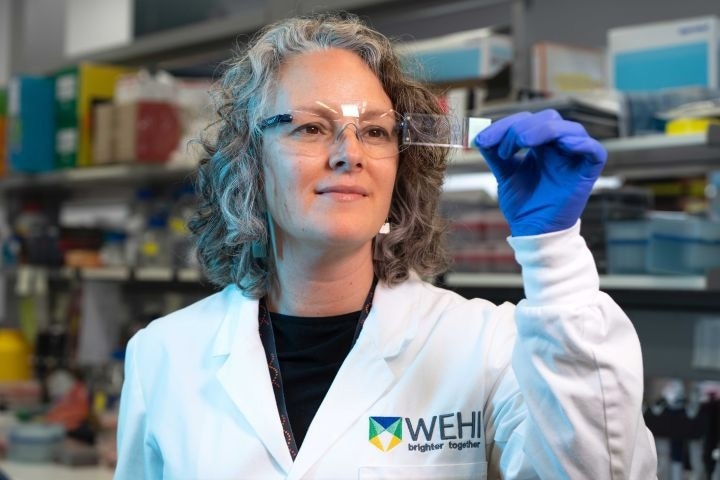 Professor Marnie Blewitt analyzing a slide used in her study that has found a potential way to treat Prader-Willi syndrome - a rare genetic disorder that remains with limited treatment options and no cure. Image Credit: WEHI
About 400,000 people worldwide live with Prader-Willi syndrome, a complex and devastating condition that affects the brain, causing lifelong physical and developmental challenges.
In a landmark new study, researchers showed that removing a protein called SMCHD1 lifts a genetic 'brake', allowing healthy but dormant genes to switch back on.
The discovery offers hope for a treatment that targets the underlying cause of Prader-Willi syndrome and is now being advanced towards potential new medicines through WEHI spinout company, Togglelux Therapeutics.
At a Glance
- WEHI researchers switched healthy but ‘silent’ genes back on by removing a genetic ‘brake’ called SMCHD1.
- The world-first study restored gene activity in patient-derived cells and animal models without causing problems elsewhere in the body.
- Potential new therapies targeting the cause of Prader-Willi syndrome, rather than individual symptoms, are now advancing through a WEHI spinout company.
How Dormant Genes were Reactivated in Prader-Willi Syndrome
Discovered at WEHI in 2008, SMCHD1 is a protein that helps regulate gene activity.
In Prader-Willi syndrome, it switches off certain genes essential for development and brain function – contributing to symptoms like developmental delays, intellectual disability and an insatiable appetite that can lead to obesity.
People with Prader-Willi syndrome often rely on multiple medications, surgeries and specialist care, but these treatments address symptoms rather than the cause, providing limited relief.
In the new study, published in Science Advances, the team combined CRISPR gene-editing, stem-cell and genomic technologies to track what happened when SMCHD1 was removed, measuring the effects across thousands of genes and in the most disease-relevant brain tissue.
Lead researcher Professor Marnie Blewitt said one of the study's most important findings was that gene activity could be restored without causing problems elsewhere in the body, a critical step towards developing future treatments for babies and young children.
We thought reactivating the ‘sleeping’ genes might be possible – what we didn't know was whether we could do it safely, We now have the strongest evidence that removing SMCHD1 can restore gene activity lost in Prader-Willi syndrome without disrupting the rest of the body."
Marnie Blewitt, Lead researcher and Professor, WEHI
Why a Safe and Effective Prader-Willi Treatment Matters
Prof Blewitt works closely with families affected by the condition and hears first-hand the challenges patients and carers face every day.
“I've seen children undergo multiple surgeries for scoliosis and met families whose lives revolve around medications, specialist appointments and managing often life-threatening symptoms,” she said.
“Prader-Willi is one of the most complex medical conditions a family can face. That's why the possibility of a treatment that targets the root cause, rather than symptoms, is so significant.”
The study was supported by the Prader-Willi Research Foundation Australia and Foundation for Prader-Willi Research USA, organizations founded and led by families affected by the condition.
Prader-Willi Research Foundation Australia CEO Kathlene Jones said the findings are an important step towards treatments that target the root cause of the condition.
“Most people can't conceive what daily life is like for a person living with Prader-Willi syndrome,” she said.
“Our children and adults have to navigate a world full of food they can't eat, while feeling an intense drive to consume it. That relentless pressure can bring great distress and very challenging behaviors that affect the whole family.”
“A treatment that addresses the root cause of the disease would be transformational. It could ease that burden for people living with PWS and bring relief to their families and carers.”
“While still at an early-stage, Professor Blewitt's work is a testament to what can be achieved when scientists and small, family-led patient organizations collaborate together.”
Homegrown Discovery Progresses Towards Potential New Prader-Willi Treatment
The new findings are the culmination of nearly two decades of research led by Prof Blewitt, marking an important milestone in a uniquely Australian scientific journey that began with her team’s discovery of SMCHD1 in 2008.
“This is my life's work, so it's incredibly rewarding to finally see this approach succeed and bring hope to patients,” said Prof Blewitt.
“Watching those dormant genes ‘wake-up’ in both patient-derived stem cells and animal models was a powerful confirmation that the strategy works.”
“It’s exciting to see a fundamental discovery that began at WEHI now being developed locally and advancing towards potential new medicines, with the ultimate goal of helping those affected by this complex condition.”
Therapeutic development is progressing through Melbourne-based biotechnology company Togglelux Therapeutics, a WEHI spinout focused on disease-modifying treatments for Prader-Willi.
The new study was also supported by the National Health and Medical Research Council, WEHI innovation funding, the Rebecca L. Cooper Medical Research Foundation, the Pamela and Lorenzo Galli Trust, the Brian M Davis Charitable Trust, the Australian Government Research Training Program and infrastructure support from the Victorian Government.
 Microbe Retains Self-Replication Machinery While Discarding Almost All Metabolic Pathways