Bacteria store surplus carbon inside their cells as a natural polyester called storage polyhydroxyalkanoates (sPHAs), a resource once believed accessible only to fungi and a handful of microbes.
A recent study published in Nature Ecology & Evolution overturns that assumption. Marine biologists from Germany and the United States discovered that a marine worm, along with dozens of other animals, carries enzymes capable of breaking down this bacterial storage compound, revealing an overlooked pathway for nutrient exchange between microbes and animals.
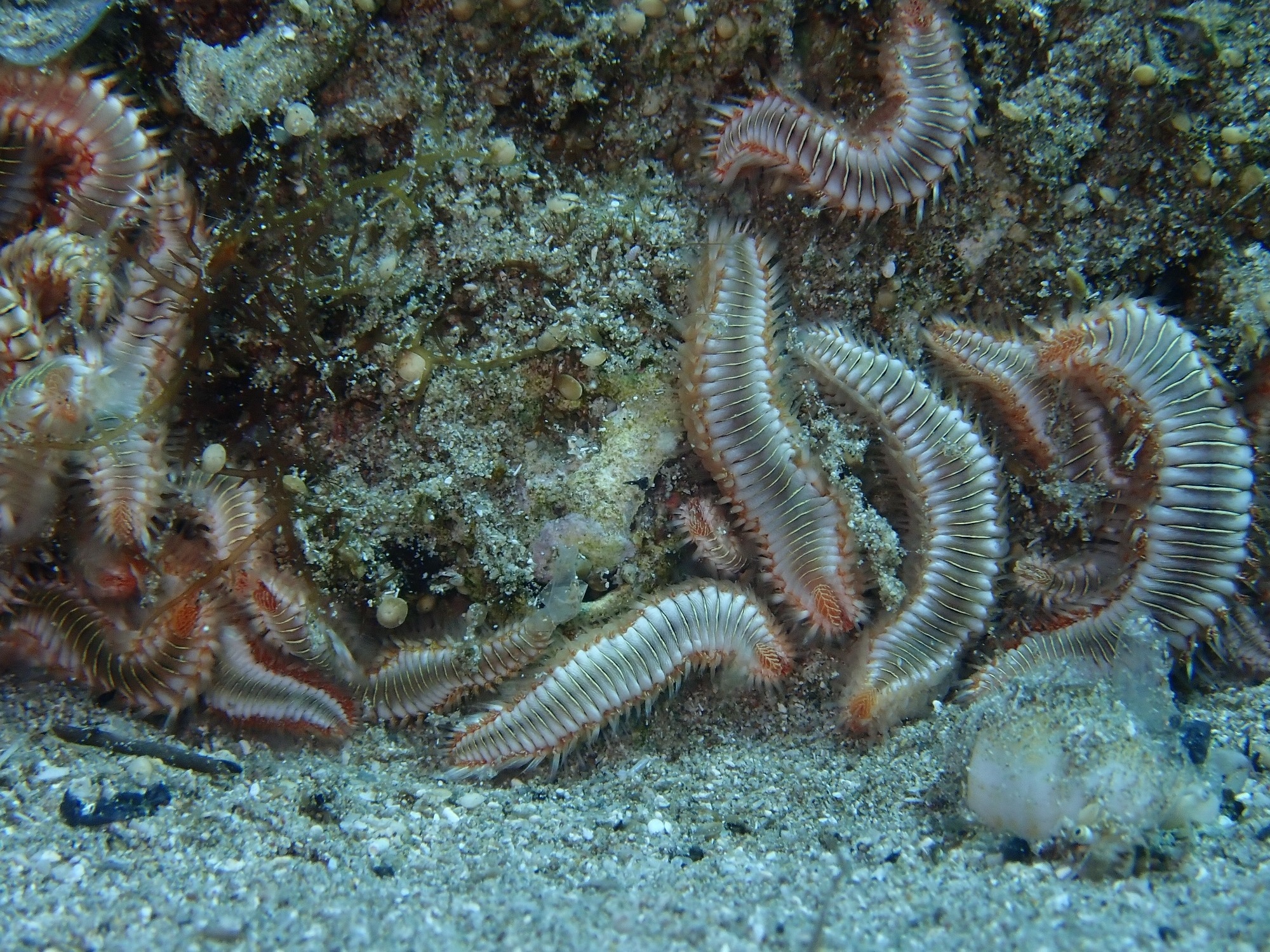 Study: Animal degradation of microbial storage polyhydroxyalkanoates. Image Credit: scubadesign/Shutterstock.com
Background
Many bacteria and archaea build up internal reserves of carbon and energy when nutrients become scarce, storing them as granules of the biopolymer sPHA, and breaking them down to meet energy needs. The enzymes responsible for this breakdown, called PHA depolymerases (PHADs), allow microbes to recycle their own stores or, in some cases, to access sPHA released by other organisms in the environment.
Fungi were long recognized as the primary eukaryotic group capable of degrading these microbial reserves, and only two protist species were previously confirmed to share this ability. Moreover, even though sPHA-producing bacteria are common in soil and sediments, animals were assumed to lack the enzymatic machinery needed to digest sPHAs.
Want to save for later? Click here.
About the Study
The researchers examined Olavius algarvensis, an oligochaete, or gutless marine worm, that lacks a mouth and digestive tract and depends entirely on internal bacterial symbionts for nutrition. They searched the worm's genome and identified a candidate gene, named phaZ, which was predicted to encode a form of the enzyme PHAD. Its structure was mapped and compared against the only previously solved eukaryotic PHAD, an enzyme from the fungus Penicillium funiculosum.
To confirm that the gene was active, the team analyzed transcript and protein data from multiple worm specimens. They then produced the enzyme artificially in Escherichia coli and tested its ability to break down denatured sPHA using plate assays, followed by gas chromatography-mass spectrometry to detect breakdown products. The researchers also used fluorescence in-situ hybridization to determine the regions in the worm’s tissue where active PHAD was expressed.
Based on the results, the researchers expanded the investigation to 14 additional gutless worm species and, subsequently, to public sequence databases covering a wide range of animal and protist groups.
A repeated database search strategy was applied to identify distantly related enzyme homologs. Candidate sequences were checked against known PHADs, as well as against related enzyme families such as lipases and cutinases, to rule out false matches.
Finally, the team produced and tested four enzymes from three additional species, an earthworm (Lumbricus rubellus), a sponge (Amphimedon queenslandica), and a springtail (Folsomia candida), and confirmed that these animal-derived enzymes could break down sPHA under laboratory conditions.
Key Findings
The study revealed that the ability to break down bacterial sPHA reserves is far more widespread among animals than previously recognized.
The marine worm's enzyme successfully degraded sPHA into simpler compounds at a rate comparable to a well-studied bacterial enzyme used for comparison. Furthermore, the enzyme was expressed specifically in the tissue layer where the worm digests its bacterial symbiont.
Public databases searched uncovered related enzymes in 66 animal species spanning nine major groups, including mollusks, annelids, and arthropods, as well as more protist species.
Laboratory testing confirmed that one PHAD enzyme each from the sponge and the earthworm, and two PHADs from a species of springtail, could also break down sPHA into usable byproducts. These findings demonstrated that the capability to digest sPHAs spans highly distinct branches of the animal family tree rather than being confined to one unusual lineage.
Interestingly, the study found that the bacterial symbionts living inside the marine worm appeared to lack the downstream machinery needed to fully metabolize the sPHAs they produce, suggesting that the worm host received most of the energetic benefits from sPHA digestion. This pattern also points to a division of metabolic labor that may help explain how the host-symbiont partnership remains stable over time.
However, the authors noted that their conclusions rely partly on computational predictions and database searches, which carry some uncertainty regarding evolutionary relationships at deeper branching points. Nonetheless, the consistent laboratory confirmation across four unrelated animal enzymes strengthens confidence in the broader pattern.
These findings suggest that animals feeding on soil, sediment, or detritus may routinely obtain energy from bacterial carbon reserves, a pathway with potential relevance to global carbon cycling that has gone largely undetected until now.
Conclusion
The findings revealed a previously unrecognized enzymatic capability widely distributed across the animal kingdom and reshaped assumptions about how carbon stored by microorganisms moves through ecosystems.
Moreover, the observation that animals ranging from marine worms to springtails can access this bacterial energy reserve also opens new questions about nutrient cycling, symbiosis, and the underappreciated biological role of microbial storage compounds in nature.
Journal reference:
Zeidler, C., Gruber-Vodicka, H. R., Michellod, D., D’Angelo, G., Becker, S., Berndt, H., Wippler, J., Violette, M., Kleiner, M., Porta-Fidalgo, A., Janke, R. S., Weinert, K., Liebeke, M., Dubilier, N., & Sogin, M. (2026). Animal degradation of microbial storage polyhydroxyalkanoates. Nature Ecology & Evolution. DOI:10.1038/s41559-026-03153-8
https://www.nature.com/articles/s41559-026-03153-8
 Oncogene-Induced Senescence Exhibits Dual Role in Tumor Suppression and Progression