Rotor mills are used to reduce the size of soft to medium-hard materials at high speeds, including those that are temperature-sensitive or fibrous.
The powerful Ultra Centrifugal Mill ZM 300 combines optimum grinding performance with ease of use. The variable speed of 6000 to 23,000 rpm enables delicate, neutral-to-analysis sample preparation in a relatively short period.
Ultra Centrifugal Mill ZM 300 - Introduction #RETSCH #rotormill #laboratoryinstruments
Ultra Centrifugal Mill ZM 300 - Introduction. Video Credit: RETSCH GmbH
Reproducibility is ensured even for lengthy grinding procedures or the pulverization of substantial sample quantities because of an integrated temperature monitoring system.
The ZM 300 is a genuine all-rounder that satisfies the needs of a wide range of size reduction activities due to its extensive assortment of rotors, ring sieves, and cassettes.
The Standard for Food and Feed
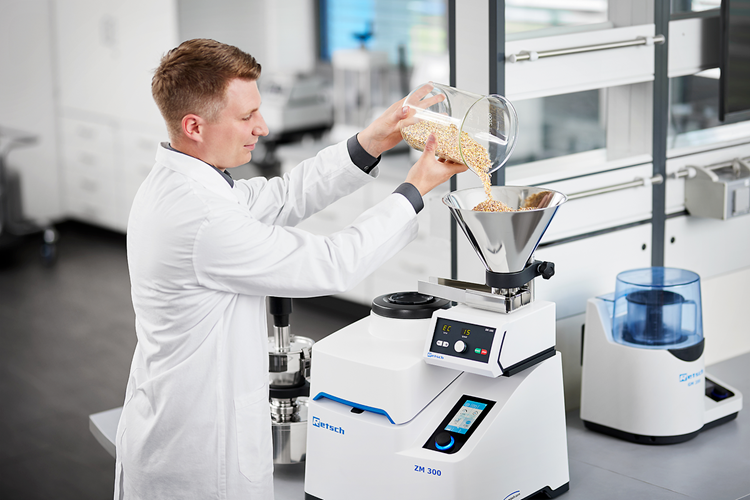
Image Credit: RETSCH GmbH
- Gentle high-speed pulverization owing to pre- and fine-grinding in a single working run
- Optimal process control and reproducibility by monitoring the cassette temperature
- Patented cassette mechanism for optimal sample recovery and simple cleaning
- Optional cassette for sample volumes up to 600 mL
- Wide speed range from 6000 to 23,000 rpm
- Ring sieves with aperture diameters ranging from 0.08 to 10 mm define the final fineness
- Collecting vessels for sample volumes from 250 mL to 4.5 L
- Automated vibratory feeder and different cyclone systems are offered
Short Processing Times
Avoid Excessive Heat Generation and Motor Overload
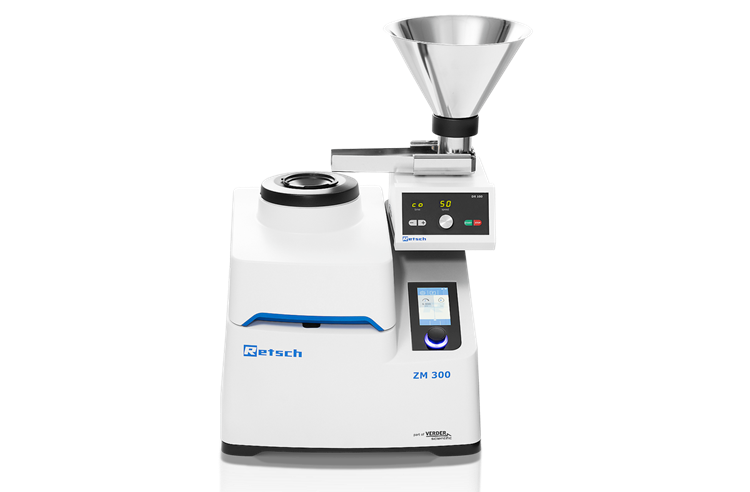
Ultra Centrifugal Mill ZM 300. Image Credit: RETSCH GmbH
The speed range of 6000 to 23000 rpm offers the most efficient adaptation of the grinding process to the sample requirements by keeping the grinding duration short and the temperature increase moderate. Too much heat can have a detrimental impact on grinding outcomes, such as allowing moisture or volatile components to escape.
The ZM 300 includes an inbuilt temperature sensor that detects the temperature of the cassette lid near the ring sieve. The measured temperature is always displayed on the mill's display, allowing the user to tune the grinding process and increase reproducibility.
Ultra Centrifugal Mill ZM 300
Finer End Products and Higher Sample Throughput
Application Examples
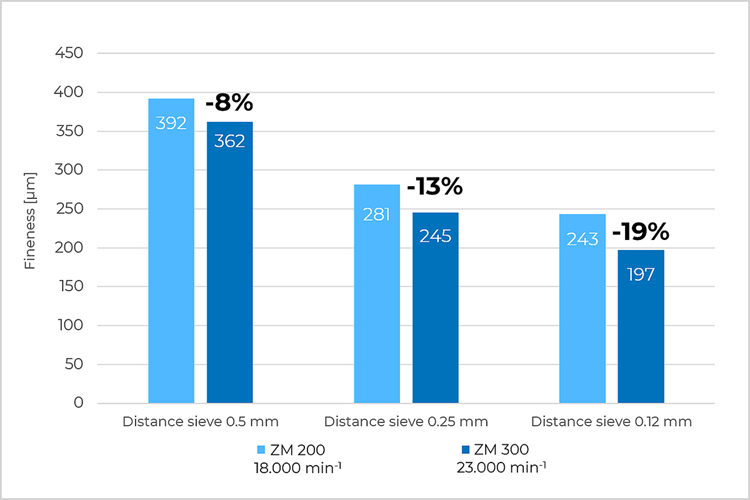
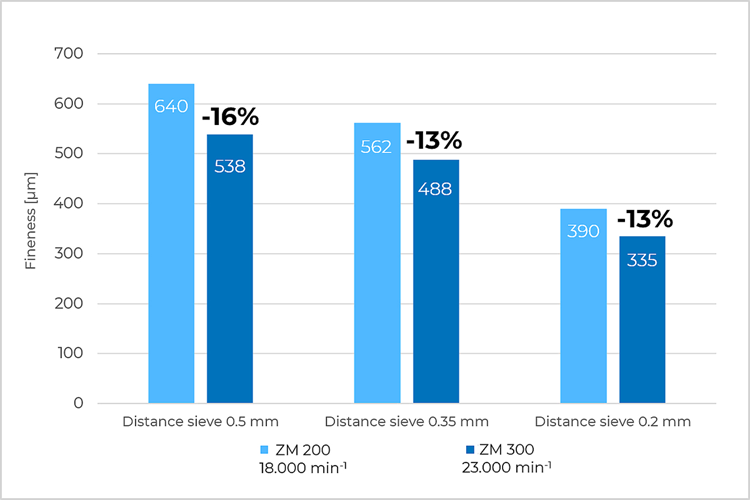
The table shows the grind sizes of plastic materials (POM or PP) after grinding with various sieves and speeds. Grinding at 23,000 rpm produces finer results for all sieves than grinding at 18,000 rpm. For example, grinding POM with a 0.12 mm distance sieve at 23,000 rpm can result in a 19% reduction in fineness.
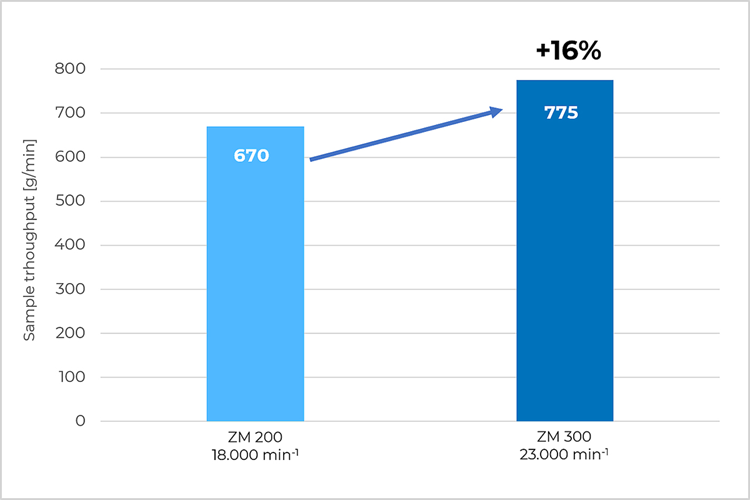
The maximum sample throughput, for example, while crushing chicken feed with a 0.5 mm ring sieve, might be enhanced by 16% by crushing at a maximum speed of 23,000 min-1 rather than 18,000 min-1.
Polymer POM. Image Credit: RETSCH GmbH
Polymer PP. Image Credit: RETSCH GmbH
Grinding animal feed. Image Credit: RETSCH GmbH
Cryogenic Grinding
Ultra Centrifugal Mill ZM 200 - Application with Dry Ice #RETSCH #rotormill #laboratoryinstruments
This video shows dry ice grinding of plastic granules with the ZM 200, which also applies to the ZM 300. Video Credit: RETSCH GmbH
Cryogenic or cold grinding is an excellent method for pulverizing samples that cannot be reduced to the required fineness at room temperature. This approach uses grinding aids such as liquid nitrogen (-196 °C, sample embrittlement outside the mill) or dry ice (-78 °C, sample/dry ice combination) to cool the sample material and enhance breaking behavior.
Additionally, cooling improves the preservation of highly volatile components in the sample. The ZM 300 makes cryogenic grinding simple and is the recommended model, especially when working with polymers or materials that are extremely sensitive to temperature. The procedure is demonstrated in the video using the ZM 200 model, which is the same as the ZM 300.
Technical Data
Source: RETSCH GmbH
| . |
. |
| Applications |
Fine grinding |
| Field of application |
Agriculture, biology, chemistry/plastics, construction materials, engineering/electronics, environment/recycling, food, geology/metallurgy, medicine/pharmaceuticals |
| Feed material |
Soft, medium-hard, brittle, fibrous |
| Size reduction principle |
Impact, shearing |
| Material feed size* |
< 10 mm |
| Final fineness* |
< 40 µm |
| Batch size/feed quantity* |
300 mL with standard cassette
600 mL with volume cassette
4500 mL/2500 mL/450 mL/230 mL with cyclone |
| Speed at 50 Hz (60 Hz) |
6000–23,000 min-1, free selectable |
| Rotor peripheral speed |
31–119 m/second |
| Rotor diameter |
99 mm |
| Types of rotors |
Six-tooth rotor/12-tooth rotor/24-tooth rotor |
| Material of grinding tools |
Stainless steel, titanium, stainless steel with wear-resistant coating |
| Sieve sizes |
Trapezoid holes 0.08/0.12/0.20 /0.25/0.50/0.75/1.00/1.50/2.00 mm
Round holes 3.00/4.00/5.00/6.00/10.00 mm |
| Setting of grinding time |
No |
| Collector capacity |
900 mL with standard cassette
1200 mL with volume cassette
5000 mL/3000 mL/500 mL/250 mL with cyclone |
| Drive |
Three-phase asynchronous motor with frequency converter |
| Power connection |
One-phase |
| Protection code |
IP 30 |
| Power consumption |
1750 VA ((200..240 V), 1400 VA (110..120 V) |
| W x H x D closed |
452 x 431 x 426 mm |
| Net weight |
∼38 kg |
| Standards |
CE |
*depending on feed material and instrument configuration/settings