The Mortar Grinder RM 200 can mix and homogenize powders, suspensions, and pastes, including those with high viscosity. It is designed for effective and reproducible sample preparation to achieve analytical fineness.
This sample grinder replaces traditional hand mortars with a high-performance drive that features electronic control. The grinding set can be both cooled and heated, and it is exceptionally easy to clean. Various grinding sets made from different material qualities are available and can be easily exchanged to ensure optimal adaptation to a range of grinding tasks.
Mortar Grinder RM 200 - Introduction #RETSCH #mortargrinder #laboratoryinstruments
RM 200 Mortar Grinder - Introduction video. Video Credit: Retsch GmbH
Product Advantages
- Dry, wet, and cryogenic grinding methods
- Consistent results achieved through adjustable pressure on the pestle and scraper
- Enclosed, dust-tight grinding chamber featuring windows
- Simple mortar and pestle exchange without the need for tools
- Performance indicator for load management
- Customizable pressure settings for the pestle and scraper
- Extensive selection of materials for contamination-free grinding
- Three scraper material options (PU, beech wood, PTFE)
- Pestle operates at a speed of 100 rpm
Application Examples
The Mortar Grinder RM 200 can be used in applications involving ashes, chemical substances, cement clinker, coal, coke, cocoa nibs, pharmaceuticals, food items, homeopathic substances, nuts, medicinal materials, botanical materials, salts, oilseeds, silicates, slag, soils, spices, tiles, and yeast cells.
Functional Principle
videoanimation rm200 function 480x360
RM 200 function. Video Credit: Retsch GmbH
The Mortar Grinder RM 200 is designed to comminute, mix, and triturate materials through the application of pressure and friction. The scraper plays a crucial role by directing the sample material into the space between the mortar and pestle.
This forced-feeding mechanism ensures that the entire sample is consistently exposed to the grinding and trituration process while also mixing it thoroughly.
The grinder pestle is positioned off-center within the mortar. This offset placement, in conjunction with the rotation of the mortar and the sample, results in automatic rotation of the pestle. The required grinding pressure is generated by the pestle’s own weight, supplemented by adjustable spring pressure applied to its axis.
Technical Data
Source: Retsch GmbH
| . |
. |
| Applications |
Grinding, mixing and triturating, dry and wet |
| Field of application |
Agriculture, biology, chemistry/plastics, construction materials, food, geology/metallurgy, glass/ceramics, medicine/pharmaceuticals |
| Feed material |
Soft, hard, brittle, pasty |
| Size reduction principle |
Pressure, friction |
| Material feed size* |
< 8 mm |
| Final fineness* |
< 10 µm |
| Batch size/feed quantity* |
10–190 mL |
| Grinding chamber volume |
700 mL |
| Speed at 50 Hz (60 Hz) |
100 min-1 |
| Speed setting |
No |
| Setting of pestle pressure |
Vertical by adjusting knob and scale, horizontal by adjusting knob and visual/acoustic control |
| Setting of scraper pressure |
By adjusting knob and visual control |
| Material of grinding tools |
Hardened steel, stainless steel, tungsten carbide, agate, sintered aluminum oxide, zirconium oxide, hard porcelain |
| Setting of grinding time |
Digital, 1–99 minutes/continuous operation |
| Drive |
One-phase motor with auxiliary capacitor |
| Electrical supply data |
Different voltages |
| Power connection |
One-phase |
| Protection code |
IP 53 |
| Power consumption |
250 W (230 V, 50 Hz)/290 W (120 V, 60 Hz) |
| W x H x D closed |
400 x 480 x 370 mm (opened 400 x 550 x 510 mm ) |
| Net weight |
∼24.2 kg |
| Standards |
CE |
*depending on feed material and instrument configuration/settings
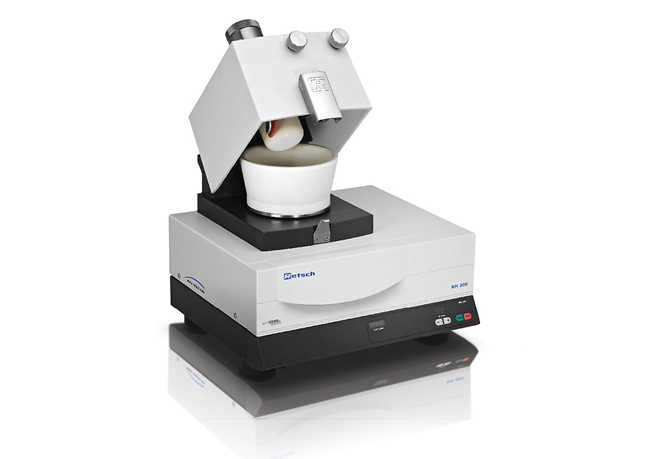
Image Credit: Retsch GmbH
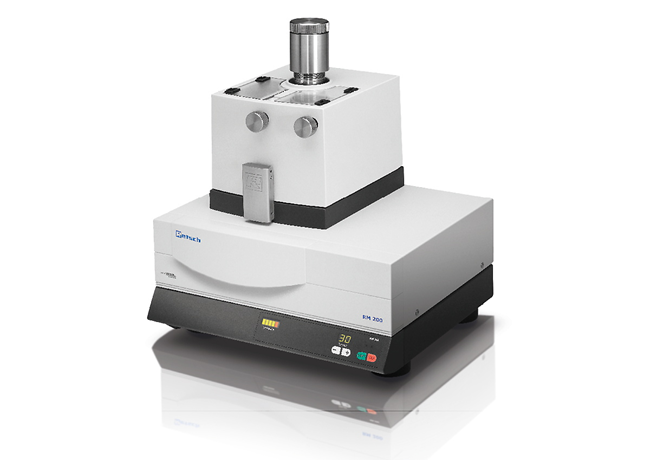
Image Credit: Retsch GmbH
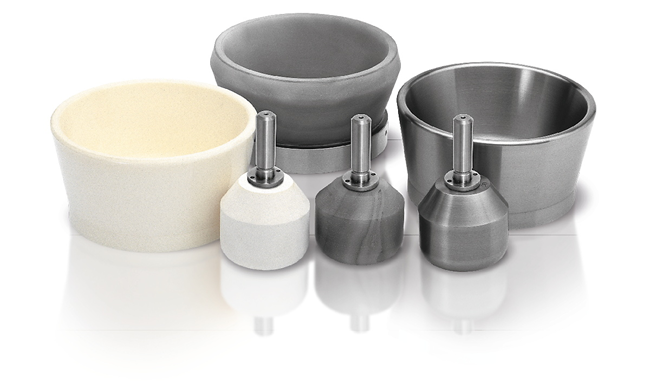
Image Credit: Retsch GmbH
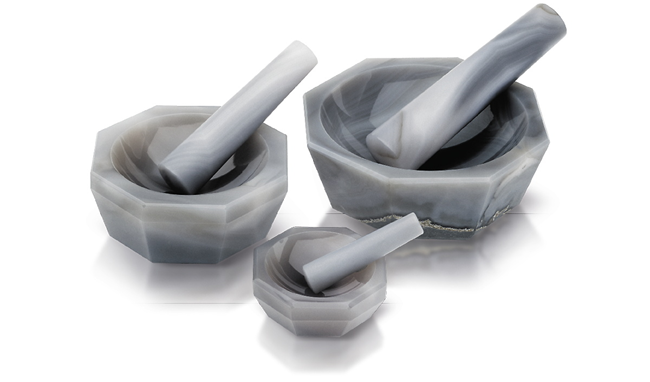
Image Credit: Retsch GmbH