For grinding and homogenizing foods and feeds, the GRINDOMIX GM 200 knife mill is the ideal tool. Thanks to its two sharp, sturdy blades and strong 1000 W motor, it can swiftly and efficiently handle sample amounts up to 0.7 liters
The GM 200 is well-suited for grinding dry, soft, and medium-hard items in addition to homogenizing materials with a high water, oil, or fat content. The rapid homogenization process preserves volatile sample components without significant temperature rise.
Knife Mill GRINDOMIX GM 200 - Application video #RETSCH #knifemill #laboratoryinstruments
GM 200 knife mill - Introduction video. Video Credit: RETSCH GmbH
This mill delivers analytical findings with the lowest standard deviation due to consistent parameter, program, and sequence settings. These capabilities, together with a large assortment of lids and containers that allow the mill to be tailored to specific application requirements, make the GRINDOMIX GM 200 a professional device that outperforms any commercial household mixer.
The Standard in the Food Industry
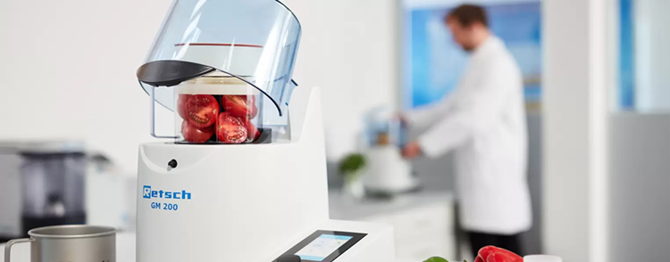
Image Credit: RETSCH GmbH
- Complete size reduction and homogenization of the whole sample material in seconds
- Pre- and fine grinding in one mill
- Variable speed up to 10,000 min-1: the Boost option offers 14,000 min-1 for better homogenization of difficult and sticky samples
- Ideal for sample volumes up to 700 mL
- Cryokit for cold grinding with dry ice available
- Eight SOPs and four program cycles can be stored
- Optional gravity lids or volume reduction lids for automatically reducing the grinding chamber volume
- All components in contact with the sample material are autoclavable
Cryogenic Grinding with Dry Ice
A Cryokit is provided to treat difficult or elastic materials that cannot be homogenized at ambient temperature, ensuring safe and efficient grinding with dry ice. It has three components:
Knife Mill GM 200 - Use of Cryo-Kit and full metal knife #RETSCH #knifemill #laboratoryinstruments
GM 200 - Use of the cryo-kit and full metal knife. Video Credit: RETSCH GmbH
Cryo Lid
The bottom section is made of stainless steel, with side openings that enable CO2 to evaporate during cryogenic grinding; the upper part is the conventional PP lid.
Stainless Steel Container with Baffles
The baffles help to thoroughly mix the sample.
Full Metal Knife
This knife has two blades and is essential for cryogenic grinding. It is also ideal for cutting hard samples.
Easy and Safe Operation
The GM 200 has a 4.3” touch display for quick parameter adjustment, SOP storage, and direct access to the MyRETSCH web portal via QR code. Routine operations can be saved using eight standard operating procedures and four program cycles. Before and after the grinding operation, the container, lid, knife, and sample can be placed and removed as a complete unit.
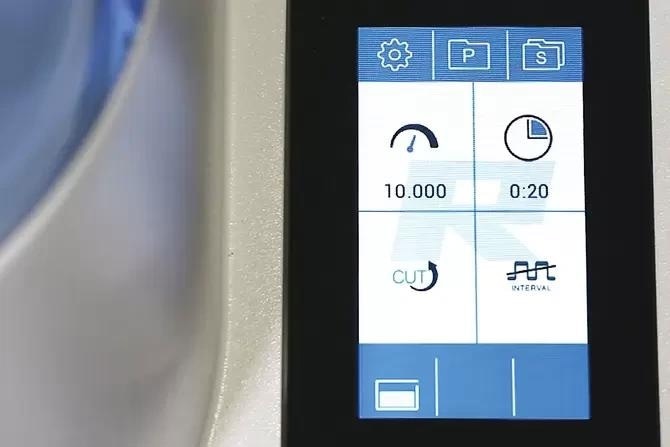
Convenient 4.3 inch touch display. Image Credit: RETSCH GmbH
Knife Mill GM 200 - Operation #RETSCH #knifemill #laboratoryinstruments
Access to MyRETSCH web portal. Video Credit: RETSCH GmbH
Gravity Lid Enables Variable Volume of the Grinding Chamber
RETSCH has created a gravity lid for the GRINDOMIX knife mills that decreases the capacity of the grinding container, preventing samples from fleeing the homogenization process by sticking to the container sides. During grinding, the lid descends under its own weight and rests directly on the sample.
The end result is full homogeneity of the sample material. The gravity lid also comes with overflow passages to ensure that the cell liquid released by the sample during grinding flows back via these channels to the container's center, allowing for complete homogeneity.
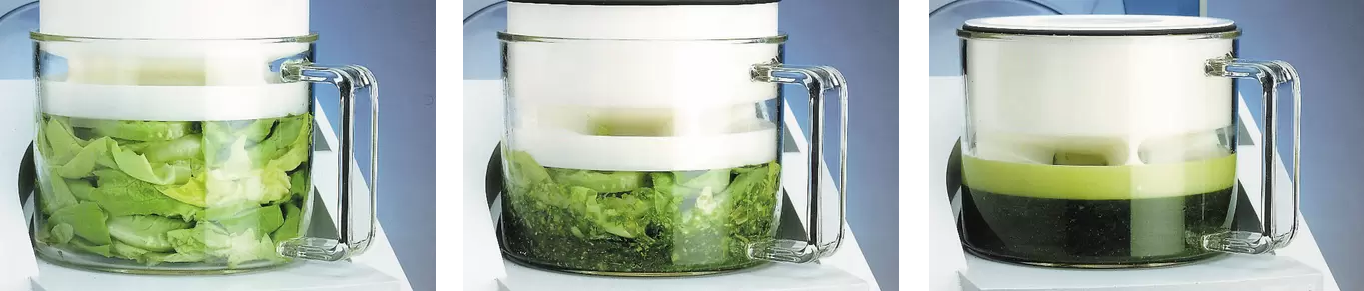
Image Credit: RETSCH GmbH
Accessories and Options
With a variety of containers, lids, and knives, the GRINDOMIX GM 200 is a genuinely versatile device, well-suited for processing a wide range of materials as well as food and feed samples.
Patented Gravity Lid
Automatically changes the grinding chamber volume to match the changing sample volume.
Gravity Lid with Overflow Channels
Ideally suited for homogenizing samples with high water content.
Stainless Steel Container
When processing hard sample materials, there is very little wear.
Stainless Steel Container with Baffles
The baffles help to thoroughly mix the sample.
Reduction Lid
Reduces chamber capacity to 0.5 or 0.3 liters to provide optimal homogenization of tiny sample quantities.
Serrated Blade Knife
Used for extremely difficult samples, such as fatty, streaky meat.
Full Metal Knife
It comes with two blades and is ideal for cold grinding and cutting hard samples.
Cryokit
For homogenizing sticky samples with dry ice.
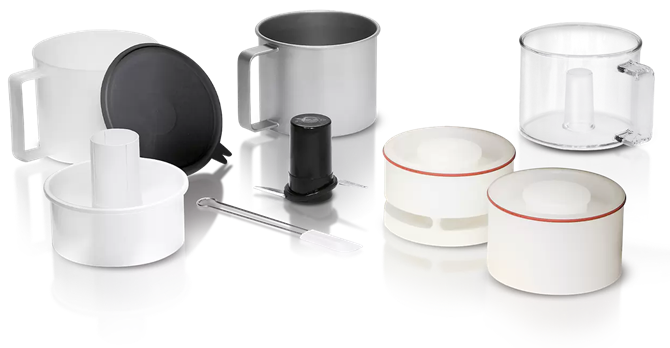
Image Credit: RETSCH GmbH
Typical Sample Materials
There are many different uses for RETSCH knife mills. Candy, cereals, cheese, coated tablets, cocoa nibs, nutritional supplements, fresh and dried fruit, feed pellets, fish, frozen goods, ham, lettuce, meat, nuts, oil seeds, pharmaceuticals, plant materials, sausages, soap, spices, and vegetables are all examples of typical materials.
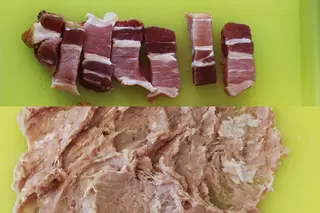
Bacon. Image Credit: RETSCH GmbH
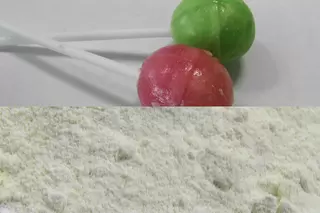
Candy. Image Credit: RETSCH GmbH
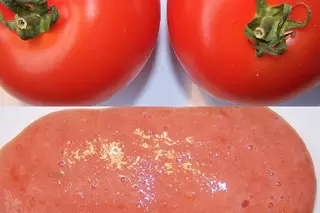
Tomatoes. Image Credit: RETSCH GmbH
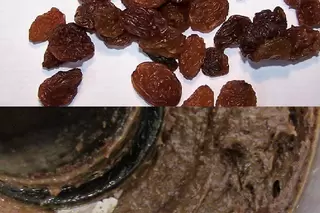
Raisins. Image Credit: RETSCH GmbH
Functional Principle
videoanimation gm200 function 480x360
GM 200 function. Video Credit: RETSCH GmbH
In the middle of the grinding container, two sturdy, sharp blades revolve. Depending on the direction of rotation, the blunt side (preliminary size reduction) or the sharp side (fine grinding) is used to reduce size.
A strong 1000 W motor powers the knife directly. Reproducible grinding results that are optimally adapted to an application's unique needs are ensured, thanks to the electronically maintained pre-selectable speed.
Technical Data
Source: RETSCH GmbH
| . |
. |
| Applications |
Size reduction, homogenization and mixing |
| Field of application |
Agriculture, biology, food, medicine/pharmaceuticals |
| Feed material |
Soft, medium-hard, elastic, containing water/fat /oil, dry, fibrous |
| Size reduction principle |
Cutting |
| Material feed size* |
40 mm |
| Final fineness* |
< 300 µm |
| Batch size / feed quantity* |
With standard lid 700 mL
With reduction lid 150–300 mL
With gravity lid 300–600 mL |
| Grinding chamber volume |
With standard lid 1000 mL
With reduction lid 250 mL/500 mL
With gravity lid 400–800 mL |
| Speed setting |
Digital: 2000–10,000 min-1 (14,000 min-1 BOOST) |
| Material of grinding tools |
Blade: stainless steel/titanium
Fixation of blade: PVDF/stainless steel
Container: autoclavable plastic/plastic PP/stainless steel |
| Setting of grinding time |
Digital: one second to three minutes |
| Interval operation |
Yes |
| Storable SOPs |
Eight programs/four sequences |
| Drive |
Series-characteristic motor |
| Drive power |
∼1000 W |
| Electrical supply data |
Different voltages |
| Power connection |
1-phase |
| Protection code |
Grinding chamber and keypad IP 42 |
| Power consumption |
∼1000 W |
| W x H x D closed |
350 x 275 x 392 mm (opened: 350 x 410 x 553) |
| Net weight |
∼10 kg |
| Standards |
CE |
*depending on feed material and instrument configuration/settings
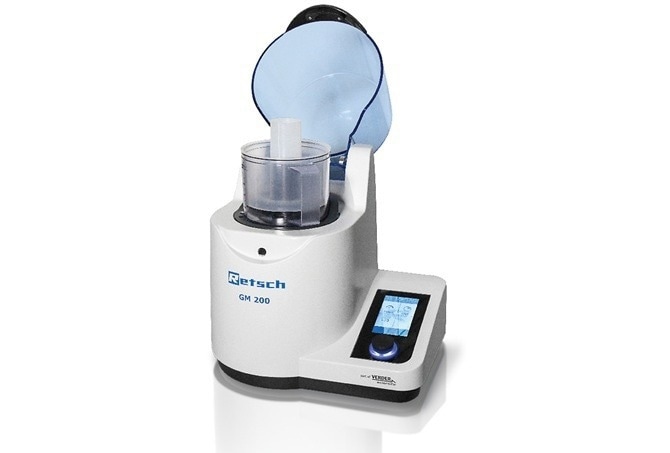
Image Credit: RETSCH GmbH
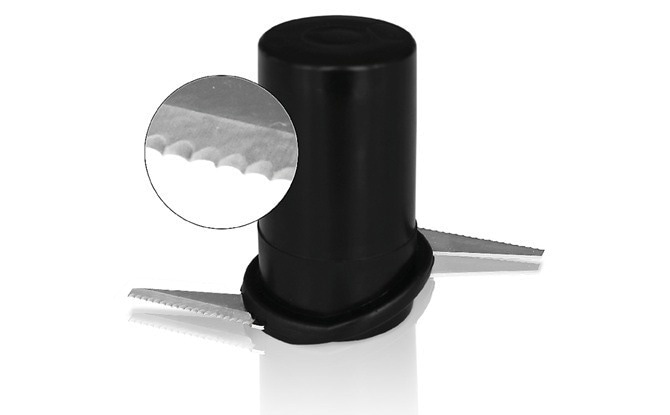
Image Credit: RETSCH GmbH
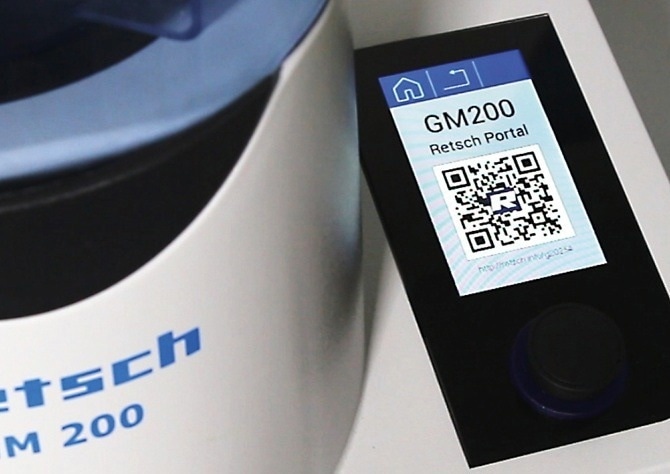
Image Credit: RETSCH GmbH