The new Mixer Mill MM 500 vario is a highly adaptable benchtop device that delivers exceptional performance while offering maximum flexibility for sample preparation needs.
This unit is suitable for dry, wet, and cryogenic grinding of small sample quantities with a high throughput. The MM 500 vario can be fitted with screw-top grinding jars ranging from 1.5 mL to 50 mL. The available materials include hardened steel, stainless steel, tungsten carbide, agate, zirconium oxide, and PTFE.
For biological applications, such as the homogenization of plant materials, tissues, or cell disruption through bead beating, the MM 500 vario can be outfitted with various adapters for single-use vials ranging from 0.2 to 5 mL.
Mixer Mill MM 500 Vario #RETSCH #mixermill #laboratoryinstruments
MM 500 vario - Introduction video. Video Credit: Retsch GmbH
The Strong Mixer Mill for High-Throughput Applications
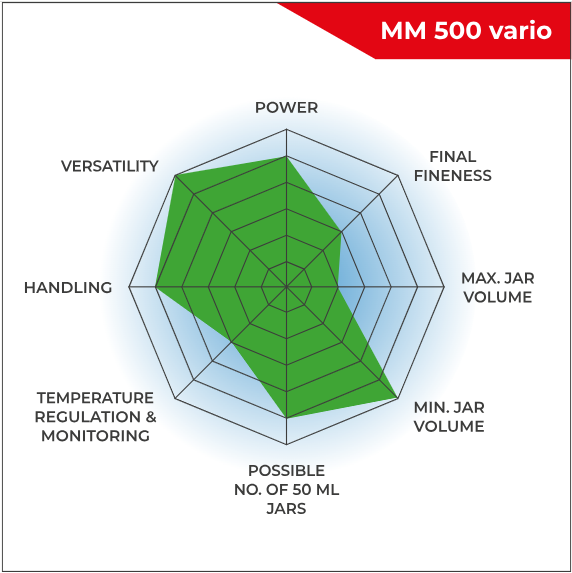
Image Credit: Retsch GmbH
- Maximum speed of 35 Hz
- Horizontal oscillation generates significant impact effects for efficient sample processing.
- Accommodates feed sizes of up to 8 mm and achieves a final fineness of 5 µm
- Equipped with six grinding stations for jars ranging from a minimum of 2 mL to a maximum of 50 mL; the adapter can hold up to 50 single-use vials of 2 mL each.
- Steel jars can be manually precooled using liquid nitrogen.
- This is a benchtop model featuring a touch screen, the ability to store Standard Operating Procedures (SOPs) and cycle programs, and offers seven different jar materials.
Performance and Design
- Grind sizes can be reduced to as small as 5 μm.
- Efficient pulverization is achieved at frequencies of up to 35 Hz.
- This system operates twice as quickly as mills that function at 30 Hz.
- Features an ergonomic design complemented by a touch display.
Flexibility
- Appropriate for dry, wet, or cryogenic grinding
- Equally effective for both quick (less than two minutes) and extended grinding sessions (up to 99 hours)
- Twelve Standard Operating Procedures (SOPs) and four program cycles with a maximum of 99 repetitions support routine tasks
- Grinding jars available in different sizes and materials; includes adapters for single-use vials
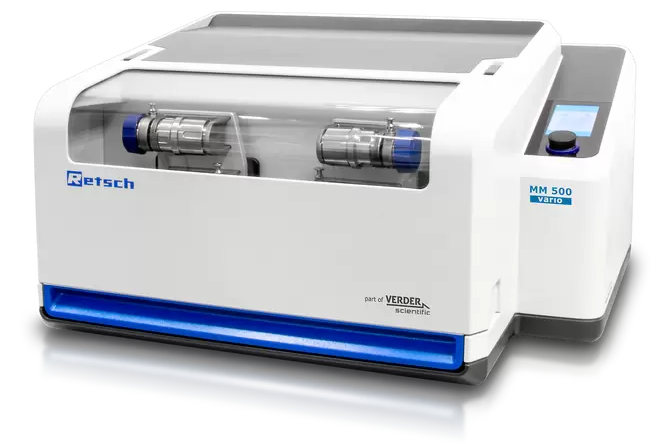
Image Credit: Retsch GmbH
Solutions for Biological Applications and Cell Disruption
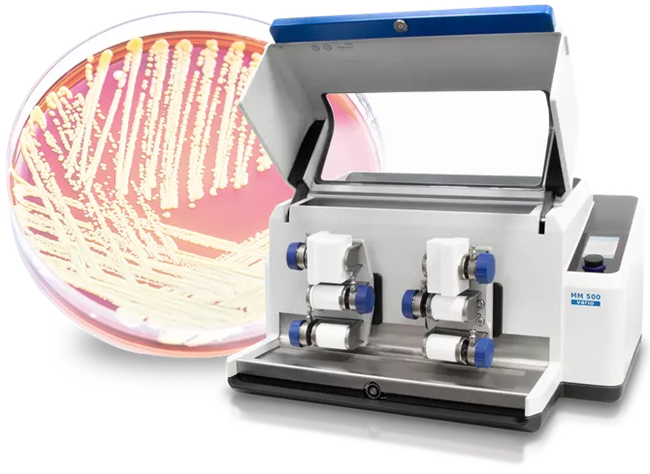
Image Credit: Retsch GmbH
Mixer mills are extensively used for the homogenization of biological samples, including tissue, liver, muscle, plants, corn, and sputum. They also serve as an ideal solution for cell disruption through bead beating.
The MM 500 vario is designed to accommodate adapters for various single-use vials: 0.2 mL/1.5 mL/2 mL/5 mL.
Depending on the type of adapter and the tube used, each adapter can hold five to 10 tubes, leading to the following maximum vial capacity per batch:
50 × 1.5 or 2 mL (or 60 × 0.2 mL)
20 × 5 mL
Typically, grinding or homogenizing biological materials requires less than two minutes.
Achieving cell disruption with high reproducibility and efficiency takes between 20 seconds and five minutes, depending on the specific cell type. Additionally, cryogenic grinding in single-use vials can effectively pulverize tough or temperature-sensitive samples.
Maximize the Throughput
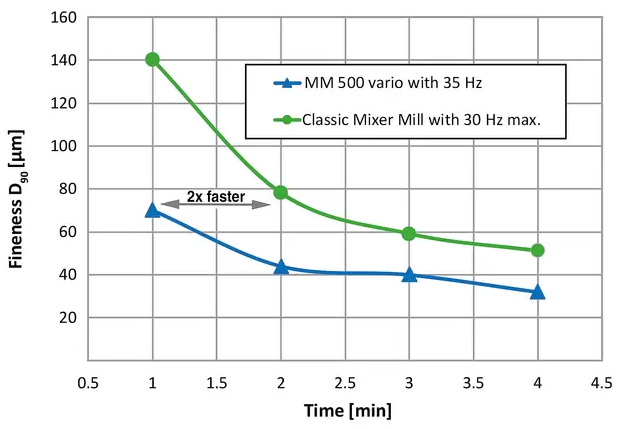
Grinding of basalt in the MM 500 vario results in better fineness compared to classic Mixer Mills thanks to the increased frequency of 35 Hz instead of 30 Hz (50 mL jar + 12 × 12 mm grinding balls). Image Credit: Retsch GmbH
- A maximum frequency of 35 Hz decreases grinding time by 50% when compared to mixer mills operating at only 30 Hz.
- The presence of six grinding stations, as opposed to the two found in traditional mixer mills, guarantees a significantly higher throughput.
- When combined, the MM 500 vario achieves a throughput that is six times greater than that of a conventional mixer mill.
For Safe and Effective Grinding Processes
Accessories for the MM 500 Vario
Grinding Jars in Six Different Materials
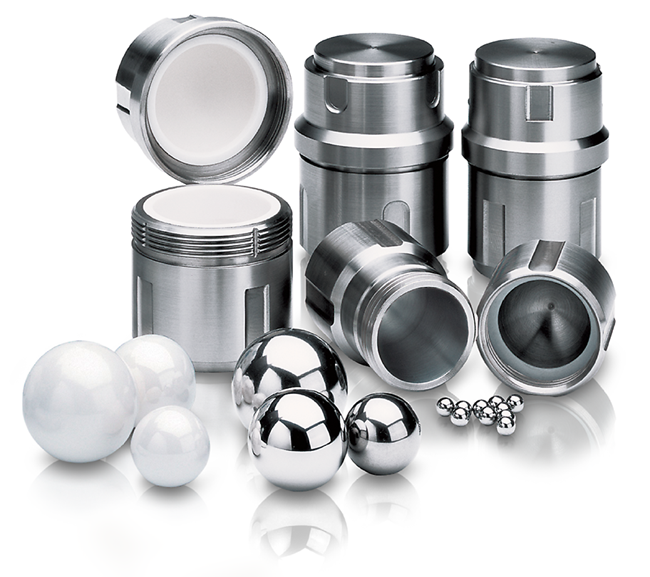
Image Credit: Retsch GmbH
All grinding jars from the smaller MM 400 model are compatible with the MM 500 vario. The nominal volume varies from 1.5 mL to 50 mL, and the materials available include hardened steel, stainless steel, agate, tungsten carbide, zirconium oxide, and PTFE, which guarantees contamination-free sample preparation.
Adapters for Single-Use Vials
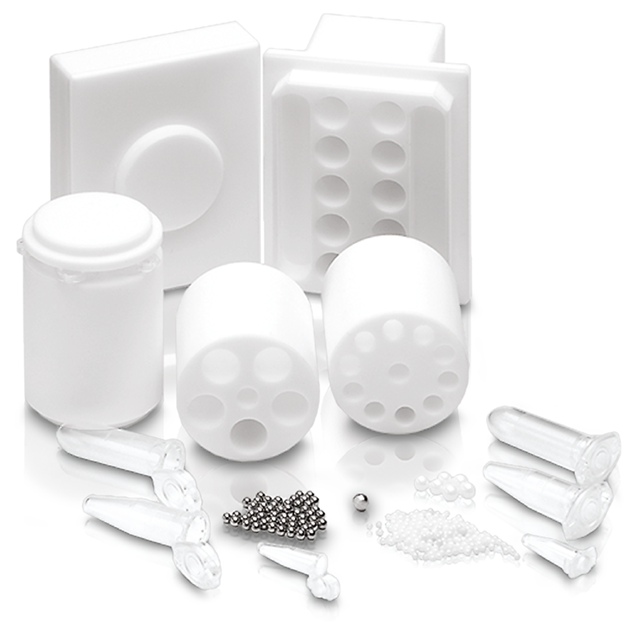
Image Credit: Retsch GmbH
The adapters designed for use with the 0.5, 1.5, 2, and 5 mL single-use vials of the smaller MM 400 model are compatible with the MM 500 vario.
Typical Sample Materials
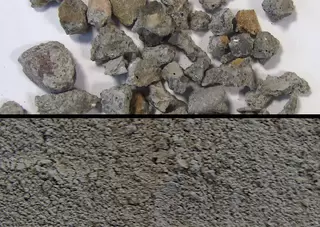
Concrete. Image Credit: Retsch GmbH
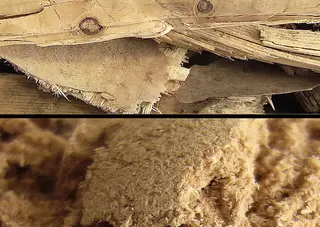
Wood. Image Credit: Retsch GmbH
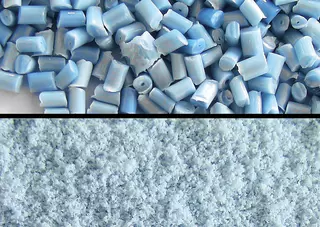
Plastic granulates. Image Credit: Retsch GmbH
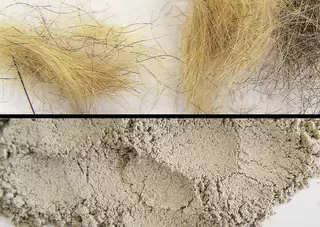
Hair. Image Credit: Retsch GmbH
RETSCH mixer mills are versatile machines. They effectively homogenize a variety of materials, including waste, soil, chemical products, coated tablets, pharmaceuticals, ores, grains, tissues, glass, hair, ceramics, bones, plastics, alloys, minerals, oil seeds, plants, sewage sludge, pills, textiles, wool, and more.
Mixer Mill MM 500 Vario Functional Principle
Function Prinicple of a Mixer Mill - RETSCH
Mixer Mill function principle. Video Credit: Retsch GmbH
The grinding jars of the MM 500 vario mixer mill execute radial oscillations while positioned horizontally. The inertia of the grinding balls leads to high-energy impacts on the sample material at the rounded ends of the jars, effectively pulverizing it. Additionally, the combined motion of the grinding jars and the balls facilitates thorough mixing of the sample. The mixing efficiency can be further enhanced by incorporating multiple smaller balls.
Mixer Mill MM 500 Vario Technical Data
Source: Retsch GmbH
| . |
. |
| Applications |
Mechanochemistry, homogenization, size reduction, cryogenic grinding, mechanical alloying, mixing |
| Field of application |
Agriculture, biology, chemistry/plastics, construction materials, engineering/electronics, environment/recycling, food, geology/metallurgy, glass/ceramics, medicine/pharmaceuticals |
| Feed material |
Hard, medium-hard, soft, brittle, elastic, fibrous |
| Size reduction principle |
Impact, friction |
| Material feed size* |
<=8 mm |
| Final fineness* |
∼5 µm |
| Batch size/feed quantity* |
Max. 6 x 20 mL |
| No. of grinding stations |
Sox |
| Vibrational frequency |
335 Hz (180–2100 min-1) |
| Typical mean grinding time |
30 seconds to two minutes |
| Dry grinding |
Yes |
| Wet grinding |
Yes |
| Cryogenic grinding |
Yes |
| Cell disruption with reaction vials |
Yes |
| Self-centering clamping device |
Yes |
| Type of grinding jars |
Screw-top design |
| Material of grinding tools |
Hardened steel, stainless steel, tungsten carbide, zirconium oxide, agate, PTFE |
| Grinding jar sizes |
1.5 mL/5 mL/10 mL/25 mL/35 mL/50 mL |
| Setting of grinding time |
Digital: 10 seconds to eight hours |
| Total grinding time |
99 hours |
| Storable SOPs |
12 |
| Number of storable cycle programs |
Four (with 99 repeats) |
| Electrical supply data |
100–120 V, 50/60 Hz; 200–230 V, 50/60 Hz |
| Power connection |
One-phase |
| Protection code |
IP 30 |
| Power consumption |
750 W |
| W x H x D closed |
690 x 375 x 585 mm |
| Net weight |
∼60 kg |
| Standards |
CE |
*depending on feed material and instrument configuration/settings