Cancer cells that detach from a primary tumor can remain hidden in the body for years in a dormant state, avoiding immune surveillance and waiting until conditions favor the formation of a new tumor elsewhere, a process called metastasis.
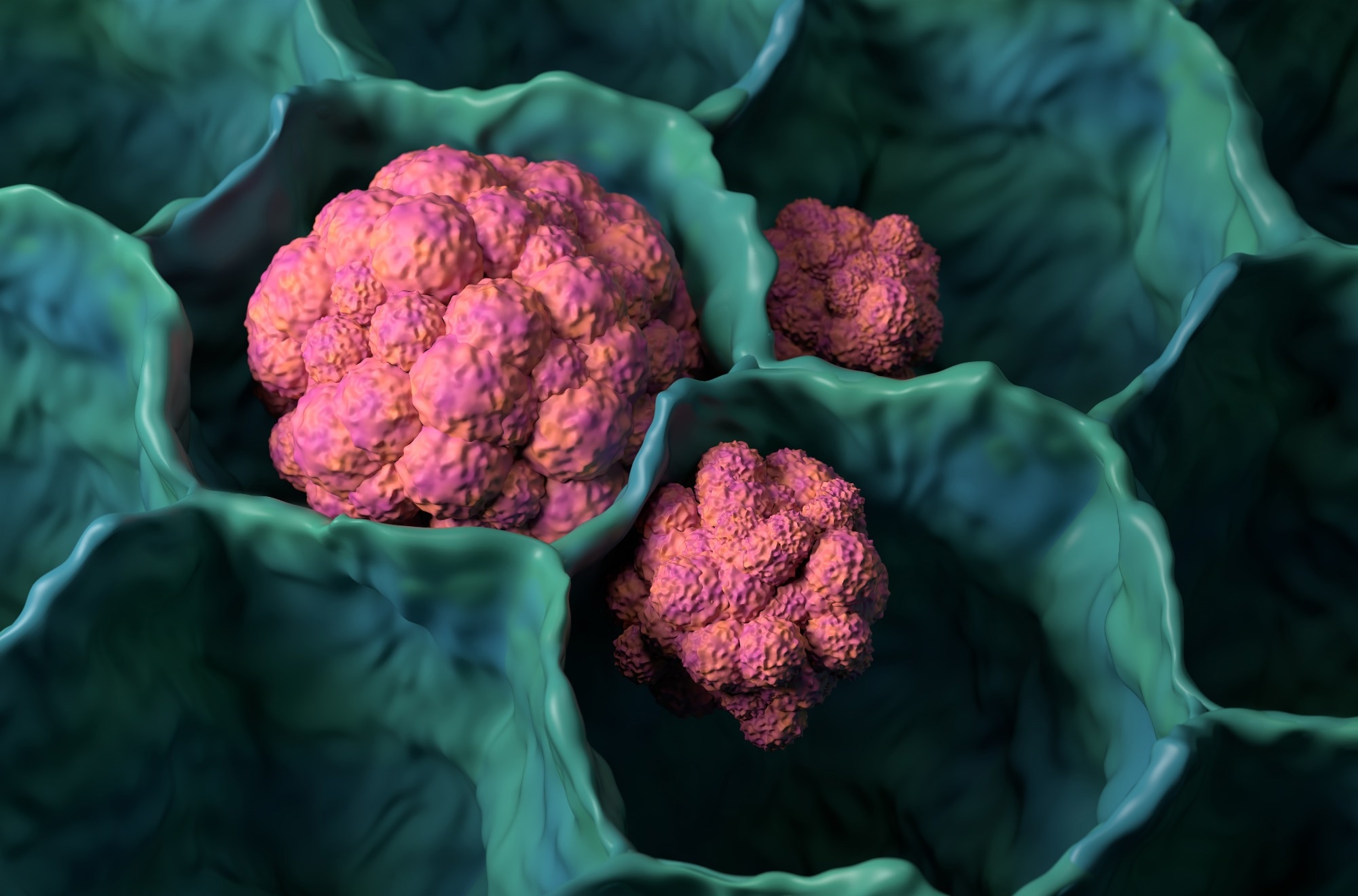 Image credit: Nemes Laszlo/Shutterstock.com
Most cancer-related deaths, up to nine out of ten, are not caused by the original tumor but by the effects of these metastatic tumors, also referred to as stage 4 cancer. Gaining insight into this complex process is one of the most critical and challenging priorities in cancer research.
New research using cell cultures and mouse models of lung cancer from Memorial Sloan Kettering Cancer Center (MSK) reveals how metastatic cancer cells evade immune destruction by altering their physical form. MSK scientists discovered that cancer cells reduce their surface tension, which makes it more difficult for roaming immune cells to attach to them. Published in Nature Cancer, the findings shed light on how cancer cells physically adapt in order to survive.
When cancer cells are round, they have much lower surface tension, and it’s harder for the immune cells to attack them and pop them like a balloon.
Joan Massagué, Study Senior Author and Director, Sloan Kettering Institute, Memorial Sloan Kettering Cancer Center
Our research suggests that if we can stop cancer cells from entering this soft state, or re-stiffen them, we might help the immune system find and clear dormant metastases before they can seed a new tumor.
Zhenghan Wang, Memorial Sloan Kettering Cancer Center
How TGF-beta and Gelsolin Help Metastatic Cancer Cells Survive
By applying an atomic force microscope to examine cellular mechanical properties, MSK researchers observed dormant metastatic lung cancer cells altering their physical form to enhance survival. The cells shift from a firm, elongated spindle shape to a softer, more rounded form, similar to releasing air from a balloon, as softer balloons are more difficult to puncture.
This transition from a rigid to a softer state is triggered by a signal known as TGF-beta, along with the protein gelsolin. Gelsolin promotes the breakdown of the cell’s internal actin fiber framework, which lowers the cell’s overall stiffness. The study showed that softer, more rounded cells are more difficult for the immune system’s natural killer cells and cytotoxic T cells to attach to.
The researchers also demonstrated how TGF-beta signaling alters the shape of cancer cells over time. When lung cancer cells are initially exposed to TGF-beta, they undergo a change known as the epithelial-to-mesenchymal transition, or EMT. This process transforms stationary epithelial cells into mobile, invasive mesenchymal cells, and during this transition, the lung cancer cells become more elongated and stiffer.
With much longer exposure to TGF-beta, however, the cells increase their production of gelsolin. Elevated gelsolin levels then dismantle and rearrange the cells’ fiber scaffold, causing the cells to become softer and adopt a rounder shape.
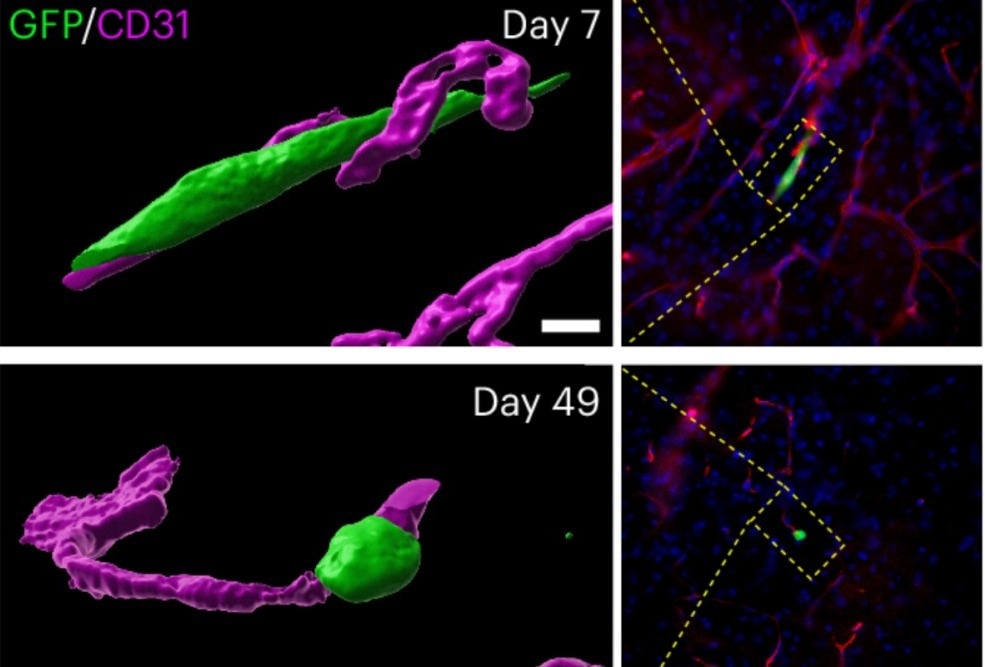 Dormant lung cancer cells change their shape from spindle shaped (above) to round (below), which helps protect them from the body's immune defenders. Image Credit: Wang, Z., et al., Nature Cancer
Overcoming Metastasis’ Mechanical Defenses
However, when the researchers inhibited TGF-beta, lowered gelsolin levels, or otherwise stopped the cells from softening, dormant cancer cells were cleared more effectively by immune cells.
Through these experiments, the scientists demonstrated that TGF-beta plays a critical role in enabling dormant metastatic cells to evade immune surveillance over long periods, including months and years.
By uncovering a new mechanism by which cancer avoids the immune system, the study also highlights potential new avenues for therapeutic intervention.
We hope that with continuing research into dormant metastasis, we can ultimately prevent metastatic cancer by helping the body eliminate its dormant seeds.
Joan Massagué, PhD, Study Senior Author and Director, Memorial Sloan Kettering Cancer Center
Source:
Journal reference:
Wang, Z., et al. (2026). TGFβ induces an atypical EMT to evade immune mechanosurveillance in lung adenocarcinoma dormant metastasis. Nature Cancer. DOI:10.1038/s43018-025-01094-y. https://www.nature.com/articles/s43018-025-01094-y.
 Retrotransposon Reactivation Suggests Reverse Transcriptase Inhibitors Lower Cancer Risk