AI-powered satellite analysis reveals that floating algae are spreading across vast swaths of the global ocean, accelerating over the past decade and signaling a potential shift in how marine ecosystems respond to climate change and nutrient pollution.
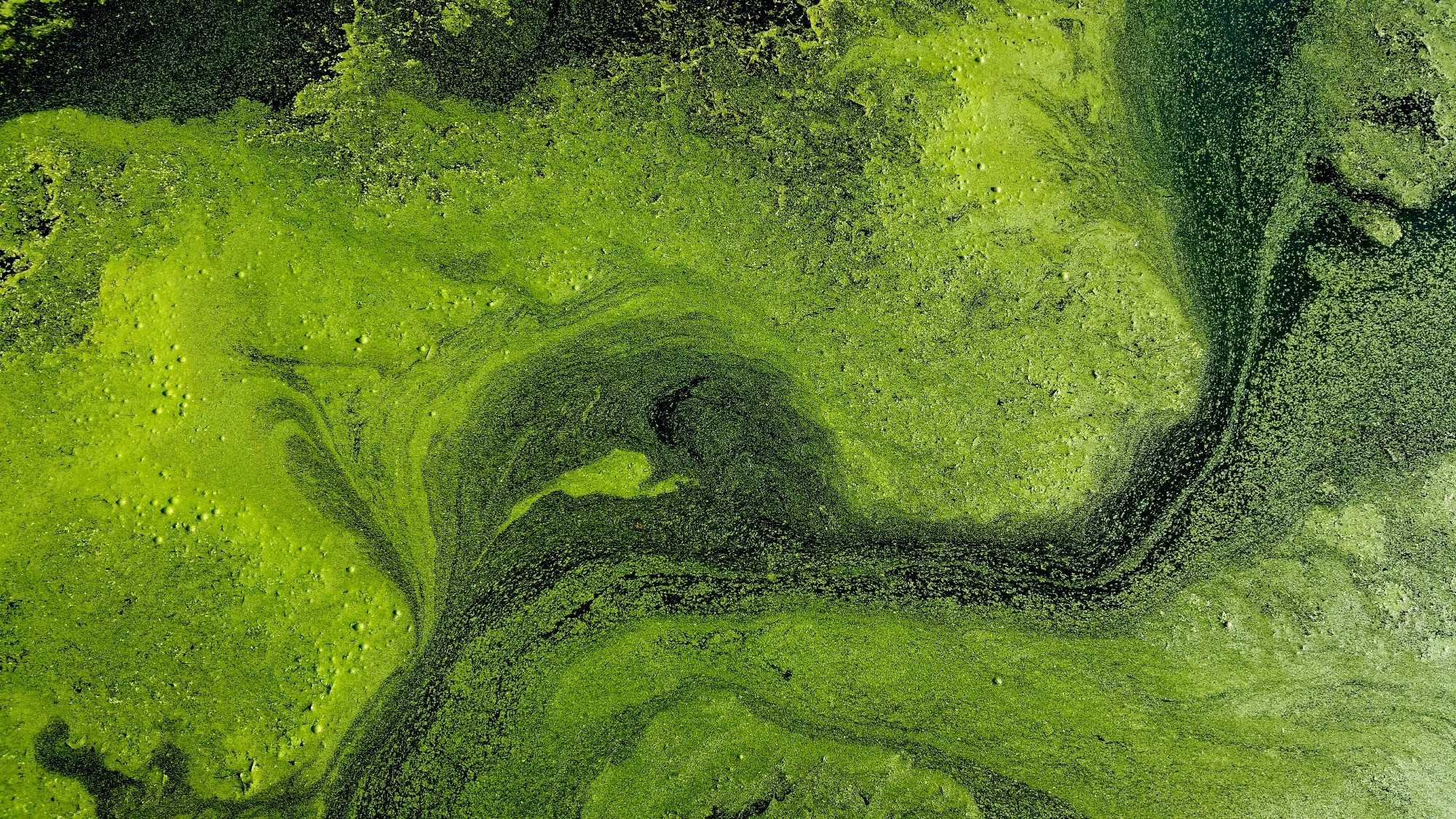 Image credit: C N Elliott/Shutterstock.com
A recent study published in Nature Communications reveals a dramatic and unprecedented rise in global floating algae populations, with much of the increase occurring over the past decade.
Expanding seaweed and surface scums lacked global assessment
Using satellite imagery combined with artificial intelligence algorithms, researchers found that floating algae have been detected across nearly 44 million km² of ocean surface over the past two decades, expanding at an annual rate of up to 13 % in parts of the western Pacific and tropical Atlantic since 2003.
While rising sea surface temperatures and nutrient enrichment are likely contributing factors, the rapid spread of algae carries far-reaching consequences for ocean ecosystems, carbon cycling, coastal environments, and the global economy.
Over the past two decades, macroalgae (seaweed) and microalgae (phytoplankton) have become increasingly abundant in coastal and open-ocean waters. Previous reports have documented regional expansions of Ulva, Sargassum, and Noctiluca in the western Pacific, North Atlantic, and northern Indian Oceans. However, a comprehensive global assessment of floating algae blooms has been lacking, with inconsistent reporting for several species, including Trichodesmium.
AI-driven mapping of macroalgal mats and surface scums
In the present study, researchers analysed approximately 1.20 million MODIS (Moderate Resolution Imaging Spectroradiometer) Level-1A satellite images from NASA archives to quantify global floating algae (FA) coverage, including macroalgal mats and microalgal surface scums, across the world’s oceans from 2003 to 2022. The analysis combined ResUNet-based deep learning artificial intelligence models with spectroscopic techniques. Additional satellite data from the Ocean and Land Colour Instrument aboard Sentinel-3A and Sentinel-3B observation satellites were also incorporated.
Sea surface temperature (SST) data were obtained using the Google Earth Engine platform and NOAA monthly Optimum Interpolation SST datasets to characterise thermal conditions associated with FA occurrence. Monthly mean dust and atmospheric black carbon data were also retrieved, along with mean concentrations of sea surface nutrients, including nitrate and phosphorus, from the NOAA World Ocean Atlas 2018.
Seventy percent of the satellite images comprised the training dataset for the deep learning models, with the remaining 30 % reserved for testing. The analysis generated global FA density maps and climatological means for each month and year. FA pixels were identified and classified by type based on spectral signatures across 14 oceanic regions. Model performance was evaluated using datasets from 2003, 2013, and 2022, with 15 macroalgae and 19 microalgae images used for validation.
Macroalgae expand fastest as microalgae rise steadily
The researchers found that floating algae (FA) occupied a cumulative realised niche area of approximately 44 million km², representing nearly 12 % of global oceans. Macroalgal blooms, particularly Ulva and Sargassum species, showed the most rapid expansion, increasing at an annual rate of 13.4 % since 2003 in the western Pacific and tropical Atlantic, with the strongest acceleration observed after around 2010.
Although slower in comparison, microalgae populations also rose significantly, expanding by around 1.0 % per year over the same period. Among these, notable increases were observed in Noctiluca, Trichodesmium, dinoflagellates, and cyanobacteria such as Aphanizomenon and Nodularia spumigena across the Baltic Sea and the Pacific, Atlantic, and Indian Oceans.
Tropical and subtropical oceans host most floating algae
Geographically, FA was most prevalent between 40°N and 40°S. The Atlantic waters accounted for the largest coverage, with approximately 20 million km² of FA extending from the western African region to the western Atlantic basin. Indian Ocean waters contained approximately 11 million km², concentrated in the Red Sea, Arabian Sea, the Bay of Bengal, waters surrounding Madagascar, western Australia, and southeastern Asia. FA covered approximately 13 million km² of Pacific waters, primarily near the eastern parts of Australia and the island groups of Fiji, Tonga, and Samoa.
Seasonal blooms tied to warm, nutrient-rich surface waters
FA abundance peaked during spring and summer, coinciding with warmer surface waters and increased nutrient availability. Trichodesmium blooms were particularly extensive, occupying over 20.6 million km² in warm waters where phosphorus is often the growth-limiting nutrient, with recurring peaks near Hawaii, where SST ranged from 26 to 29°C. Unexpected blooms near New Caledonia were also observed, which the authors hypothesize may be linked to volcanic iron inputs.
Noctiluca blooms dominated the Arabian Sea and coastal waters near Oman, covering 3.4 million km². These blooms peaked in late winter and spring under low-nitrate conditions and at temperatures of 24–26°C.
Warming, eutrophication, and human activity drive expansion
Overall, the findings indicate that ocean warming, eutrophication, and intensified human activities such as agriculture and aquaculture have likely contributed to the rapid expansion of floating algae, particularly over the past decade, and may reflect a broader shift in oceanographic conditions that increasingly favours macroalgae over some other phytoplankton groups. In several regions, this macroalgal expansion occurs without corresponding long-term increases in satellite-derived phytoplankton chlorophyll concentrations, suggesting contrasting ecosystem responses.
Global algae growth carries ecological and economic consequences
Drawing on two decades of global algae abundance maps, the findings reveal a rapidly expanding and increasingly diverse presence of floating algae across the world’s oceans, detected episodically and seasonally over a large cumulative surface area, and likely driven by rising sea surface temperatures and growing nutrient inputs from both natural and human activities.
This accelerating spread has the potential to reshape ocean ecosystems, alter carbon sequestration pathways, and disrupt fisheries, coastal tourism, and broader economic systems.
The authors emphasize the need for future research to better understand how different algae groups respond to evolving oceanographic conditions and how macroalgae and microalgae may respond differently under the same environmental pressures. With ocean warming and phosphorus inputs projected to intensify, the global footprint of floating algae is expected, though not yet certain, to continue expanding in the coming years.
Download your PDF copy now!
Journal reference
Qi, L., Wang, M., Barnes, B.B. et al. (2026). Global floating algae blooms are expanding. Nature Communications, 17, 612. DOI: 10.1038/s41467-025-66822-5. https://www.nature.com/articles/s41467-025-66822-5
 Merging Advanced Machine Learning With Biological Research Accelerates Global Health Solutions