Scientists at The James Hutton Institute, Scotland’s pre-eminent interdisciplinary scientific research institute for the sustainable management of land, crop and nature resources, have developed a new test that reduces the time required to analyze water samples for indicators of fecal contamination from 24 hours to four.
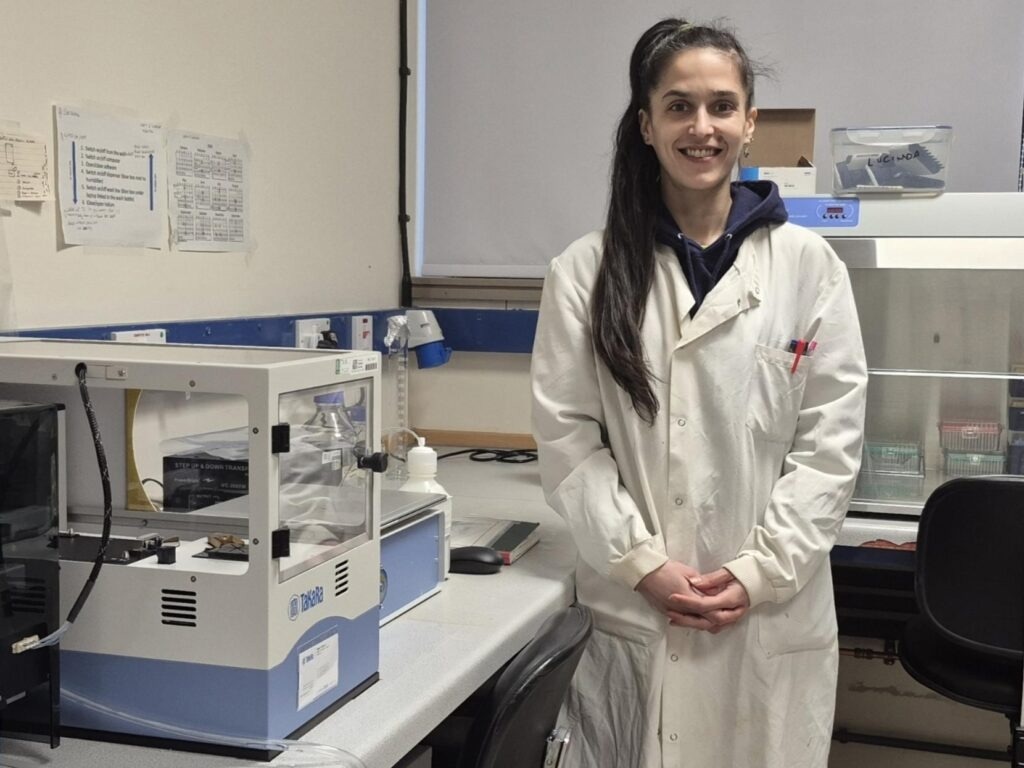 Dr Clara Benavent Celma, a catchment microbiologist at the Hutton and the lead author behind the qPCR assay study. Image Credit: The James Hutton Institute
The test, called a quantitative polymerase chain reaction (qPCR) assay, targets somatic coliphages – viruses which infect bacteria such as E. coli. These viruses can only be found in feces and therefore are widely recognized as indicators of fecal pollution in water and used in water quality monitoring under UK and EU regulations.
Current tests detect somatic coliphages by growing them on petri dishes containing E. coli and waiting for them to infect their E. coli host. When this happens, it leaves clearings on the dish, called plaques. Scientists then count the plaques to find out how many coliphages were in the water sample. But this is a long process, taking up to 24 hours to give results.
By comparison, the test developed by Hutton scientists uses qPCR technology to measure DNA from the four most common somatic coliphage families. This involves extracting DNA from a water sample and then detecting the four coliphage families using four different primers (short, single-stranded DNA molecules). Because there is no time involved in waiting for the coliphages to grow, this method gives results in just three to four hours. By speeding up the testing process, the new method allows monitoring agencies to detect and react to water contamination events much faster – limiting risks to public health.
Using the qPCR method, scientists can also work out which specific families of coliphages are in the water. While coliphage detection does not directly identify the source of contamination, this additional genetic information may help support interpretation of pollution events, such as human sewage spills or agricultural runoff, when used alongside other monitoring data.
Additionally, the qPCR method detects DNA from both live and ‘dead’ coliphages, whereas current methods can only detect live coliphages capable of infecting their host. This provides insight into recent or past contamination events and may help identify water treatment inefficiencies missed by the current test.
The researchers behind the qPCR assay believe it could be used alongside current culture-based methods as a rapid screening tool, rather than a replacement for current regulatory testing.
Dr Clara Benavent Celma, a catchment microbiologist at the Hutton and the lead author behind the qPCR assay study, said, “Catchments are dynamic systems where contamination events can occur rapidly. By developing a rapid qPCR assay for somatic coliphages, we can provide an additional layer of information that helps water managers monitor, interpret and manage water quality more effectively.”
Dr Eulyn Pagaling, a Hutton senior environmental microbiologist and principal investigator on the project, added, “Good water quality is vital for protecting public health. If drinking water is contaminated with feces, it needs to be detected right away so people don’t get sick from pathogens such as norovirus, the ‘vomiting bug’. Our new test will allow relevant actors to rapidly detect, diagnose and respond to contamination events."
While the test has been thoroughly tested and validated, we think that we can make it even faster by multiplexing the assay so all four tests are run in a single reaction. That time saved can make all the difference.”
Dr Eulyn Pagaling, Hutton senior environmental microbiologist and principal investigator
 Viral Metagenomics Uncovers Distinct Replication Machinery in Plateau Wetland Soils