A McGill University-led reseach team has created a biocomputer built from bacteria that can tackle large, intricate problems using only a fraction of the memory and resources required by conventional “solid-state” computers demand. The researchers say the approach could have applications in areas including encryption, molecular biology, and artificial intelligence (AI).
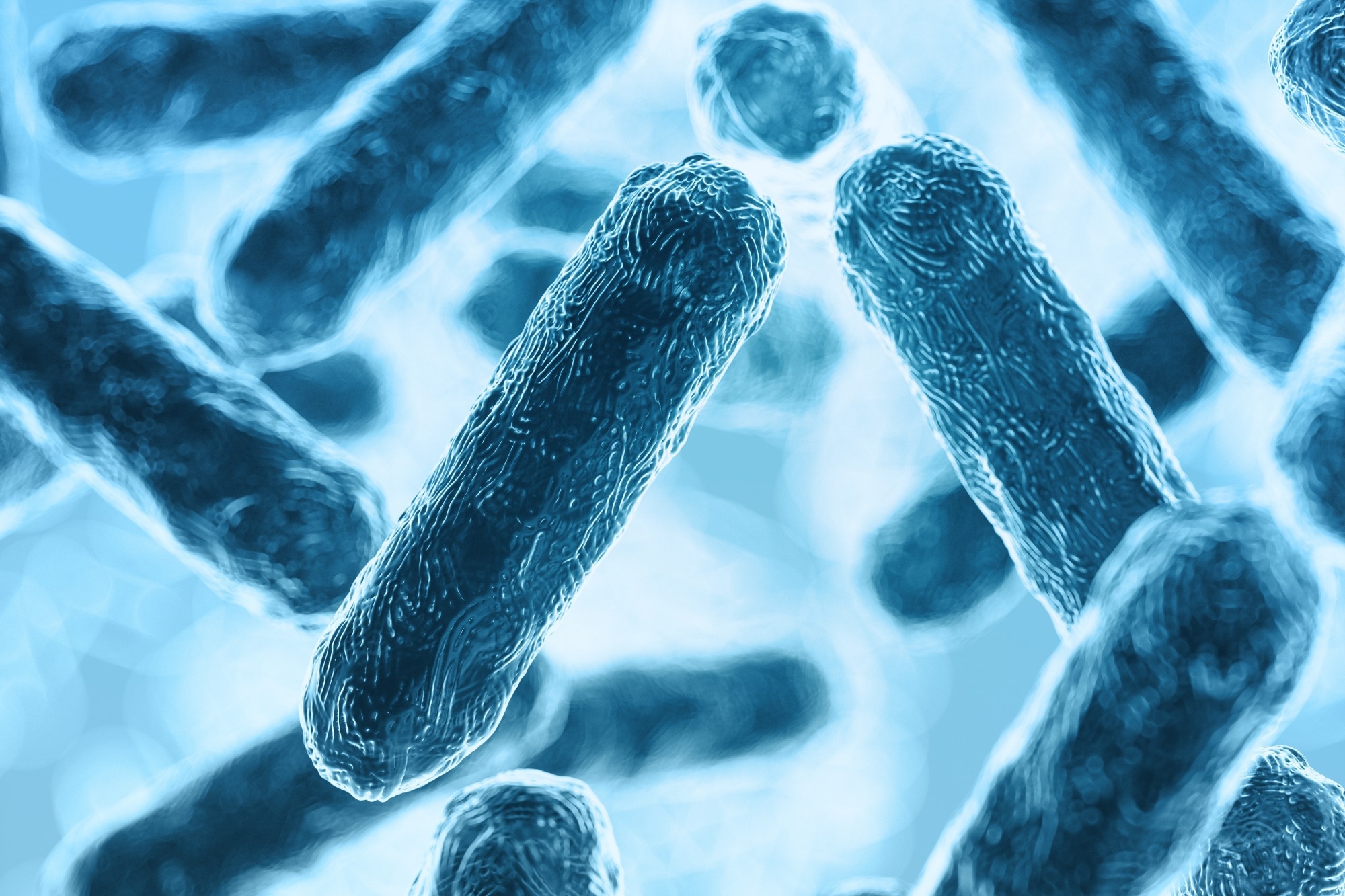 Image credit: Myshkovskyi/Shutterstock.com
Conventional solid-state computers typically evaluate potential solutions one at a time, meaning hardproblems may take years or even centuries to work through. Bacteria, by comparison, can probe many options at the same time. Furthermore, bacteria can replicate to produce additional biological “processors.”
Modern electronic computers make millions of operations per second using one chip. With bacterial division, we have one million chips working at the same time. More chips mean you can resolve the problem faster, even if for each “processor,” the number of operations per second is slower. The exponential division of bacteria can go to the size of the problem. It’s an entirely new way of computing.
Dan Nicolau, Study Senior Author and Professor, Bioengineering, McGill University
Exploring Possibilities in Parallel
The work builds on a two decade, multi-institution collaboration involving research across Canada, Europe, the United Kingdom, and Australia.
To construct the biocomputer, the team mapped a well-known problem onto a graph of potential options, and then engineered a matching physical maze: a network of microscopic, interconnected channels that bacteria could navigate through. Each path throught the network corresponded to a distinct potential solution, and unique "logic gate" junction served as the key decision points.
As the fast-replicating bacterial flowed through the channels, the population explored many paths simultaneously, effectively evaluating a large number of potential answers concurrently. The researchers can also regulate growth by ajusting the system's temperature, helping to avoid overcrowding.
The team then tracked where the bacteria traveled and used automated image analysis to pinpoint the successful routes within the network, revealing the combination that met the problem's constraints.
A Resource-Efficient Tool
According to the researchers, the biocomputer is designed not to substitute traditional electronic or quantum computers, but to offer a resource-efficient and economical method to address problems that were previously thought to be unsolvable.
Our way is tailored for problems that electronic computers are not designed to solve, such as mapping the structure of proteins. It was reported that AI figured this out, but this is only half-true, because it can only scan the available data. We propose this technology to solve problems, not estimate based on past information.
Dan Nicolau, Study Senior Author and Professor, Bioengineering, McGill University
Source:
Journal reference:
Perumal, A. S., et al. (2026) Amplification of computational power by the multiplication of bacteria exploring microfluidic networks encoding mathematical problems. Microsystems & Nanoengineering. DOI:10.1038/s41378-026-01341-x. https://www.nature.com/articles/s41378-026-01341-x.
 New Research Reveals Strong Public Support for National Parks’ Role in Wellbeing, Nature and Climate Action