Producing a precise replication of the genome, which encompasses the complete DNA sequence within a cell, represents a crucial step prior to cellular division, forming the foundation of all living organisms. Mistakes during this duplication process, including replication interruptions, create genetic variation that forms the basis of evolution; however, they can also contribute to diseases such as cancer.
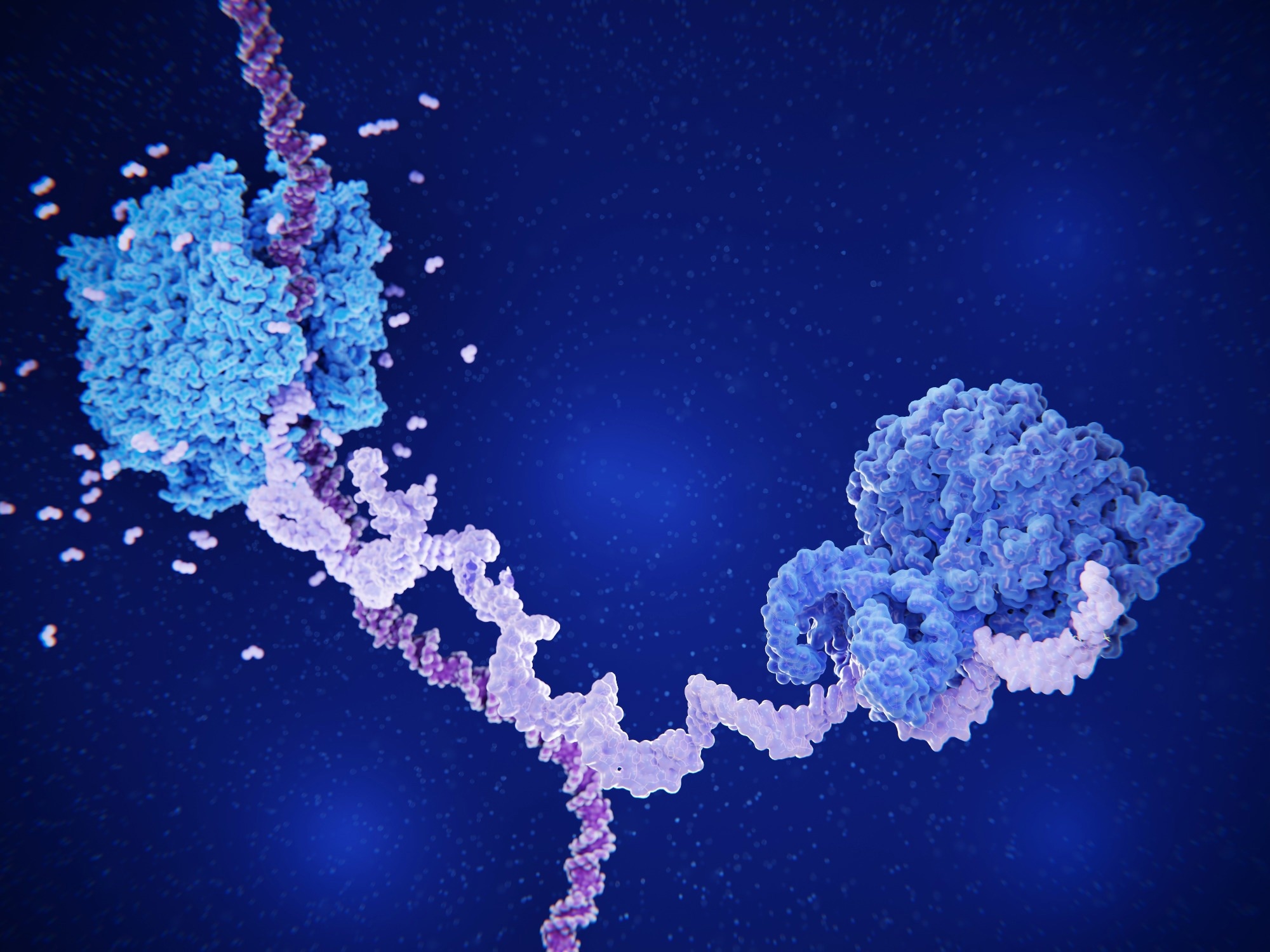 Image credit: Juan Gaertner/Shutterstock.com
Nevertheless, because replication pauses are both uncommon and spread across many sites, determining the frequency and effect of these events is inherently difficult.
Researchers from the Nieduszynski Group at Earlham Institute have recently mapped the specific areas in budding yeast where the replication machinery either hesitates or stops altogether, pinpointing individual stall sites with finer detail than earlier approaches.
Using a single-molecule technique that labels newly synthesized DNA with a chemical tag known as BrdU, researchers were able to observe distinct replication activities and identify instances of pauses. In the same readout, they could also infer the direction in which the replication apparatus, referred to as the replisome, was moving, the particular DNA strand being copied, approximately how long the pauses lasted, and whether the replication process resumed thereafter.
The study discovered that pauses are especially common in transcribed areas, demonstrating an increase of approximately 20 to 30 percent in problematic instances. The effect was strongest when there are direct conflicts between transcription and replication that are head-on.
Although these conflicts have been noted in the past, earlier methods primarily focused on analyzing occurrences at a population level, so the true frequency of pauses and the scale of the problem were hard to quantify.
By focusing on the single-molecule level, the researchers have the ability to examine specific replication occurrences, in addition to less common events that would pose challenges to identify when using methods based on population-level approaches.
We can see replication-pausing hotspots in much greater detail. More importantly, we now have a handle on how many replication events encounter problems. Because we can capture individual events, we can zoom in on particular genomic regions and see what's happening even when the event is relatively rare. So, if someone is interested in a particular gene and knows that problems in replication at that gene have downstream effects, this technique gives them a way to zoom in on that region and capture individual replication events.
Dr. Sathish Thiyagarajan, Postdoctoral Researcher, Earlham Institute
The study expands upon a previous study conducted by the Nieduzynski Group, which employed the same single-molecule technology to locate initiation sites, the locations where the double-stranded helix separates to begin the process of replication. That earlier work showed that, similar to pausing events, these initiation sites are scattered throughout the genome, with approximately 80% of the sites having never been previously recognized.
“Together with our earlier study, we can now track on a single DNA molecule where replication initiates, the obstacles it encounters, and the consequences for genome stability and gene regulation,” added Sathish.
The research identified particular hotspots where parts of the copying machine separate during a pause. The researchers suggest that these areas may function as a molecular switch, changing the manner in which that section of the genome is organized and possibly leading to lasting effects on which genes are turned on or off in a cell.
At two specific locations, they identified areas where the leading strand faced an obstruction, whereas replication on the lagging strand persisted.
This work provides a powerful new way to identify difficult-to-replicate regions across genomes. These regions are likely to be hotspots for genetic and epigenetic change, with consequences that can range from microbial adaptation and biofilm formation to genome instability and disease in more complex organisms.
Dr Conrad Nieduszynski, Group Leader, Nieduszynski Group, Earlham Institute
“One thing that we were pleased with was how well the technique could distinguish between replication on the leading and lagging strands. We knew the technique had the potential to distinguish between the two types of replication, but I thought we would need much more data to see meaningful differences. Instead, we saw many more leading-strand pauses than lagging-strand pauses at particular locations,” added Sathish.
Through simplifying the detection and measurement of rare replication pauses, the research aims to assist researchers in gaining a clearer insight into the emergence of replication issues and their potential links to genetic diseases in humans.
Source:
Journal reference:
Thiyagarajan, S., et al. (2026) Single-molecule landscape of DNA replication pausing. Nature Communications. DOI:10.1038/s41467-026-79296-w. https://www.pnas.org/doi/10.1073/pnas.2625362123.
 Pluripotent Stem Cell Vesicles Outperform Adult Stem Cells in Immunity