By delivering microRNA directly to a single gut microbe, researchers used biomimetic nanoparticles to boost protective metabolites, repair the intestinal barrier, and dramatically ease colitis.
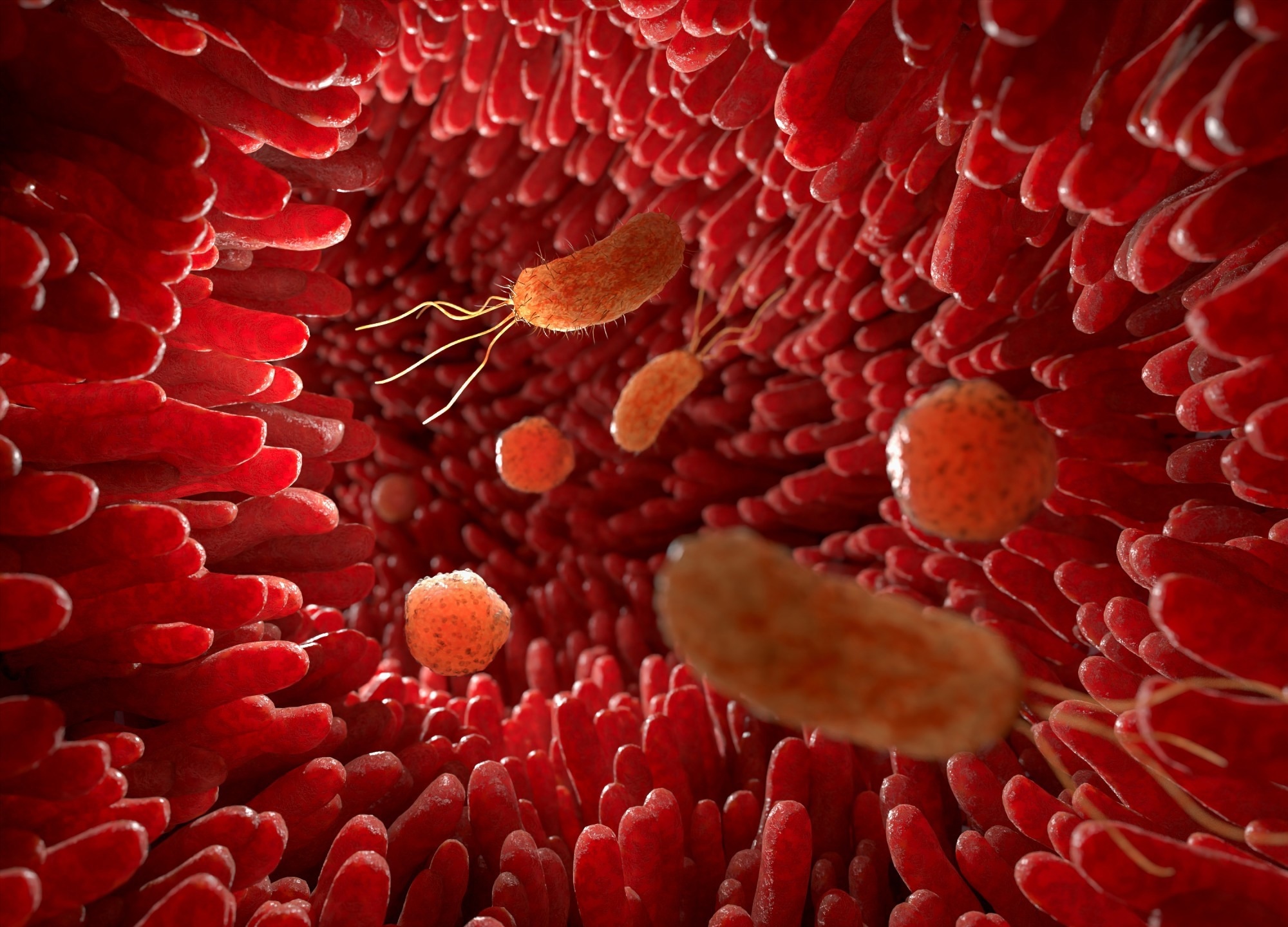 Image credit: paulista/Shutterstock.com
A recent study published in Science Advances reports a microbiome-targeted therapy to improve inflammatory bowel disease (IBD): microRNA (miRNA)-encapsulated biomimetic lipid nanoparticles (LNPs) that modulate gut bacteria from within. Delivering miRNA directly to Lactobacillus rhamnosus GG (LGG) can boost its beneficial activity and restore microbial balance.
In preclinical models, these NPs demonstrated improved gastrointestinal stability under fasting conditions and precise targeting, and, when combined with 5-Aminosalicylic Acid (5-ASA) treatment, enhanced intestinal barrier function and reduced inflammation, offering a promising approach to broaden the IBD therapeutic landscape.
How Engineered Microbes Could Reshape IBD Treatment
IBD, including Crohn’s disease and ulcerative colitis, affects millions worldwide. Current therapies, including 5-ASA, corticosteroids, immunosuppressants, and TNF-α-targeted antibodies, often provide only symptomatic relief. However, systemic side effects, poor localization, and high non-response rates highlight the need for new strategies.
IBD is increasingly linked to gut microbiota dysbiosis. Microbiome-based interventions, including engineered probiotics, fecal microbiota transplantation (FMT), and exosomes, face limitations, such as poor colonization, immune clearance, safety concerns, and inconsistent composition. Biomimetic miRNA-encapsulated LNPs, which mimic natural cell-surface interactions, offer a precise and stable platform.
MicroRNA Delivery Aims to Boost Protective Metabolites
In the present study, researchers aimed to engineer LGG with miRNA-delivering biomimetic LNPs to enhance LGG abundance and indole-3-carboxaldehyde (I3A) production, thereby supporting gut mucosal integrity. Researchers developed hybrid bacterial extracellular vesicle (BEV)–LNPs by fusing LGG-derived extracellular vesicles with LNPs for homologous targeting and the efficient intracellular delivery of mdo-miR-7267-3p, a small ribonucleic acid (RNA) molecule that influences gut health.
The team optimized LNPs for miRNA encapsulation and bacterial uptake, producing particles with diameters of 80 to 200 nm and an encapsulation efficiency of greater than 85 %, along with a stable spherical morphology, as confirmed by transmission electron microscopy (TEM). Flow cytometry and fluorescence resonance energy transfer (FRET) assays showed that 200 nm LNPs achieved the highest LGG uptake, guiding their selection for subsequent experiments. LNPs demonstrated good storage stability at 4.0 °C.
Fusing Bevs with LNPs Enables Homotypic Targeting
The researchers isolated BEVs from LGG via ultracentrifugation and characterized them by Nanoparticle Tracking Analysis (NTA) and TEM. They extruded the BEVs and LNPs together through a 200 nm membrane to generate BEV-LNPs. A reduced zeta potential, FRET signal reduction, fluorescence colocalization, and preservation of BEV-associated protein and lipid profiles confirmed membrane fusion. Proteomic analysis revealed that BEV-LNPs retained proteins involved in adhesion, membrane transport, and envelope biosynthesis, supporting their homotypic targeting potential.
The team evaluated targeting specificity by comparing nanoparticle uptake in LGG and Escherichia coli Nissle 1917 (EcN). LGG preferentially internalized BEV-LNPs, while EcN showed higher uptake of cationic LNPs due to electrostatic attraction. The findings validated BEV-mediated homologous targeting. BEV-LNPs also enhanced intracellular delivery of mdo-miR-7267-3p, significantly suppressing LGG ycnE expression and increasing I3A production compared with naked miRNA or standard LNPs.
The team assessed NP stability in simulated gastrointestinal fluids to ensure compatibility with oral administration and transit to the colon, where LGG is typically located, noting reduced stability in fed-state conditions but preservation under fasting conditions. They induced murine colitis using dextran sulfate sodium (DSS) to model acute inflammation and IL-10⁻/⁻ mice to simulate chronic colitis. They used these models to evaluate the therapeutic efficacy of BEV-LNPs in vivo.
Nanoparticles Stay Gut-Localized with Strong Safety Profile
In murine models, miRNA-loaded BEV-LNPs effectively modulated gut commensals, providing significant therapeutic benefits in IBD. Following oral administration, BEV-LNPs showed superior gastrointestinal stability and prolonged retention of miRNA in the distal gut compared with conventional LNPs, enabling sustained interaction with local microbiota.
Importantly, BEV-LNPs preferentially targeted L. rhamnosus, delivering mdo-miR-7267-3p to suppress the ycnE gene and markedly increase the production of the immunomodulatory metabolite I3A. Repeated dosing significantly elevated the relative abundance of Lactobacillus, confirming successful microbiota modulation driven by homologous targeting.
In a DSS-induced acute colitis model, the BEV-LNP-5-ASA combination produced more pronounced improvements than 5-ASA alone in multiple readouts. Treated mice exhibited reduced weight loss, restored colon length, and markedly lower histological injury scores.
The combination therapy increased interleukin-10 (IL-10) and IL-22 levels, while reducing those of IL-6, TNF-α, and myeloperoxidase (MPO). This combination reduced mucosal inflammation and promoted epithelial barrier repair. Similar benefits were observed in IL-10-deficient chronic colitis mice, where BEV-LNP + 5-ASA significantly decreased colon inflammation and enhanced microbial richness and diversity.
Fluorescence imaging and short-term toxicology studies confirmed no detectable systemic absorption of intact nanoparticles, and no adverse effects on liver, kidney, or tissue integrity, supporting excellent biosafety.
Microbiome Engineering Emerges as an IBD Strategy
Overall, the study findings present a robust microbiota-focused strategy for IBD by engineering LGG with miRNA-loaded BEV-LNPs to enhance beneficial metabolite production and restore microbial balance.
With demonstrated stability, precise targeting, and enhanced outcomes, especially alongside 5-ASA, this strategy reinforces epithelial integrity and activates protective pathways such as the I3A–AhR–IL-22 axis. This highlights its potential as a transformative, microbiome-focused therapy for IBD. Further studies on pharmacokinetics and long-term safety will support clinical translation.
Journal Reference
Wenjuan Liu et al. (2025). miRNA-loaded biomimetic nanoparticles orchestrate gut microbe to ameliorate inflammatory bowel disease. Sci. Adv. 11, eadw5984. DOI:10.1126/sciadv.adw5984. https://www.science.org/doi/10.1126/sciadv.adw5984
 Scientists Identify Lethal Columnaris Fish Disease in Brazil for the First Time