By harnessing immune cells just beneath the skin, natural polysaccharide microneedles offer a minimally invasive method for delivering cancer immunotherapies locally, promising safer and more precise treatment while revealing the manufacturing and clinical hurdles that still lie ahead.
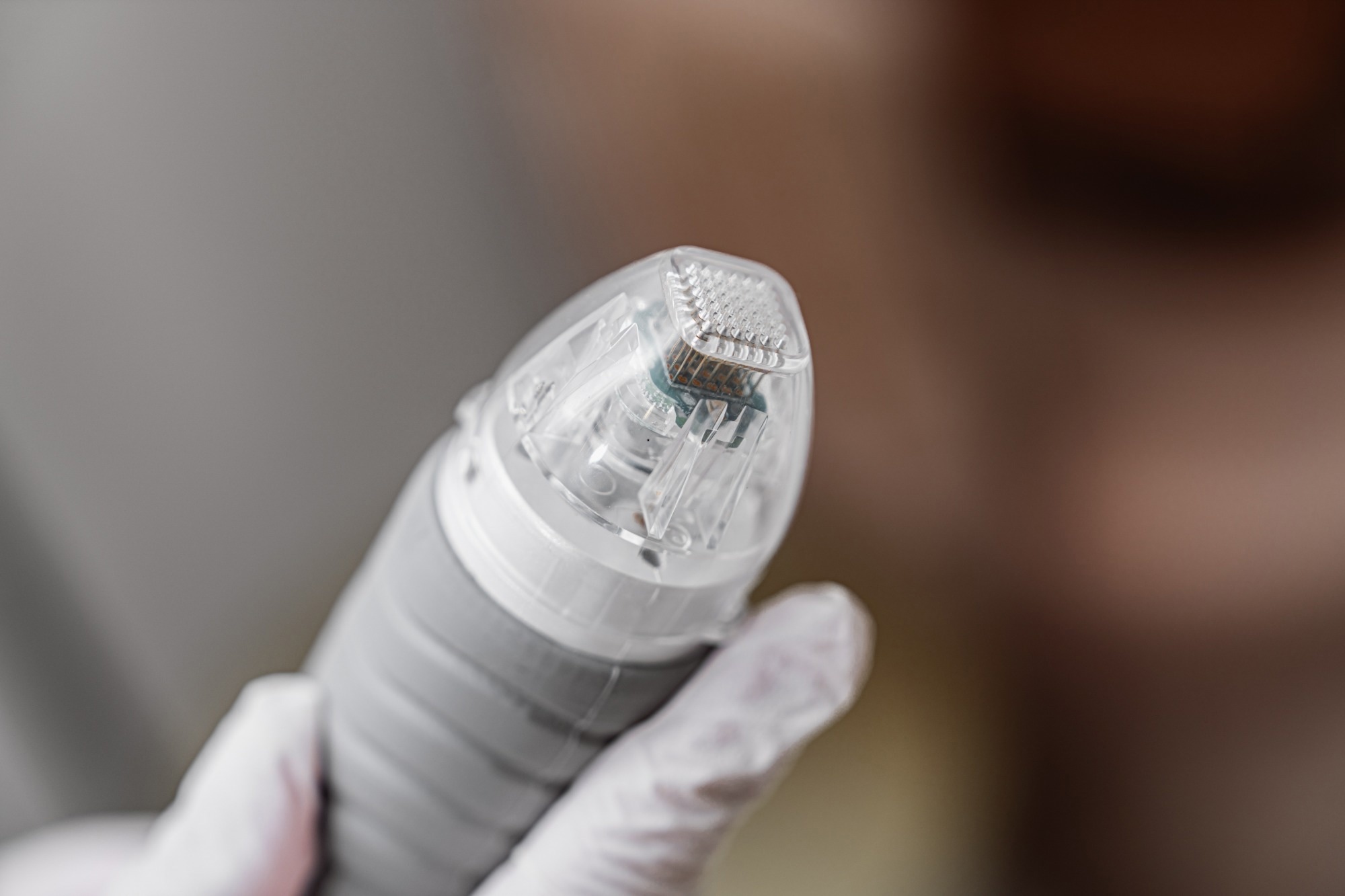 Image credit: Rovsky/Shutterstock.com
A recent review published in Glycoscience & Therapy identifies natural polysaccharide microneedles (PMNs) as a promising platform for localized cancer immunotherapy approaches by enabling localized treatment and reducing side effects, which are important limitations of many current immunotherapies.
These biodegradable, minimally invasive devices enable precise and targeted transdermal drug delivery (TDD) without stimulating nerve endings. As a result, they reduce pain and improve bioavailability, stability, and treatment compliance. By directly activating immune cells beneath the skin, PMNs may improve local therapeutic efficacy and immune activation while potentially reducing total drug payloads in some preclinical settings. However, challenges in manufacturing consistency and application reproducibility remain for clinical translation.
Microneedles (MNs) are emerging as a patient-friendly platform for TDD, offering a compelling alternative to conventional injection-based therapies. By avoiding liver-mediated metabolism before reaching the bloodstream, MNs can maintain more stable drug levels in plasma while improving safety, bioavailability, and compliance.
Increasing scientific evidence emphasizes the use of PMNs for next-generation drug delivery, as natural polysaccharides are renewable and biodegradable materials that exhibit low toxicity and good biocompatibility.
About the review
In the present review, researchers systematically evaluate the potential of PMNs in expanding the immunotherapeutic landscape of cancer, with a particular emphasis on localized and intradermal immune modulation that leverages the skin as an immune-active organ.
Why Natural Polysaccharides Are Preferred for Microneedle Therapy
Natural polysaccharides are increasingly preferred for microneedle therapy due to their favorable biological, mechanical, and therapeutic profiles. PMNs provide minimally invasive and targeted transdermal co-delivery of multiple agents and bioactive molecules that bypass first-pass metabolism into localized skin or superficial tumor lesions.
These properties improve bioavailability and safety. In addition, PMNs may reduce pain and anxiety associated with conventional injections by penetrating the stratum corneum without stimulating dermal nerve endings.
PMNs interact directly with skin-resident antigen-presenting cells, such as dendritic cells (DCs) and Langerhans cells. Localized targeting using tumor antigens and immunoadjuvants enhances T-cell activation and the release of pro-inflammatory cytokines to generate robust anti-tumor immune responses, while limiting systemic toxicity in cancer therapy.
Encapsulation further improves antigen stability and reduces cold-chain dependence.
Examples of Natural Polysaccharides Used in Microneedle Therapy
Natural polysaccharides from marine, animal, plant, and microbial sources have been explored for microneedle therapy due to their biodegradability and tunable properties. Sodium alginate (SA), derived from brown seaweed, is widely used for its ability to form mechanically robust hydrogels.
The compositional flexibility of SA enables rigid microneedle tips or sustained drug release. Hyaluronic acid (HA) is highly valued for its hydrophilicity, viscoelasticity, and affinity for cluster of differentiation 44 receptors, which support targeted drug delivery in cancer.
Chitosan offers a cationic structure that facilitates the binding of nucleic acids and proteins and promotes immune activation. Mannosylated chitosan variants enhance DC targeting.
Additionally, botanical polysaccharides, such as Bletilla striata and Panax notoginseng, as well as microbial polysaccharides including dextran and Poria cocos, offer immunomodulatory and anticancer benefits. These compounds highlight the versatility of natural polysaccharides in microneedle-based therapies.
Natural PMNs can deliver chemotherapeutics, immune checkpoint inhibitors, and functional nanoparticles (NPs) to activate immune cells locally. Examples include HA needles loaded with doxorubicin and 1-Methyl-DL-tryptophan to induce tumor cell death and relieve immune suppression simultaneously.
Additional systems include pH-sensitive liposomes carrying small interfering RNA and doxorubicin in pullulan-based patches for synergistic chemo-immunotherapy, as well as stimulus-responsive fucoidan-coated copper sulfide nanoparticles integrated into HA backing layers for photothermal-assisted tumor ablation. These systems respond to enzymatic, pH, and photothermal cues in the tumor microenvironment.
Polysaccharide-based dissolving or hydrogel-forming MNs, including HA and chitosan, can also encapsulate nanodrugs, immunomodulators, or cancer vaccines to remodel the tumor microenvironment, enhance immune cell infiltration, and induce tumor cell death. They can be combined with photodynamic therapy or photothermal therapy to enhance localized antitumor effects, and such combinatorial strategies remain largely preclinical.
Modifications to Enhance Transdermal Drug Delivery Using Polysaccharide Microneedles
PMNs contain several reactive functional groups, including hydroxyl, carboxyl, and amino moieties on natural polysaccharide chains. These groups enable physicochemical modifications that improve mechanical strength, dissolution behavior, and drug-loading efficiency.
Blending polysaccharides with other biopolymers or NPs can enhance skin penetration while preserving structural integrity. For example, chitosan and polyvinyl alcohol composites show improved robustness and insertion performance.
Both chemical and physical crosslinking strategies strengthen PMNs and support controlled drug release. For example, calcium-mediated crosslinking of pectin-rich polysaccharides improves mechanical stability and biocompatibility.
Nanoparticle composites comprising HA demonstrate enhanced puncture strength. Chemical modifications, such as sulfation and carboxymethylation, improve aqueous solubility and biological activity.
Conclusions
Natural polysaccharides are emerging as key materials for microneedle systems in cancer immunotherapy, offering a combination of biocompatibility, biodegradability, and immune-relevant bioactivity.
Their chemically tunable and structurally diverse backbones enable improved mechanical strength, controlled drug release, and the co-delivery of therapeutics and immunomodulators, positioning PMNs as both delivery vehicles and immune-activating platforms.
Advances in fabrication technologies, including high-resolution 3D printing and hybrid molding, are enabling the precision design of PMNs for personalized, localized therapy.
Most cancer-related PMN applications remain at an early clinical stage, with challenges related to reproducibility, standardized characterization of polysaccharides, and consistent drug deposition.
To translate these innovations into clinical practice, scalable manufacturing, robust quality control, and standardized characterization are essential. With multidisciplinary efforts and rigorous clinical evaluation, PMNs hold promise for safer, more effective, and patient-friendly cancer treatments.
Journal Reference
Zhang, C. et al. (2025). Natural polysaccharide-based microneedles, a promising frontier in cancer immunotherapy. Glycoscience & Therapy, 1, 100010. DOI: 10.1016/j.glycos.2025.100010. https://www.sciencedirect.com/science/article/pii/S3050608525000102
 Oncogene-Induced Senescence Exhibits Dual Role in Tumor Suppression and Progression