Consider a star-shaped cell in the brain, extending its spindly arms to cradle the neurons surrounding it. That is an astrocyte, and for a long time, scientists assumed its role was to care for the brain, gluing neurons together and preserving neural circuits.
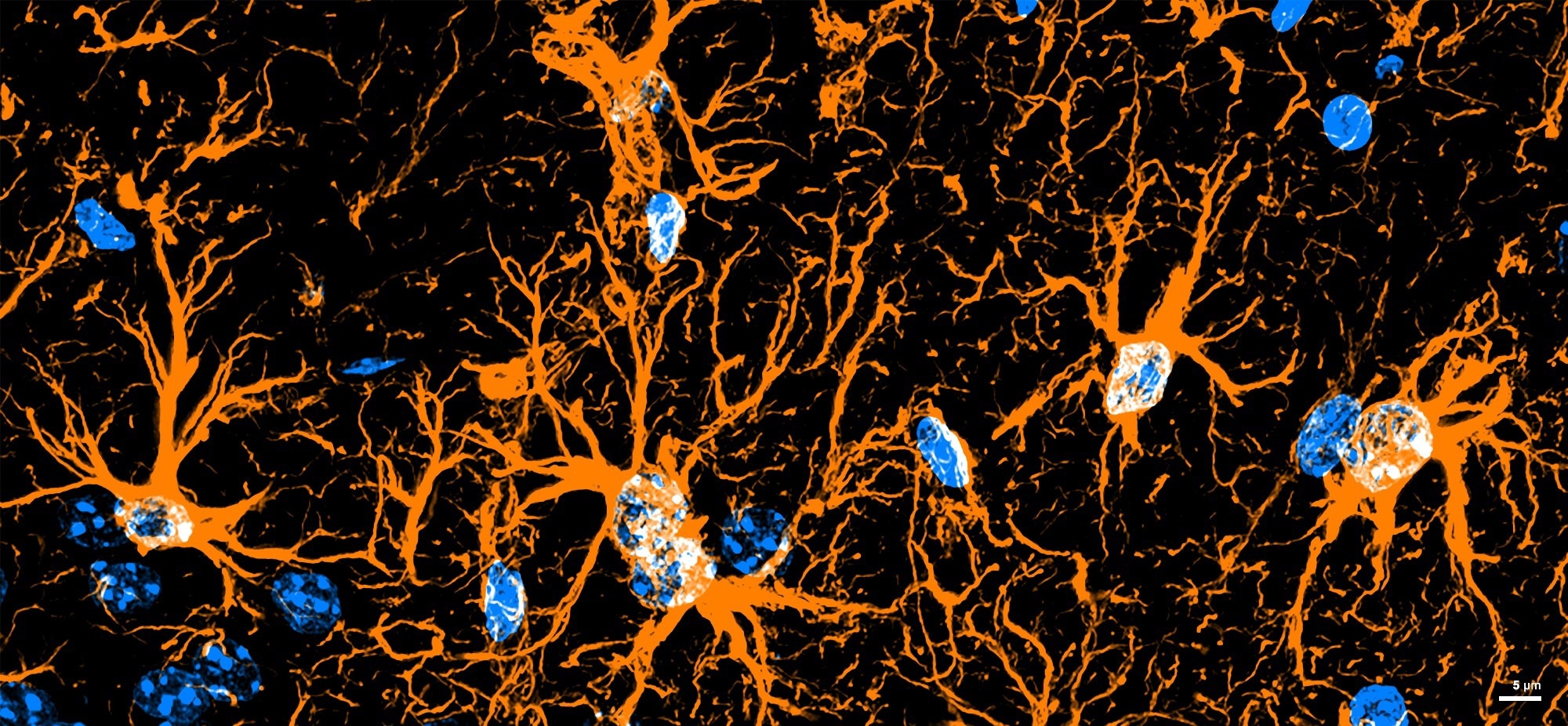 Image credit: Samurai Cat/Shutterstock.com
However, a new study has discovered that these presumed support cells found throughout the brain are just as critical in fear memory as neurons.
Astrocytes are interwoven among neurons in the brain, and it seemed unlikely they were there just for housekeeping. We wanted to understand what they're actually doing – and how they're shaping neural activity in the process.
Lindsay Halladay, Study Senior Author and Assistant Professor, Department of Neuroscience, University of Arizona
The study, published in Nature, reveals that astrocytes found in the brain's fear center, the amygdala, help the brain learn what to dread, retain those memories, and, most importantly, learn when to let them go. The findings call into question long-held notions about how fear memory works, pointing to novel treatment options for diseases, including post-traumatic stress disorder.
“For the first time, we found that astrocytes encode and maintain neural fear signaling,” Halladay added.
The researchers employed a mouse model to investigate how fear learning occurs in the brain, how fear-related memories are recalled, and the roles of neurons versus astrocytes in fear learning.
Using fluorescent activity sensors, the researchers observed astrocytes responding in real time as fear memories were generated and later retrieved. As these memories faded, astrocyte activity decreased. When the researchers selectively raised or repressed the signals astrocytes transmit to nearby neurons, the intensity of fear memories varied in tandem, suggesting that astrocytes are active players in forming fear, rather than passive observers.
Astrocyte activity also affected neural circuits. When astrocyte activity was disturbed, neurons were unable to produce typical fear-related activity patterns or properly relay information about appropriate defensive reactions to brain regions responsible for controlling defensive behavior. These findings contradict neuron-centric conceptions of fear by demonstrating that fear memories are not solely created by neurons.
The effects of altering astrocytes extended beyond the amygdala. The modifications also altered how fear impulses were sent to the prefrontal cortex, a brain area critical for decision-making. This shows that astrocytes impact not just the amygdala's storing of fear memories, but also how the brain applies those experiences to select appropriate reactions to stressful circumstances.
Knowing that astrocytes play an important part in the retrieval of fear memories will change the way therapeutic approaches for diseases characterized by persistent fearful memories, such as post-traumatic stress disorder, anxiety disorders, and phobias, Halladay explained. If astrocytes have a role in determining whether fear memories are produced or effectively suppressed, targeting astrocyte-related pathways rather than neural pathways may eventually complement neuron-focused treatments.
Halladay’s next goal is to investigate what astrocytes are doing across the remainder of the brain's fear circuitry, as the amygdala does not function alone and depends on other regions of the brain. For example, the prefrontal cortex aids decision-making in stressful situations, but deeper regions, such as the periaqueductal gray in the midbrain, carry out specific protective responses, such as freezing and fleeing.
While it is unclear what astrocytes do in such places, Halladay believes there is a good chance they contribute to brain function there as well.
Understanding that larger circuit could help answer a simple question of why someone with an anxiety disorder might exhibit inappropriate fear responses to something that isn't actually dangerous.
Lindsay Halladay, Study Senior Author and Assistant Professor, Department of Neuroscience, University of Arizona
Source:
Journal reference:
Bukalo, O., et.al. (2026) Astrocytes enable amygdala neural representations supporting memory. Nature. DOI: 10.1038/s41586-025-10068-0. https://www.nature.com/articles/s41586-025-10068-0.
 Stem Cell Models Demonstrate Precise Cellular Nibbling of Pathological Fibrils