For the first time researchers have found evidence that monkeys are catching human Hepatitis B virus (HBV) in the Amazon and deforestation could be making the problem much worse.
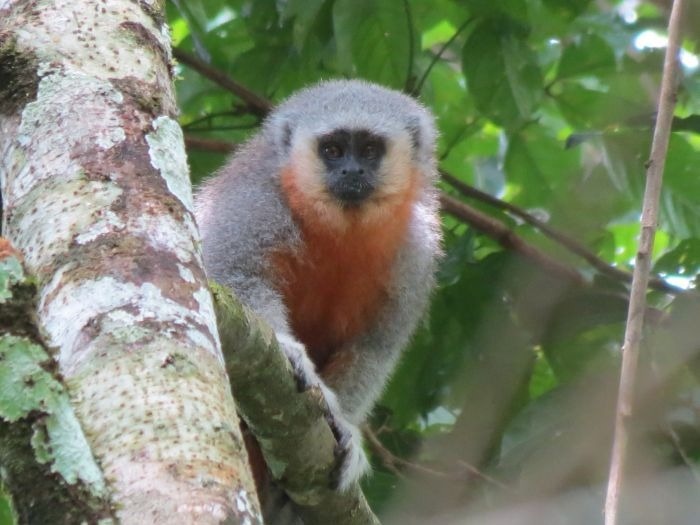 Species Plecturocebus grovesi. Image Credit: Diego Afonso Silva
In a new study, described by experts as a huge warning sign, the team from the University of Salford in the UK and Federal University of Amazonas in Brazil, tested blood or liver samples from 88 primates across 28 species in two Brazilian Amazonian regions - one human-impacted area (Rondonia and Mato Grosso states) and one remote area (upper Japurá River, Amazonas state).
Published in the journal EcoHealth the paper shows how researchers found HBV in 17 out of 49 primates from the human-impacted areas. None of the 39 primate samples from the remote area had contracted HBV. Previously only apes had been known to catch this virus that cause Hepatitis B disease in humans.
The findings show that human population density significantly predicts human HBV infection in wild primates, suggesting that human-to-primate disease transmission is happening and it is driven by deforestation and encroachment by human populations on primate habitats. It is not yet clear if the monkeys are suffering ill effects from the virus, i.e., developing the disease, and if it is being transmitted between monkeys.
Professor Jean Boubli, who led the research at the University of Salford, said: “This is a huge warning sign but there is still a lot we need to learn."
“Our findings were clear that monkeys that are in much closer proximity to humans are much more likely to contract HBV. HBV is only known to be passed on through blood, saliva or other intimate contact. We don’t know the route of the infection for monkeys as yet, that is something we need to look into.”
We also don’t yet know if the virus is causing disease in infected monkeys. They don’t have clinical signs but we need to see if the monkeys are being affected. It is likely that they will be because it is such a serious disease for humans and also apes. And if this is going on then what else is happening? We destroy their habitat, we hunt them and now it looks like we might be affecting then with diseases.”
Jean Boubli, Professor, University of Salford
Increasing deforestation and human encroachment into wildlife habitats is increasing human-primate interactions, which could lead to more cross-species disease transmission. In the Amazon, Indigenous people and local communities consume an estimated three million primates from the genera Alouatta, Ateles and Sapajus for subsistence.
Other primate species, especially squirrel monkeys (Samiri spp.) are often traded as pets. Both the pet trade and subsistence hunting increase instances of human-primate interaction.
Primates (e.g. chimpanzees) who contract HBV have been shown in experimental studies to develop symptoms such as lethargy, jaundice and anorexia.
However, there are currently no clinical studies involving New World primates.
 Marine Carbohydrate Therapeutics: From Structural Diversity to Clinical Translation