The human body contains vast numbers of T cells that can seek out and eliminate malignancies when properly activated. A group from UC San Francisco has developed a technique to achieve this by merging laboratory-cultivated immune cells with samples from a person's malignancy. Like giving a dog a scent, this process teaches the defense network how to pursue the malignancy.
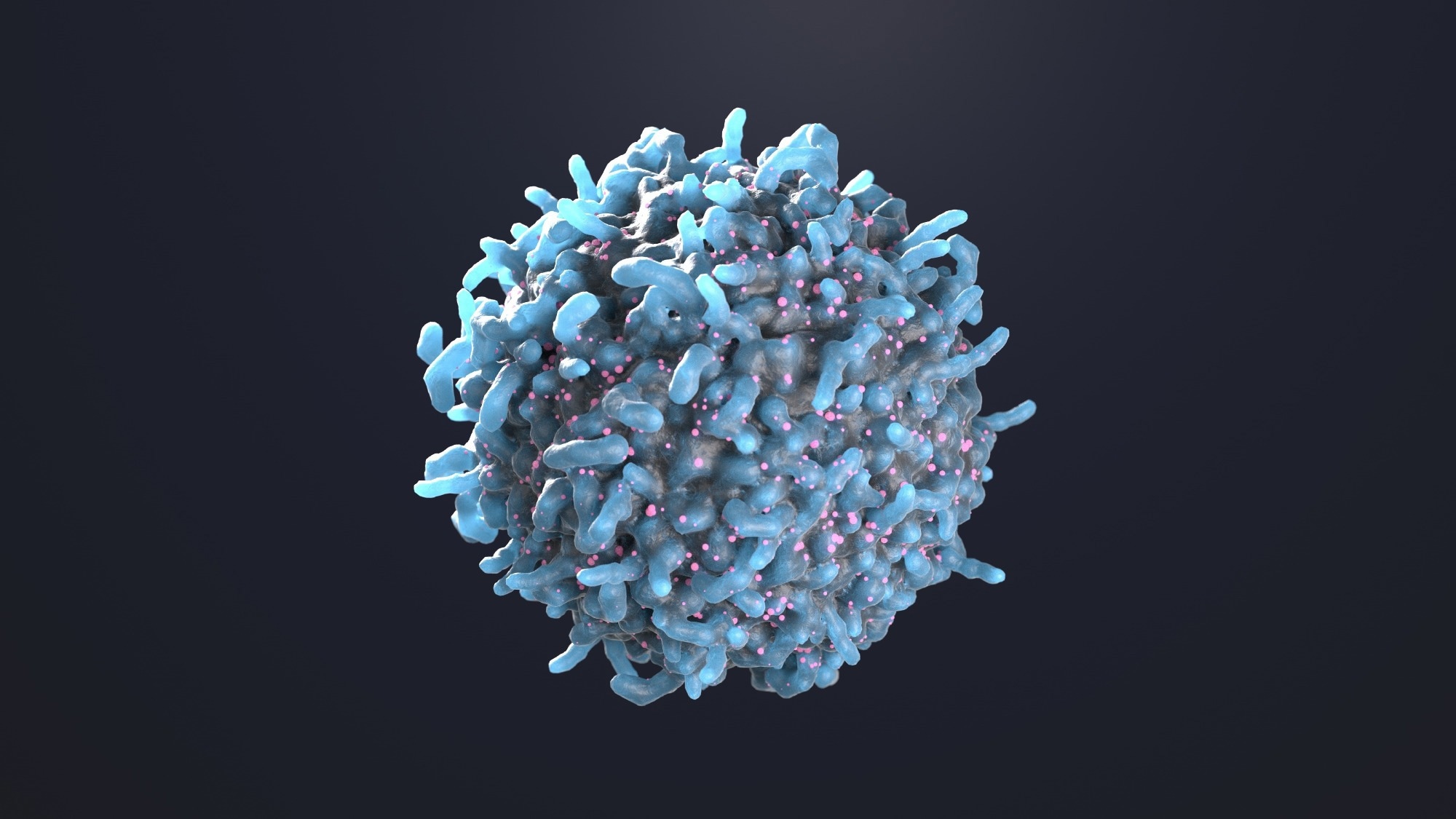 Image Credit: Ursa Design/Shutterstock.com
Initially, T cells require instruction from dendritic cells, which are rare immune cells difficult to harvest from oncology patients. The UCSF approach bypasses this hurdle by generating dendritic cells from induced pluripotent stem cells (iPSCs), which can be produced in large quantities in lab settings.
Because standard iPSCs face rejection by host immunity, researchers first remove their molecular identifiers before inducing maturation into dendritic cells. Ultimately, they "dress" these dendritic cells using minuscule membrane bubbles derived from malignant cells. These provide the dendritic cells with various cancer signatures to present to the T cells.
During benchtop trials utilizing tumor specimens and T cells from individuals with leukemia or ovarian malignancies, the dressed dendritic cells successfully coached T cells to eradicate autologous tumors. This therapy also inhibited neoplastic expansion in mouse models. These results were published in Cell Stem Cell.
For cell-based therapies to work, they need to avoid immune rejection by the body, and they need to target the cancer and not healthy tissue. Our combination of iPSC-derived dendritic cells with patients’ own tumor signature checks both boxes and we’re very hopeful it could work in the clinic.
Robert Blelloch, MD, PhD, Study Senior Author and Professor, Department of Urology, University of California, San Francisco
Rather than isolating individual cancer targets sequentially, investigators disrupted tumor cell membranes, prompting them to self-assemble into tiny bubbles. These vesicles subsequently fused with dendritic cells, blanketing their surfaces with a diverse array of patient-specific tumor fragments.
This integration enhanced the dendritic cells' resemblance to the patient's native tissue while presenting a broad spectrum of tumor antigens. Supplying such comprehensive antigenic information helps prevent tumors from evading immune detection simply by shedding a single target – a common limitation that restricts the efficacy of other immunotherapies.
Home-Schooling the Immune System
After confirming that the tumor membrane successfully integrated into the dendritic cells, the researchers evaluated whether these modified cells could direct T cells to locate and eliminate cancer.
Beyond simply presenting tumor antigens, the dendritic cells generated the exact signaling cues T cells needed to recognize those cancer fragments as a danger. The scientists were subsequently able to boost these activation signals, triggering a significantly enhanced T cell response.
The technique demonstrated success in Petri dishes using patient-matched tumor samples and T cells, and it effectively delayed human cancer cell progression in mouse models.
For Blelloch, a clear application lies ahead: while surgery can excise prostate tumors, many patients remain at elevated risk for cancer recurrence.
After surgery, we have all the tumor tissue needed to make a bespoke therapy for that patient’s cancer. We could dress artificial dendritic cells with pieces of the biopsy, place them back in the patient to educate T cells, and then the T cells could go kill any remaining cancer cells in the body, removing the risk of the tumor returning.
Robert Blelloch, MD, PhD, Study Senior Author and Professor, Department of Urology, University of California, San Francisco
Source:
Journal reference:
Xu, H., et al. (2026) Engineered human iPSC-derived dendritic cells dressed with tumor MHC complexes as a cancer vaccine. Cell Stem Cell. DOI:10.1016/j.stem.2026.07.017. https://www.cell.com/cell-stem-cell/fulltext/S1934-5909(26)00301-2.
 Prime Editing Generates Genomic Ticker Tapes Tracing Millions of Developing Cells