This study reveals a previously unknown role for a understudied region of the brain, showing how it helps coordinate the body's repsonse to cold while also contributing to metabolic regulation.
 Image credit: peterschreiber.media/Shutterstock.com
In a study published in the journal Neuron, researchers from USF Health used non-human models to identify a previously unknown brain circuit that translates a decrease in temperature into a coordinated reaction that regulates eating, heat generation, and energy use in the body.
The finding reveals the initial function of a previously overlooked area in the back section of the hypothalamus known as the dorsal posterior periventricular hypothalamic nucleus (dPVp), a region that scientists have not widely studied.
We identified a very understudied brain region and then found the first function for that brain region. The basic function of the dPVp is to sense temperature fluctuations and then coordinate a comprehensive set of behaviors or metabolic changes to deal with cold exposure.
Dr. Yong Xu, Professor, Department of Psychiatry and Behavioral Neurosciences, Morsani College of Medicine, University of South Florida
The research indicates that dPVp acts as a brain center that regulates cold responses and becomes highly active when the body's temperature decreases. It activates neurons that enhance the urge to consume food and boost the body’s capacity to generate heat.
To establish the function of the region, researchers conducted experimental manipulations on the activity of cold-responsive neurons located in the dPVp, thereby uncovering its crucial involvement in regulating the body's behavioral and metabolic reactions to cold exposure.
Xu stated that the activation of dPVp neurons resulted in surprising metabolic outcomes, which included boosting the motivation to eat additional food while simultaneously increasing energy expenditure. This aids in limiting weight gain and enhancing glucose control.
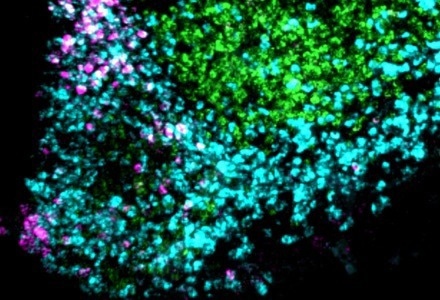
A fluorescent microscope image of brain tissue reveals cellular activity that is helping researchers better understand how the brain uses energy. Image Credit: Dr. Hailan Liu
The research additionally discovered a biological protein known as the “cold sensor,” located in dPVp neurons, which aids brain cells in sensing cold temperatures and managing the body's reaction.
Referred to as KCNK2 or TREK-1, this cold sensor presents researchers with a possible new target for creating drug treatments that might replicate the metabolic advantages linked to a reaction to cold exposure.
Instead of simply lowering food intake, this pathway may help the body use energy more efficiently. One of the future directions is to use that as a drug target to try to develop highly selective inhibitors for KCNK2 as a future medicine.
Dr. Hailan Liu, Study First Author and Faculty Member, Center for Molecular Psychiatry, University of South Florida
The results could have lasting effects on the treatment of obesity, type 2 diabetes, and various metabolic conditions. While numerous existing methods primarily aim at decreasing appetite, upcoming therapies might concentrate on the recently discovered pathway to enhance metabolic performance by facilitating the body's ability to consume and utilize greater amounts of energy.
If successful treatments were developed targeting the cold sensor, we wouldn’t have to expose people to cold temperatures to achieve those benefits. One could maintain metabolic health without dieting.
Dr. Yong Xu, Professor, Department of Psychiatry and Behavioral Neurosciences, Morsani College of Medicine, University of South Florida
Source:
Journal reference:
Liu, H., et al. (2026) A hypothalamic neuronal population coordinates metabolic adaptations to cold. Neuron. DOI:10.1016/j.neuron.2026.08.024. https://www.cell.com/neuron/abstract/S0896-6273(26)00675-6.
 Breakthrough Study Explains Developmental Origins of the Human Brain