Moneky see, monkey do. Disgust may be one of evolution’s oldest disease-prevention tools to steer us away from spoiled food, sick companions, and unclean surfaces to protect us from infection. But do other primates share this protective instinct?
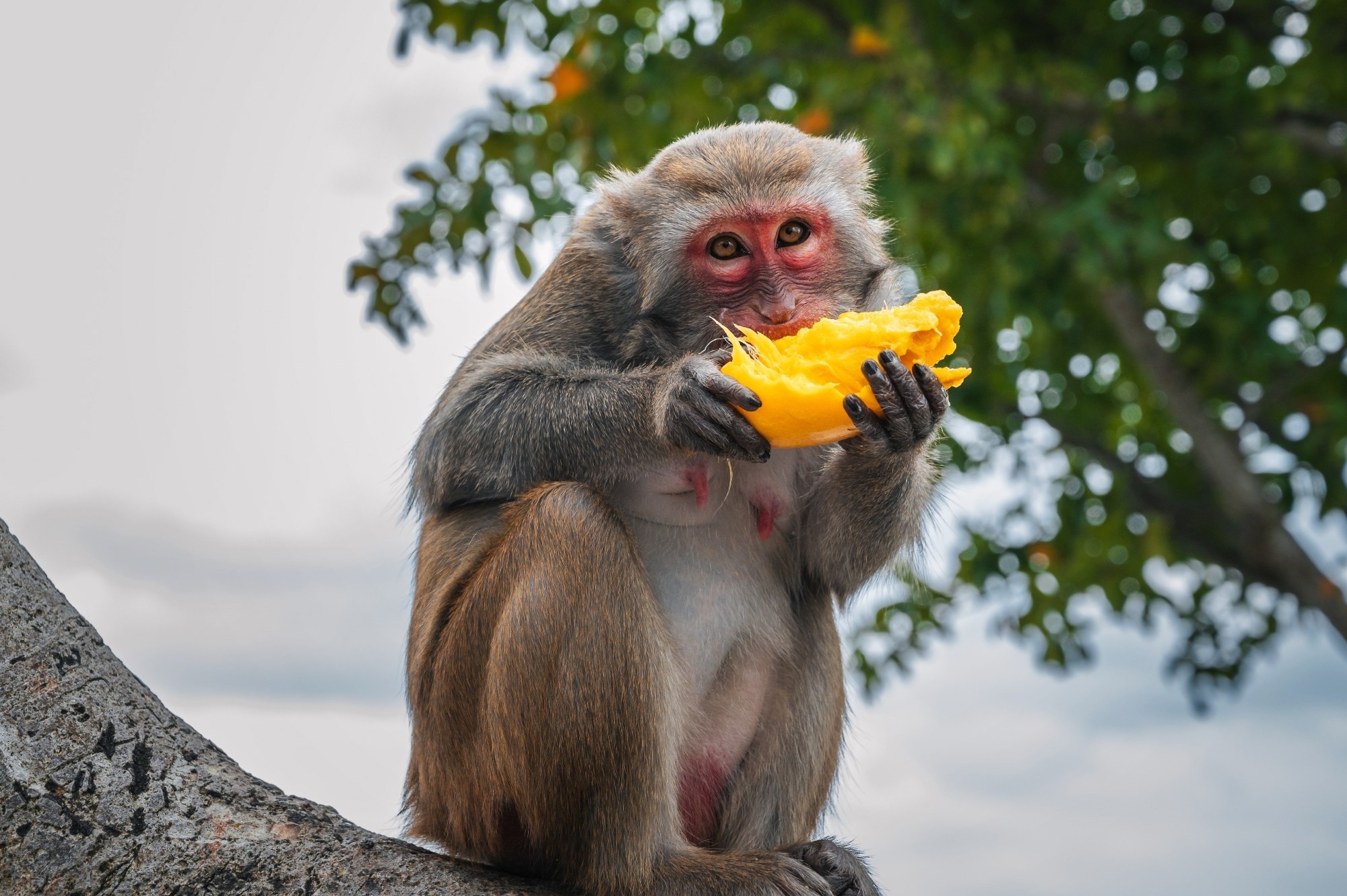 Study: Early-life experience and disease exposure affect pathogen avoidance behaviour in macaques. Image credit: alexkoral/shutterstock.com
In a recent study published in Royal Society Open Science, a team of researchers tested whether the childhood environment and disease outbreaks change how macaques avoid food touched by feces.
Pathogen Avoidance Behavior
Pathogens are among the strongest evolutionary pressures on animals, including humans. Beyond the internal immune system, many species rely on a behavioral immune system, a set of actions that lowers the chance of infection. In people, this system draws on genetics, personal learning, and culture, and it includes the emotion of disgust. Researchers think disgust evolved to keep individuals away from sources of disease.
Evidence from nonhuman primates shows that several species avoid contaminated food, sick group members, and unclean surfaces. Sex, age, rank, and season can all influence this behavior. However, little is known about whether childhood experiences or recent disease outbreaks change how sensitive an animal is to pathogen cues.
Studies in macaques show that early rearing conditions leave lasting marks on the internal immune system, but the evidence on whether they also exhibit avoidance behavior and whether surviving an outbreak heightens caution is lacking.
Testing Macaques' Responses to Visually Contaminated Food
In the current study, a team of researchers from the University of California San Diego and the animal advocacy & wildlife nonprofit group Born Free USA carried out two studies at the Born Free USA Primate Sanctuary in Texas. Both used food rewards, mainly grape halves, placed on two surfaces. One surface held macaque feces coated in clear epoxy, which gave a wet, fresh look without any smell or texture. The other surface was either a piece of wood, which was familiar to the animals, or a brightly colored kitchen sponge, also coated in epoxy, which tested for fear of new objects.
The first study included 54 macaques from seven species, including one hybrid. They came from diverse backgrounds, including sanctuary-born, former pets, former laboratory animals, and zoo-born. A sliding wooden table presented both options at once, and each animal could take food from only one surface per trial. Up to eight trials were run per animal, with the side of the contaminated surface varied and the order of the clean surfaces balanced.
The researchers coded the video recordings of each trial and performed a second coding round on 20% of the trials. Statistical models tested rearing background, sex, rank, trial number, and surface type.
The second study involved 55 Japanese macaques from four groups. Three groups had lived through an outbreak of Simian Retrovirus (SRV) Type II, which spreads mainly through bites, and one group had not. Food-baited surfaces were placed on the ground in each enclosure, and the researchers recorded which food was taken first and whether the contaminated food was eaten at all. An added analysis compared outbreak exposure with each animal's own infection status.
Upbringing and Disease Exposure Linked to Greater Caution
The study found that macaques consistently preferred food on clean surfaces, with avoidance behavior varying according to their upbringing and previous exposure to disease outbreaks.
In the first study, animals chose food from the contaminated surface in 32% of trials. Sanctuary-born macaques, raised by their own mothers, were significantly less likely to choose it than former pets raised by humans. Zoo-born animals also tended to show less avoidance than sanctuary-born macaques, although the difference was not statistically significant. Former laboratory animals also did not differ in their behavior from sanctuary-born ones.
Furthermore, species, sex, and rank had no meaningful impact on the behavior. However, choices of the contaminated surface increased over repeated trials, which suggested that the animals became used to the visual cue.
In the second study, animals from outbreak groups ate the contaminated food in 47% of trials, compared with 79% in the unaffected group. Interestingly, infected and uninfected animals in the outbreak groups behaved similarly, suggesting that the heightened caution was linked more closely to experiencing the outbreak than to infection itself. Moreover, because feces play no known role in SRV spread, the caution appears broad rather than tied to one route.
These results suggested that a flexible behavioral immune system exists in Old World monkeys, and that raising young primates among their own kind may be important for management and release programs to increase survival odds. The authors noted that the absence of pre-outbreak measurements and incomplete life histories for some animals did limit the interpretations that could be drawn from the findings.
Early Experiences May Shape Lifelong Disease Avoidance
The research suggests that macaques' caution toward contaminated food is influenced by their early upbringing and their groups' experiences with disease outbreaks. The findings indicated that flexible, experience-based pathogen avoidance exists in monkeys, and offered clues about the behavioral roots of human disgust. The learnings are also relevant for improving survival rates in wildlife rehabilitation projects and captive rearing of primates.
Journal Reference
Kaufhold, S. P., Goguen, A., Viano, K., & Rossano, F. (2026). Early-life experience and disease exposure affect pathogen avoidance behaviour in macaques. Royal Society Open Science, 13(10), 260011. DOI:10.1098/rsos.260011. https://royalsocietypublishing.org/rsos/article/13/10/260011/483776/Early-life-experience-and-disease-exposure-affect
 Major Virology Breakthrough Identifies Third Known Family of Bacteria Infecting RNA Viruses