The Spanish association “Izas, la princesa guisante” and the Pediatric Cancer Center Barcelona (PCCB) at Sant Joan de Déu Hospital have reached another milestone in the fight against childhood cancer: they have helped establish an international expert tumor board dedicated to pediatric gliomatosis cerebri. Bringing together leading physicians and researchers from Europe and North America, the board will review cases individually and provide families with a free international second opinion. Its aim is to make international scientific and clinical expertise available to patients, regardless of where they receive medical care.
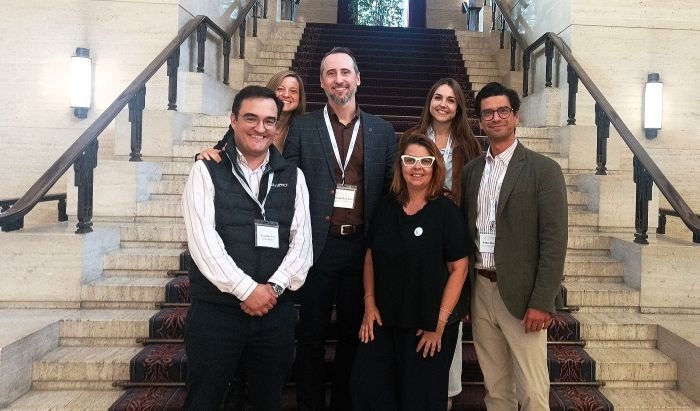 Mónica Sarasa (Izas, la princesa guisante), Andrés Morales (PCCB) and Marina Caballero (a pediatric neuro-oncologist at Sant Joan de Déu Hospital who leads the Tumor Board), taken at the 2025 International Gliomatosis Cerebri Congress in London, where the initiative originated. They are the three people on the right. On the left are colleagues from Sant Joan de Déu Hospital and other hospitals around the world. Image Credit: Izas, la princesa guisante
Gliomatosis cerebri (GC), a condition whose research both organizations have supported since 2013, is a very rare and particularly aggressive form of brain cancer for which there is currently no cure. Surgery cannot remove it because it spreads diffusely throughout the brain, like a spider’s web. In children and adolescents, median survival is 14.5 months from diagnosis.
The multidisciplinary panel, known as the Gliomatosis Cerebri International Tumor Board, is coordinated by the PCCB at Sant Joan de Déu Hospital and includes more than 20 experts from leading centers in Europe and the United States: pediatric neuro-oncologists, radiologists, neurosurgeons, radiation oncologists, researchers, pathologists and molecular diagnostics specialists.
Establishing a single international multidisciplinary tumor board dedicated to one disease is challenging and uncommon. Pooling the specialists’ expertise allows each case to be considered from different perspectives and recommendations to be provided to the medical team caring for the child. To refer a case to the board, the physician responsible for the patient should contact the PCCB team at Sant Joan de Déu Hospital.
An International Second Opinion and Ongoing Follow-Up
The board held its first meeting in early October and plans to meet monthly to review cases referred by medical teams. Specialists examine the available clinical documentation, including MRI scans, diagnostic reports, molecular analyses and information on the patient’s progress, to assess potential treatment options together.
This assessment can help refine the diagnosis, identify treatment options, consider suitable clinical trials and support decisions made by the treating medical team. Another major benefit is the in-depth molecular analysis that will be performed on tumor samples. Such tests are not available to many patients worldwide and, in a small number of cases, may even reveal potential treatment options.
One distinctive feature of the project is its provision for close patient follow-up, enabling the specialists to review each child’s progress and reassess cases when relevant new clinical information becomes available.
Given the prognosis of this disease and the limited treatment options, access to a highly specialized international second opinion also provides valuable support to families who need to know that every available option has been considered.
A Free Service for Families, Made Possible by Izas
The specialists contribute to the board voluntarily and without remuneration. Families are not charged for the assessment, thanks to the collaboration of the Sant Joan de Déu PCCB, the participating professionals and the financial commitment of “Izas, la princesa guisante”.
The association will initially cover operational coordination costs, transport of tumor samples and the molecular sequencing required when patients have not already undergone these tests. The aim is to make this specialized assessment accessible to patients in countries with fewer diagnostic resources. Other patient organizations may join in funding the project in the future.
For Mónica Sarasa, founder and president of “Izas, la princesa guisante”, and mother of Izas, who died from the disease at the age of three, the project represents an especially important step forward for families.
Cancer is the leading cause of death from disease among children and adolescents, and brain tumors are the leading cause of cancer-related death in children. Yet childhood cancer remains the least researched type of cancer, particularly rare cancers such as gliomatosis cerebri. As families, we refuse to accept this prognosis, but finding a GC specialist and knowing how to reach one is extremely difficult. This board will give families the reassurance that they have done everything in their power and that their child’s case has been reviewed by the very best specialists.”
Mónica Sarasa, Founder and President, Izas, la princesa guisante
The association’s president also expressed her gratitude for the specialists’ involvement. “We are immensely grateful to the PCCB team at Sant Joan de Déu Hospital and to all the experts from other countries who are taking part. Over the past 40 years, the FDA (Food and Drug Administration) has approved fewer than ten treatments specifically for children with brain tumors. Most treatments given to these children were not designed for tumors in a developing brain; they tend to be insufficiently targeted and highly intensive. This often leaves survivors with significant neurological impairments. This board will help us assess the best treatment options.”
An Opportunity to Advance Research
The board may also help improve scientific understanding of pediatric GC. The rarity of the condition makes research difficult, particularly because of the limited availability of tumor samples and sufficiently comprehensive clinical, imaging and molecular data.
Collaboration between international centers could support future research linking tumor characteristics with patient outcomes, subject to the necessary authorizations and data-protection safeguards. The aim is for the clinical experience gained to help researchers explore new therapeutic strategies.
More Than a Decade of Collaboration Between Sant Joan de Déu and Izas
The board represents another step in the longstanding partnership between Sant Joan de Déu Hospital and “Izas, la princesa guisante”, which began in 2013 following Izas’s death.
Since then, the hospital has participated in epidemiological research, molecular studies and projects aimed at understanding how the disease behaves and exploring new treatments. It has also led the organization of five international conferences specifically devoted to GC.
Dr Andrés Morales La Madrid, Clinical Director of SJD Pediatric Cancer Center Barcelona and Senior Consultant in the Paediatric Neuro-Oncology Unit, has been involved in this field of research from the outset, alongside the hospital’s team. According to the neuro-oncologist, “Establishing this international board was an important initiative that emerged from the most recent international congress. With the support of this group of professionals and Izas, we believe we can not only help more families by supporting the local medical teams caring for children with GC, but also advance research.”
Since Izas died in 2013, “Izas, la princesa guisante” has worked internationally from Huesca to support families affected by childhood cancer and other rare diseases, improve hospital care, fund international research into pediatric GC, foster collaboration between researchers and healthcare professionals in different countries, promote tumor-sample donation to advance understanding of the disease, organize and support specialized international conferences, and develop educational, fundraising and public-awareness initiatives
 Food Allergy Risk Changes as Children Grow