Researchers at the Garvan Institute of Medical Research have found that the functioning of a protein known as CDK1 in breast cancer is associated with a response to a widely used treatment. This finding has the potential to guide more personalized treatment strategies for patients.
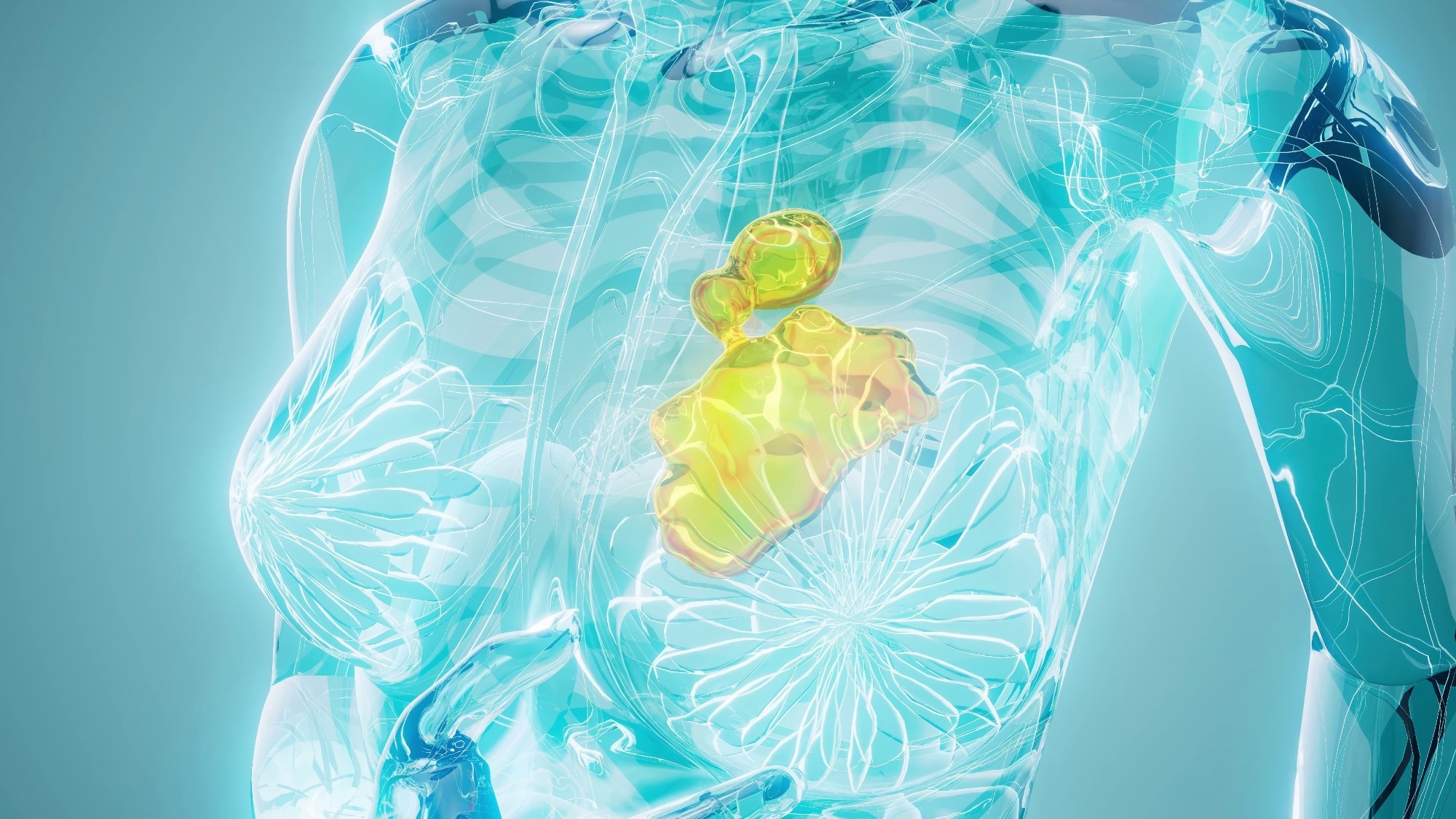 Image credit: Julien Tromeur/Shutterstock.com
The research, which appeared in Advanced Science, investigated estrogen receptor-positive (ER+) breast cancer, considered as the most prevalent form, driven by the hormone estrogen. Patients diagnosed with this type of cancer are currently treated with a combination of medications known as CDK4/6 inhibitors and hormone therapy.
These drugs are designed to prevent cancer cell proliferation; however, they are not effective for all patients. In cases of advanced cancer, they ultimately stop working for the majority.
CDK4/6 inhibitors have made a real difference for people with breast cancer, but right now we can’t tell who will get the most out of them, or whether they’ve stopped working. We wanted to find a signal in the tumour itself that tells us who is most likely to benefit and whether the therapy is doing its job.
Liz Caldon, Study Co-Senior Author and Associate Professor, Garvan Institute of Medical Research
Is the Engine on?
CDK1 is part of the same protein family as CDK4 and CDK6, which regulate the timing of cell division. CDK4 and CDK6 initiate this process, whereas CDK1 is essential for the final phase, during which the cell divides into two parts. This method of division occurs in healthy cells; when this mechanism becomes uncontrolled it results in cancer.
Associate Professor Caldon explained, “CDK1 is like the ‘engine’ that has to start for a cell to divide. CDK4/6 inhibitors work by jamming the cell’s ignition, but some cancer cells find a way to ‘hotwire’ around it. Even then, the cell can only divide if the CDK1 engine is running – so checking whether it’s switched on shows whether the drugs are still holding the cancer back.”
To track CDK1 during breast tumor progression, the research team created a novel preclinical model equipped with a fluorescent sensor that glow in response to the activation of the protein. They observed an increase in CDK1 activity as the tumors became invasive.
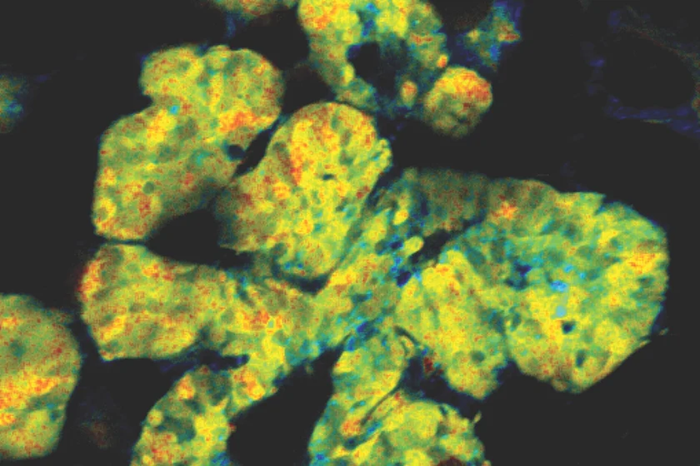
Breast cancer cells in a preclinical model glow blue/green when CDK1 – the ‘engine’ of cell division – is switched on. Image Credit: Dr Max Nobis
Most tests can tell you whether a protein is there, but not whether it’s actually working. This model shows us which cells have CDK1 switched on, so we can track the cell cycle being activated during treatment.
Dr. Max Nobis, Study Co-Senior Author, Lab Head and Lecturer, University of Manchester
In a study involving over 400 biopsy samples from patients with breast cancer, the researchers observed an increase in CDK1 activity as the cancer became more severe, and elevated activity was associated with poorer outcomes.
Spotting Cancers That Become Resistant
The researchers then used previously collected clinical trial data to examine breast cancers that treated with CDK4/6 inhibitors. In tumors that did not show a response, the genes associated with CDK1 and its related proteins remained active, indicating that the CDK1 mechanism was still going. This same activity was also observed in recurred advanced cancers.
Breast cancer cells cultured with CDK4/6 inhibitor for approximately ten months eventually developed resistance, but they reactivated their CDK1 machinery. Furthermore, in the preclinical model, tumors that continued to proliferate despite the treatment exhibited increased CDK1 activity levels.
It can take only a small number of surviving cells to bring a cancer back, so being able to see which ones are still active gives us a new view of how treatment resistance starts.
Paul Timpson, Study Co-Senior Author, Co-Director, Cancer Ecosystems Program, Garvan Institute of Medical Research
“CDK1 kept turning up as a red flag – in early breast cancer, in advanced cancer and in cancers that had overcome treatment,” stated Dr Sarah Alexandrou, first author of the study. “If a tumour has high CDK1, that may be a sign CDK4/6 inhibitors won’t work as well, which is something doctors could one day use when planning each patient’s care.”
Building on Decades of Garvan Research
The study builds upon research conducted by Garvan in the 1990s, which demonstrated that a related protein known as cyclin D1 promotes the development of breast cancer.
“Finding better options for people whose cancer stops responding to treatment takes long-term commitment,” added Associate Professor Caldon. “Over many years, our lab has built a collection of breast cancer cells that have become resistant to different drugs, and each one takes many months of careful work. These models are where we saw CDK1 switching back on, and our hope is that tracking CDK1 will help doctors match each person with the treatment most likely to work for them.”
The research team indicates that the results must now be evaluated in more extensive populations of patients undergoing treatment with CDK4/6 inhibitors, which may ultimately lead to the development of new drugs aimed at CDK1.
“Decades ago, CDK4/6 inhibitors were just an idea – now they’re helping people with breast cancer around the world,” concluded Professor Timpson. “There’s no drug for CDK1 yet, but that doesn’t mean there won’t be one day.”
Source:
Journal reference:
Alexandrou, S., et al. (2026) Tracking CDK1 Dynamics With a Novel Biosensor Mouse and Clinical Cohorts to Predict CDK4/6 Inhibitor Sensitivity in ER+ Breast Cancer. Advanced Science. DOI:10.1002/advs.77920. https://advanced.onlinelibrary.wiley.com/doi/10.1002/advs.77920.
 Long-Read Nanopore Sequencing Resolves Unexplained Tumor Mutations