Light is a fundamental signal affecting every form of life. Cycles of light and dark help set the biological clocks in organisms from unicellular bacteria to humans. Certain bacteria perform photosynthesis to transform sunlight into energy like plants, while others detect light for functions that are less understood by scientists worldwide.
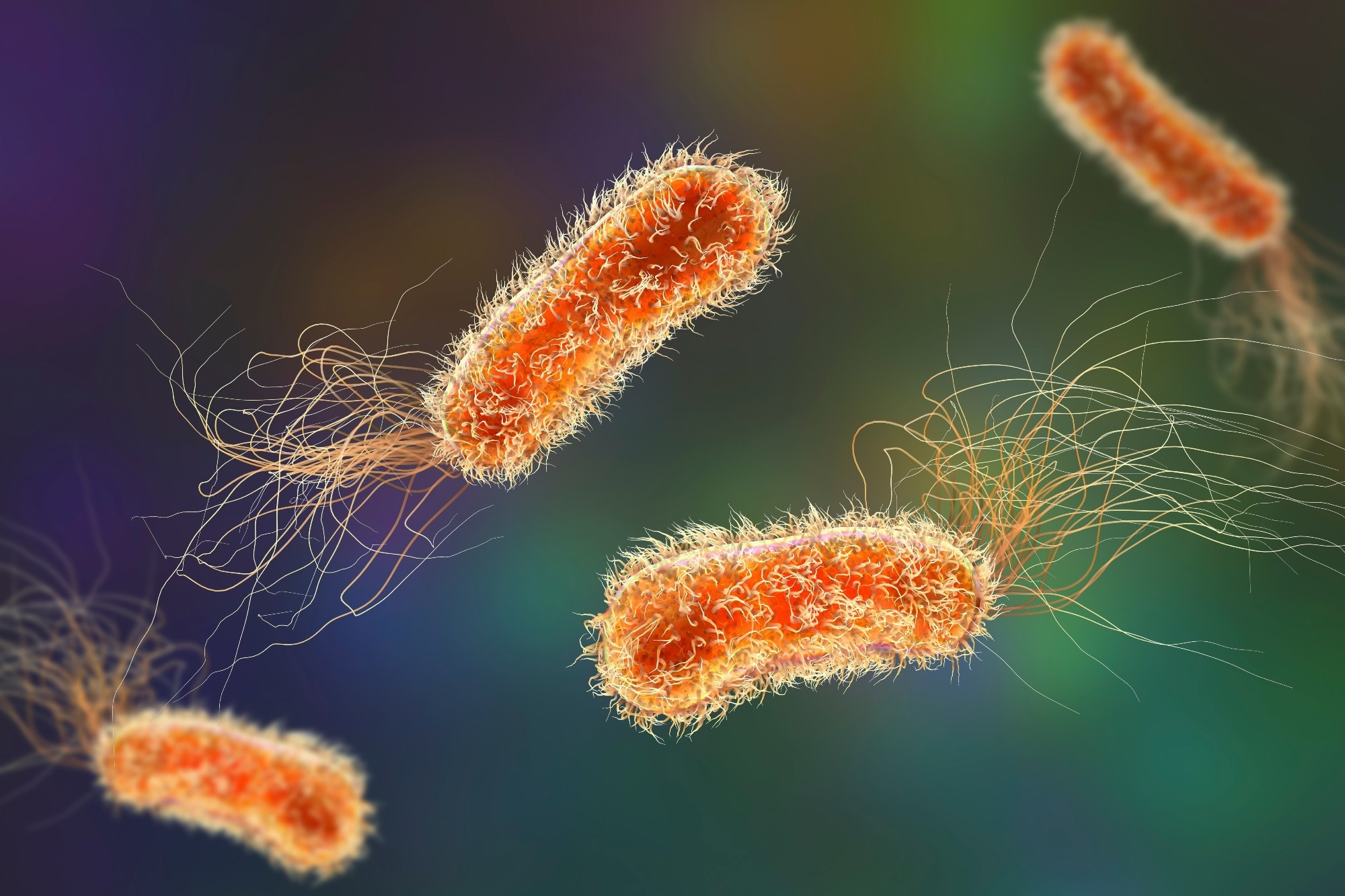 Image credit: Kateryna Kon/Shutterstock.com
In 2019, Sampriti Mukherjee, PhD, and colleagues at the University of Chicago found that far-red light, a specific region of the light spectrum close to infrared wavelengths, blocks biofilm development in the human pathogen Pseudomonas aeruginosa. Biofilms arise when bacterial populations gather closely together and adhere to surfaces such as medical equipment or body tissues.
Pseudomonas aeruginosa is an antibiotic-resistant microorganism, typically present in soil and water. It is known to cause hard-to-treat infections in hospitalized patients, particularly those with compromised immune system function, lung disorders, or extensive wounds such as burns.
Determining how to stop this pathogen from creating biofilms may help manage these serious infections. In a recent study published in Nature Communications, Mukherjee’s group gained deeper insight into how light influences its behavior. They demonstrate that a small protein initiates a light-sensitive cascade that activates genes to reduce biofilms and virulence in Pseudomonas aeruginosa. This light-sensing system also exists in other Pseudomonas species, indicating that it may serve additional, still unknown functions.
Photo sensing in non-photosynthetic bacteria is such poorly chartered territory. Here, we found a new signaling system in this bacterium and it's connected to biofilms and virulence. It’s also present in other pseudomonads, so it gives us the opportunity to translate our findings and possibly learn how to suppress infections.
Sampriti Mukherjee, Assistant Professor, Department of Molecular Genetics and Cell Biology, University of Chicago
During the COVID-19 pandemic, one may have encountered news reports describing technology designed to shine blue or UV light in hospital rooms to eliminate viruses and bacteria. While far-red light is not toxic to bacteria in the same manner, it instead functions as a signal.
Mukherjee and her team sought to learn more about how Pseudomonas aeruginosa uses light to reduce biofilms, so they linked a luciferase reporter gene that generates its own light to a promoter controlling genes that generate virulence factors.
When the bacteria were exposed to far-red light, the reporter was not switched on, indicating that those genes were not expressed. They also engineered a strain of the bacterium with mutations that disrupted the photo-sensing cascade and observed that it produced the virulence factors there.
During these screens, the team discovered a novel, previously unidentified gene that became active when the team exposed bacteria to far-red light.
This gene encodes a small protein named DimA positioned between the inner and outer layers of the bacterium’s cell membrane, which seems to initiate a sequence of protein processing that activates transcription factors that ultimately reduce biofilms and virulence in the organism overall.
Now we have a positive regulator of the system, so you can imagine a situation where we could artificially over express this small protein and see if we can prevent biofilm formation.
Sampriti Mukherjee, Assistant Professor, Department of Molecular Genetics and Cell Biology, University of Chicago
The group additionally identified multiple previously uncharacterized genes that became light-activated, suggesting that this photosensing pathway may serve additional functions in Pseudomonas species.
Mukherjee proposed that it might act as a system for regulating reactions to naturally changing illumination. In soil, for instance, bacteria on plant roots could detect how deep they are based on the level of light.
Pathogenic bacteria within a hospitalized patient’s lungs might survive and generate biofilms when light is absent. Her group aims to understand more about the function of the small protein and the numerous additional genes triggered by light in these bacteria overall.
Light is variable in nature, so you can have cloud cover, for example, and perhaps the bacterium doesn't want to stop photo sensing immediately. But then if there's no more light coming in, it also doesn't want to run the photo sensing genes for forever, so it stops. This could be like an hourglass model where the process slowly runs out with the light.
Sampriti Mukherjee, Assistant Professor, Department of Molecular Genetics and Cell Biology, University of Chicago
Source:
Journal reference:
Manias, D., et al. (2025). A light-induced microprotein triggers regulated intramembrane proteolysis to promote photo-sensing in a pathogenic bacterium. Nature Communications. DOI: 10.1038/s41467-025-66862-x. https://www.nature.com/articles/s41467-025-66862-x.
 Marine Carbohydrate Therapeutics: From Structural Diversity to Clinical Translation