A preclinical study finds that the widely used metabolic drug tirzepatide suppresses alcohol intake and relapse-like behaviors in rodents while altering brain reward signaling, highlighting a potential new direction for treating alcohol use disorder.
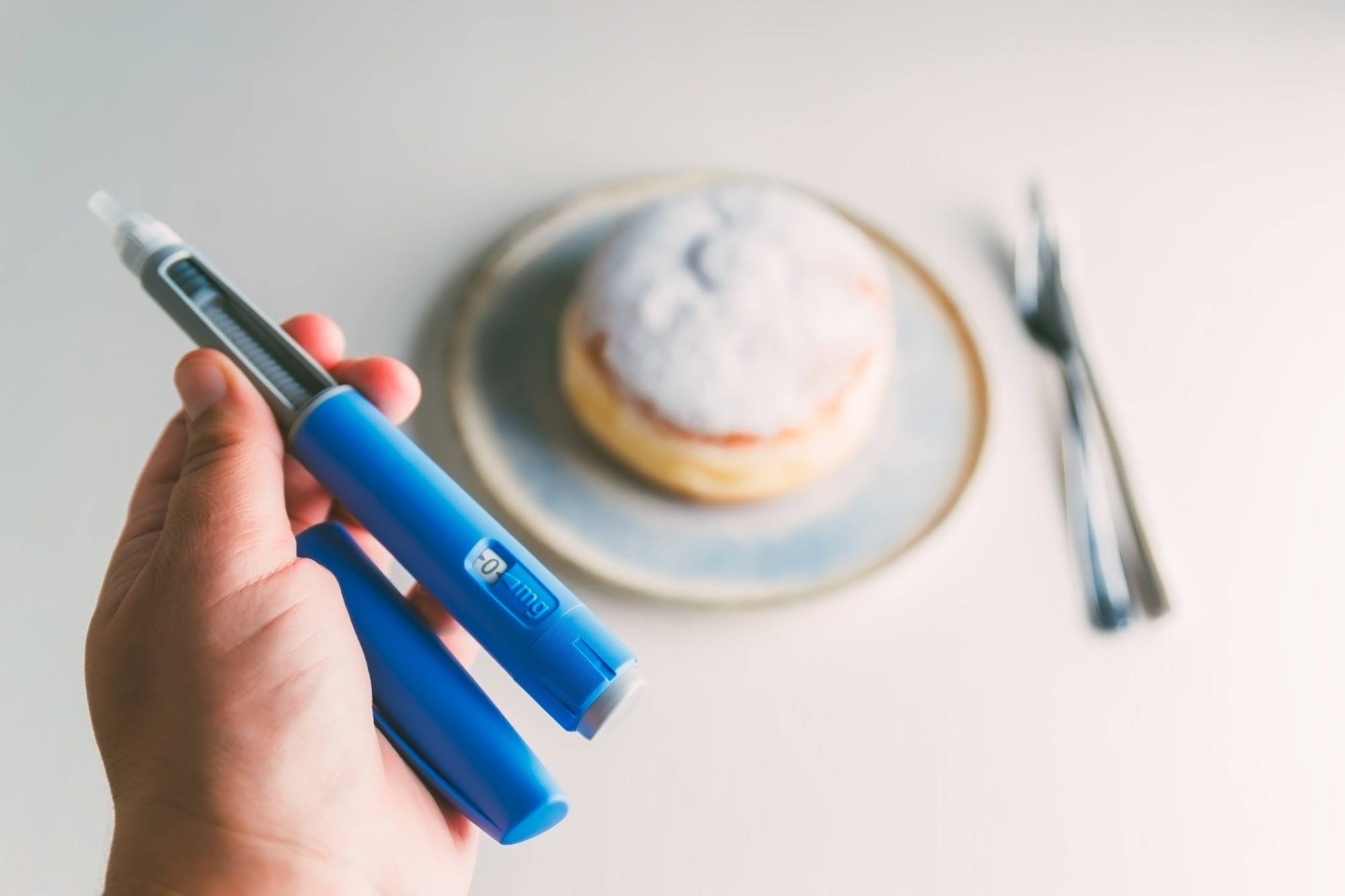 Study: Tirzepatide reduces alcohol drinking and relapse-like behaviours in rodents. Image credit: Yusia13/Shutterstock.com
In a recent study published in eBioMedicine, researchers report that tirzepatide, a dual incretin agonist targeting receptors for glucose-dependent insulinotropic polypeptide (GIP) and glucagon-like peptide-1 (GLP-1), may represent a potential therapeutic avenue for treating alcohol use disorder (AUD).
In rodent models, the drug consistently reduced alcohol intake across drinking behaviours and sexes, without evidence of tolerance. Notably, tirzepatide also diminished relapse-like behaviours, suggesting potential to lower relapse vulnerability.
By altering mesolimbic dopaminergic reward pathways, the therapy appears to influence alcohol-related responses at both behavioural and neural levels, supporting the need for further clinical investigation in individuals with problematic alcohol use.
Gut-Brain Hormone Drugs Gain Attention in Addiction Research
AUD remains a major public health challenge worldwide, with limited treatment options and modest efficacy of currently approved medications. The need for therapies with novel mechanisms has prompted interest in gut-brain signaling peptides, which influence mesolimbic reward pathways implicated in addiction. GLP-1 receptor (GLP-1R) agonists, widely prescribed for metabolic conditions such as obesity and diabetes, have demonstrated potential to reduce alcohol intake across animal models and early-stage human studies.
Tirzepatide, a dual agonist of GIP and GLP-1 receptors, may offer added therapeutic potential. However, its effects on alcohol intake and underlying mechanisms have not yet been fully explored.
Behavioral, Neural, and Molecular Alcohol Responses
In the present preclinical investigation, researchers evaluated tirzepatide across multiple behavioural, neurochemical, and molecular models of AUD. They housed adult male and female mice and rats under standardized conditions and studied them using established methods to assess reward, voluntary intake, binge-like drinking, and relapse-related behaviour.
The researchers performed behavioural assays evaluating movement activity and alcohol-associated conditioned place preference (CPP) after systemic alcohol administration (1.75 g/kg) in male mice. They incorporated environmental and olfactory cues in CPP testing after two weeks of abstinence to assess cue-induced relapse vulnerability.
The team examined neurochemical mechanisms using in vivo microdialysis in the nucleus accumbens shell to measure alcohol-induced dopamine release in male mice. They obtained electrophysiological recordings from key reward-related regions of the brain in alcohol-naïve male mice 24 hours after a single tirzepatide dose. The regions included the nucleus accumbens shell and core, the dorsomedial and dorsolateral striatum, the lateral septum (LS), and the medial prefrontal cortex.
Further, the researchers performed mass spectrometry for proteomic analyses of lateral septum (LS) tissue obtained from alcohol-drinking male rats after repeated tirzepatide treatment. They evaluated voluntary alcohol consumption using the drinking-in-the-dark (DID), alcohol deprivation effect (ADE), and intermittent access two-bottle choice (IA2BC) paradigms.
The researchers administered tirzepatide subcutaneously at 10 or 30 nmol/kg (selected from dose-response testing), typically 30 minutes before alcohol exposure. Subsequently, they assessed acute and repeated-dose effects in both male and female animals using the drinking method. They also measured metabolic and inflammatory outcomes, including liver triglycerides and circulating cytokines, to examine systemic consequences of treatment.
Tirzepatide Suppresses Alcohol Reward, Intake, and Relapse Behaviors
Tirzepatide significantly blunted alcohol’s rewarding and reinforcing effects across behavioural and neurochemical assays. In male mice, the drug reduced alcohol-induced locomotor stimulation without affecting baseline activity. Similarly, tirzepatide markedly reduced CPP for alcohol-paired environments and suppressed cue-induced preference after prolonged abstinence, indicating reduced relapse vulnerability. Microdialysis experiments showed that tirzepatide diminished alcohol-evoked dopamine release in the nucleus accumbens, as well as associated dopamine metabolites, while having no effect on baseline dopamine levels. The team observed noradrenergic and serotonergic changes, although these effects were less pronounced.
In voluntary drinking models, tirzepatide dose-dependently decreased alcohol intake in male and female rats. At 30 nmol/kg, alcohol consumption fell by 52 % in males and 41 % in females within 24 hours. There were no significant sex differences at the higher dose. In addition, binge-like drinking was reduced by 65 % in males and 77 % in females. In the ADE paradigm, tirzepatide prevented alcohol re-escalation following abstinence, reversing the expected post-deprivation surge in both sexes. Notably, repeated administration over two weeks sustained reductions in intake without tolerance and without signs consistent with nausea or malaise in ingestive-behaviour controls.
Electrophysiological recordings identified the LS as a potential neural substrate in which tirzepatide induced lasting synaptic depression. Proteomic analysis of LS tissue revealed altered expression of histone and chromatin-regulating proteins, suggesting possible epigenetic-related mechanisms. Additionally, tirzepatide improved metabolic and inflammatory parameters, reducing body weight, white adipose tissue, liver triglycerides, and circulating interleukin-6 (IL-6) and tumor necrosis factor-alpha (TNFα) levels in both sexes. While the findings are promising, the results are based on preclinical models and require validation in human clinical studies.
What's Next for Semaglutide? Beyond Diabetes and Weight Loss. Find out by clicking here.
Metabolic Drug Shows Promise for Alcohol Use Disorder
The findings suggest that tirzepatide changes alcohol-associated behaviours by dampening mesolimbic reward signalling while also pointing to the lateral septum as a candidate downstream neural substrate and improving metabolic and inflammatory disturbances linked to chronic alcohol exposure.
The drug reduced alcohol-induced dopamine release, voluntary intake, and post-abstinence rebound drinking across sexes, demonstrating consistent efficacy in multiple preclinical models. Electrophysiological and proteomic analyses identified the lateral septum as a potential neural substrate, with histone-related protein changes pointing to possible epigenetic involvement.
Given its existing clinical approval for metabolic disorders, tirzepatide may represent a promising repurposing candidate. However, further studies are needed to optimise dosing, clarify sex-specific mechanisms, and confirm long-term safety and efficacy in large-scale clinical trials.
Download your PDF copy by clicking here.
Journal Reference
Christian E. Edvardsson et al. (2026). Tirzepatide reduces alcohol drinking and relapse-like behaviours in rodents. eBioMedicine,124: 106119, DOI: 10.1016/j.ebiom.2025.106119 https://www.thelancet.com/journals/ebiom/article/PIIS2352-3964(25)00569-9/fulltext
 Stem Cell Models Demonstrate Precise Cellular Nibbling of Pathological Fibrils